


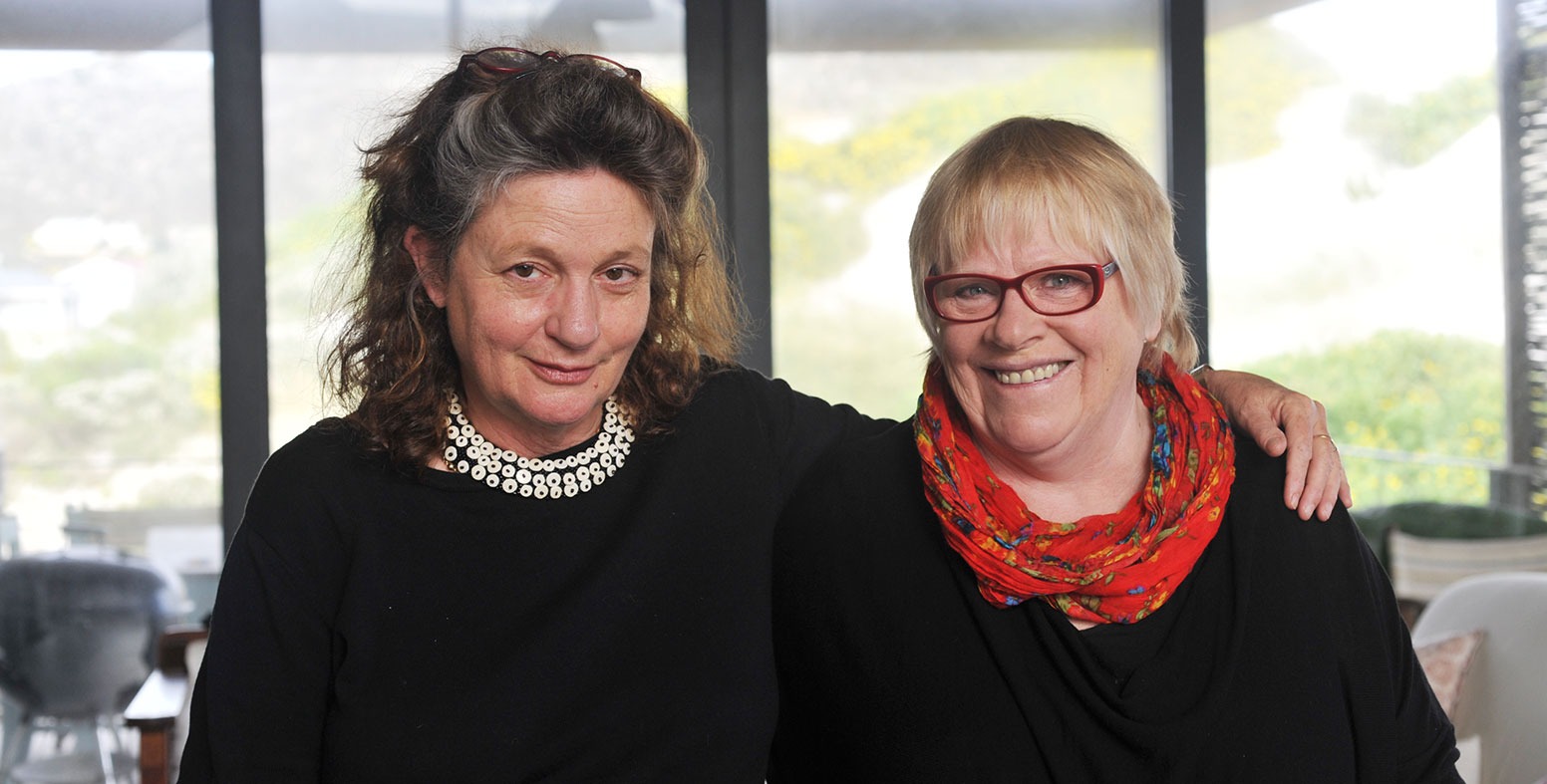
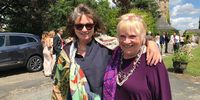
 Liza Key and Janice Honeyman, Paris 2014. (Photo: Adine Sagalyn)
Liza Key (1954-2026)
In the first week of September 1990 a bomb went off in the Avalon Theatre in Fordsburg – the first act of political violence I experienced in Johannesburg after returning home a few weeks earlier. In my mid-twenties, I had come back to work at the Weekly Mail, and this attack was to protest against a screening that was part of the paper’s film festival, of a Canadian film called How to Make Love to a Negro Without Getting Tired.
The Weekly Mail Film Festival was transition-era Johannesburg’s most thrilling event. Its extensive programme ran from still-banned anti-apartheid documentaries to cutting-edge international features to revived gems of South African film history like Come Back Africa, and it created a tumult in our office and in the city – all of which seemed to swirl around its director, Liza Key.
Liza had an insouciant beauty, untamed hair and eyes of pure mischief, and she seemed to float through it all in a cloud of pearls and exposed cleavage, trailing drama and desire in her wake. She died on 11 October, at the age of 71, in her “Parkview plaas”, as her partner of 25 years, the director Janice Honeyman, called their gorgeous home. I am one of many who came to love her, and who will miss her dearly.
When I met her, she lived in a stone cottage off The Valley Road in Parktown, where she seemed to run a perpetual salon. She would convene artists, journalists, funders, visiting film directors and inexplicable hangers-on (she seemed to love celebrities and troubled souls in equal measure), cooking up feasts of sweetbreads or black beans and then retiring to the bedroom where you could hang out with her, or not, on a huge bed covered in the finest antique linen. There was a piano; she played Schubert like an angel. She was elusive and enchanting; there was always trouble and fun around her, as well as kindness and care.
Liza ran the festival for seven years before turning to documentary filmmaking herself and then pioneering an innovative scriptwriting programme called Scrawl. Her last work was the monumental research and writing on Mandy Jacobson’s seven-part The Trials of Winnie Mandela, recently aired on Netflix.
Liza was pathologically shy: she could not speak in public and once, famously, pulled a phone out of the wall and pretended the line had dropped rather than proceed with a 702 interview. But she had extraordinary mettle, whether it meant doing battle on behalf of the subject of her first film, HF Verwoerd’s assassin Dimitri Tsafendas; or hanging out with apartheid killers for her second, about “Dr Death” Wouter Basson; or pushing the “limits of liberty” (as one of her film festivals was called) by getting permission to show banned films that outraged the censors and often the audiences too. In her fifties, she went back to university, to get a masters’ degree in ethnomusicology; her dissertation was about the Karoo musicians she had met during a film she had made about David Kramer.
Making waves
Liza was raised in Witbank in the Eastern Transvaal, schooled at a convent – she was always in trouble, but had the protection of a renegade Polish nun – and then at the University of Natal. Before she completed her degree, she took off to see the world as a shiphand. She arrived in Johannesburg in the mid-1980s and fell into the alternative film world. She took the reins of the Weekly Mail Film Festival in 1988 – it had been founded the previous year – and set about making waves.

“Nothing gave me more nightmares than the festival,” laughs the Weekly Mail founder-editor Anton Harber. “Every year Liza found what it was that would push the edges, push all the buttons of the censors. ‘Oh my God, here we go again,’ I would say, when a call came in. There I was trying to keep a newspaper afloat, but a cinema has been bombed, or there were fundamentalists threatening to invade the Market Theatre.” But the Mail supported the festival unstintingly, because it was “so important in establishing a resistance culture, an alternative culture, in that time of transition”.
Lauren Jacobson, the festival’s lawyer, was to become one of Liza’s closest friends. She recalls Liza’s annual visits to her flat, “carrying this battered but very stylish leather briefcase, filled with VHS cassettes: ‘this is what we’ve got this year’. It would be a mountain of things to argue, to get unbanned, to get exemptions for from the Publications Appeal Board. We used to tussle – ‘Can’t we make it a bit easier, Lize? – but she knew exactly what she was doing. She was deliberately setting up challenges, using the festival to push all these secret things into the public domain at a time of the State of Emergency and terrible repression.” The screenings were always accompanied by lively panel discussions and debates; these often included the censors themselves.
In a book on the history of The Weekly Mail, assistant editor Barbara Ludman describes Liza as “charming, tenacious and, to a great extent, unacquainted with reality, which is probably why the Film Festival worked. Her strengths are her encyclopaedic knowledge of film and an ability to make mountains out of molehills and, conversely, molehills out of mountains.” Liza “was very good at talking funders out of money,” Ludman continues. “Her love affair with film was catching and so was her sense of the jol. And the image she presented did no harm… Often vaguely frantic, sometimes simply vague, she would appear in a clinging black satin frock and stockings with holes in them – or ragged, holey jeans and a gorgeous silk shirt – and funders, impressed by this winsome waif, would reach for their cheque books.”
She also befriended the still-exiled ANC’s cultural commissars, and got struggle luminaries such as Barbara Masekela and Mongane Wally Serote to support the festival. With the ANC’s backing, she persuaded filmmakers such as Paul Schrader, Costa Gavras and Peter Greenaway to come to South Africa, and distributors to allow films through that would never otherwise be seen in the country, by directors such as Woody Allen and Spike Lee. The filmmaker Harriet Gavshon, who was on the festival committee and became one of her closest friends, describes it as “the cultural nexus that opened up the film industry beyond apartheid”. As well as “opening our eyes to the possibilities” it helped grow the industry, in large part through its short film competition, out of which a new generation of filmmakers emerged.
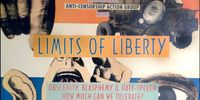
But Liza, together with her programme director Trevor Steele Taylor, didn’t just want us to imagine what freedom could look like. She wanted us to think about whether we were ready for it. What would be allowed, and what forbidden, in a post-apartheid South Africa? This was the intent behind Limits of Liberty, the anti-censorship festival Key and her team put together in 1993, at the Wits Theatre. Astonishingly, Jacobson managed to get exemptions not only for Schrader’s Last Temptation of Christ, but also Pier Paolo Pasolini’s Salò (120 Days of Sodom), and for erotic artists such as Annie Sprinkle, who did on screen as her name suggests, as well as a lobby exhibition of Robert Mapplethorpe’s sexually explicit male nudes, sex toys, and videos showing explicit pornography.
On one day, feminists protesting against pornography converged with Christians protesting against The Last Temptation of Christ and a battalion of the Afrikaner Weerstandsbeweging there to disrupt a screening of the film Die Voortrekkers, a brilliant subversive retelling by Matthew Krouse and his collaborators. The festival even attempted to show the Nazi film Jud Süß, to engender a conversation on whether hate speech was permissible. This was its one failure: complaints from the Jewish Board of Deputies led to a withdrawal of permission to screen the film by the German foundation responsible for it.
Humanity and Tsafendas
After the 1994 elections, funding for the festival dried up and Liza started researching her own film projects. She was preoccupied with travesties of justice, and two stories in particular compelled her to the point of obsession. The first was the imprisonment of Tsafendas, forced to spend 25 years on death row despite having been declared criminally insane: she believed he should have been treated as a political prisoner and released along with everyone else. The second was the freedom of Basson, the head of South Africa’s chemical weapons programme who was acquitted in 2002: she believed he should rot in jail. The Man Who Knew Too Much (2002), about Basson, is the best of her 10 films (some of which were episodes in series), both in the way she allows herself to be its plucky and quirky protagonist and in its lyrical style, a counterpoint to the testimony of horror. But the film that had the most impact – on the world and in her life – was The Furiosis (1998), about Tsafendas.

Together with her friends, the journalist David Beresford and the photographer Ellen Elmendorp, Liza was the first person to interview Tsafendas since the odious journalist-spy Gordon Winter did a cover-up job on him for The Citizen in 1976. Now at Sterkfontein, in a facility for the criminally insane, Tsafendas had been all but forgotten. With Beresford and Elmendorp, Liza brought him back into light through devastating and poignant interviews; she also became deeply committed to him. She was convinced that he was not insane and had only been turned so by his maltreatment in jail, and said as much to the Truth and Reconciliation Commission when she was asked to make a submission about him. “It is important, I believe, to try and understand [Tsafendas] if we are to understand ourselves, our country and our times,” she wrote, after itemising the brutality of his incarceration. Tsafendas might seem to some to be a Frankenstein, “but I would remind you that the power of Mary Shelley’s famous story lay in the sense of humanity which the monster shared with mankind. I would, as a friend of Tsafendas, like to conclude by quoting the following words of Frankenstein’s monster in Mary Shelley’s novel: ‘Am I to be thought the only criminal, when all humankind sinned against me?’”
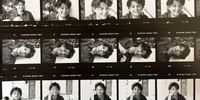
The author Harris Douzemetsis relied heavily on Liza’s research for his biography The Man Who Killed Apartheid. Liza “brought renewed attention to a man who had been largely forgotten and whose humanity had so often been obscured by the circumstances of Verwoerd’s assassination,” Douzemetsis says. “More importantly, she saw Tsafendas not merely as a historical figure for the subject of a film, but as a human being deserving of compassion, friendship and dignity.” She was deeply committed to Tsafendas, and visited him regularly until his death in 1999.
Flair, integrity and high seas drama
Janice Honeyman speaks of how, while “Liza had all her flair and creativity”, “she also had a very strict ethic and integrity about what she was doing. She had a set of rules for herself that might seem like tumbleweed to other people, but this was her way of seeing the world and she stuck to it. She was a brilliant researcher. On the Winnie project, this meant she was determined to be fair, and that it could not be a hagiography.” To the extent that this is the case in the final product, it is largely due to her research and writing.
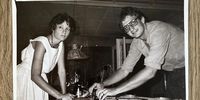
Honeyman and Liza first met in the 1980s, but the romance began in 2001 when, one night at the theatre, Honeyman asked a group of people for somebody’s phone number. “I’ll give it to you,” Liza responded saucily, “but only if you meet for coffee at Café de la Crème tomorrow.” It was a coup de foudre; Liza first moved to Cape Town, and they eventually set up homes in Pringle Bay and in Parkview and travelled the world, often following Honeyman’s work. Their long Cape summers were filled with friends and family; her beloved brother Philip and his brood were down the road. Liza retreated, ultimately, to the comforts of the “Parkview plaas”, and became the diffident Duchess of Tyrone Avenue, much loved along this neighbourhood strip. She spent many of her final years in Pietermaritzburg caring for her mother Marian, who died earlier this year. Honeyman cherished the fullness of life that Liza brought: “Life was fuller than just her work. Sometimes she was so focused on work that you couldn’t talk to her. Other times she just embraced the random way life happened. She loved entertaining, people talking together, stimulating conversation.”
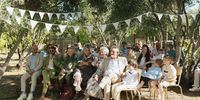
The dinner tables were the constant in her life. Her scriptwriting workshop project Scrawl was “one big dinner party for Liza”, says Harriet Gavshon: from 1998 onwards, for several years, she convened annual workshops at Monkey Valley on Noordhoek Beach in Cape Town, where up-and-coming scriptwriters were paired with experienced tutors from abroad and celebrities such as the actor Alan Rickman, who became a close friend. At Scrawl, the very serious intention was to address the deficit of good writers in South Africa. But to make this happen, people at different stages in their careers were convened around a bountiful table, and brought into conversation with each other.
“Liza was a madcap adventurer who thrived on high seas drama, more pirate than sailor, a dizzying disruptor of anything considered politely appropriate,” says her longtime close friend, the journalist Charlotte Bauer. “She could be the most interesting person in the room, yet she hated drawing attention to herself. She loved entertaining at home, but dreaded being a guest at big social gatherings where she’d often wander off or hide in the kitchen. Her home was her playground; this is where she could create an atmosphere crackling with impending commotion, then melt back into the wings – or go to bed. That was the seductive paradox of Liza Key. I haven’t lost a friend, I’ve lost a sister.”
What Gavshon will miss most about her is that “I could turn up any time of day or night, she’d take me in. Because she had so few boundaries, it allowed you to have no boundaries too.” Jacobson wrote, after Liza’s death, that she was “a warrior who took her work but never herself seriously”. The observation has an astute double edge: she could sit back and laugh at herself, but she was also too self-effacing to put herself forward.
Liza’s close friend, the filmmaker Sylvia Stevens, tells a story about the two of them missing a plane at Stanstead, on their way to Ireland for a film festival, even though they were sitting at the gate with plenty of time to spare. This was because they were engrossed in reading Hello! When they realised, moments too late, that the gate was closed, Liza tried to talk her way onto the plane by complaining that neither of them understood the announcer’s English accent. When that didn’t work, they hunkered down to reading and gossip “until we were joined by a lovely Italian man who had a bottle of wine and delicious sandwiches prepared with his grandmother’s homemade mozzarella. We were having such a fabulous time with him that we almost missed our plane again, 12 hours later.”
Such was life along the way with Liza Key.
Liza Jane Key died in Johannesburg on 11 October 2026, after suffering from brain cancer. She leaves behind her partner Janice Honeyman, her brothers Philip and Gordon Key and their families, and her beloved dogs Scaramouche and Pollicle. DM
Comments
Scroll down to load comments...