


 Former intelligence official Thulani ‘Silence’ Dlomo. (Photo: www.min-on.org)
At the time of writing, Media24, amaBhungane, Daily Maverick and the Campaign for Free Expression were arguing this case in court. This is a developing story that will be updated as new information emerges.
The State Security Agency (SSA) has doubled down on excluding journalists from the remainder of the R12-million criminal trial of former intelligence officials Thulani “Silence” Dlomo and Patrick Mshothola, arguing that evidence could expose intelligence sources, operational methods and classified information.
In a counter-application before the Gauteng Division of the High Court in Pretoria, the agency is seeking an order barring both the public and the media from the proceedings in which evidence is led. It also wants to prohibit the publication of information from hearings held behind closed doors.
The SSA argues that the risks go beyond identifying witnesses, saying testimony by the accused could expose intelligence-gathering techniques, operational infrastructure and cooperation arrangements with foreign intelligence services. It maintains that such disclosures could reveal sensitive information extending beyond the specific charges they face.
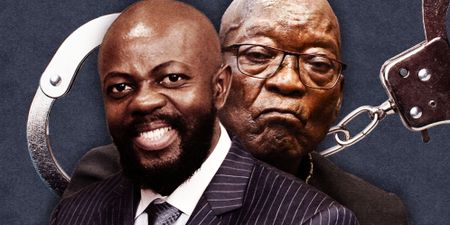
The media organisations challenging the existing restrictions have rejected the agency’s case, arguing in a replying affidavit that its allegations of harm are speculative and that the law does not permit a blanket order closing criminal proceedings to public scrutiny.
The competing positions were set out in papers filed before an urgent hearing on Wednesday, 21 October.
Witness identity protection — ‘not enough’
In an affidavit, SSA Acting Deputy Director-General James Ramabulana says the agency’s concern is that the content and timing of evidence cannot always be anticipated before it is given.
He argues that protecting a witness’s identity through a pseudonym or screening would not prevent the disclosure of intelligence methods or sources during testimony.
“The SSA seeks the total exclusion of not only the members of the public from the court proceedings, it also seeks the exclusion of the media,” Ramabulana said in his affidavit.
The SSA also contends that excluding the public only during particular portions of the trial would not adequately protect information because sensitive details could emerge unexpectedly during examination, cross-examination or evidence led by the accused in their defence.
Explaining his concerns about the potential disclosure of confidential information, classified documents, intelligence-gathering methods and sources, Ramabulana said: “That is what keeps me awake at night.”
Ramabulana also says the agency’s objective is to protect information concerning its sources, methods, techniques and operations, rather than to shield the accused from accountability.
“I have no interest in shielding them from accountability,” he said.
The counter-application seeks to exclude the public and journalists from the remainder of the trial while evidence is led. It proposes that rulings, the judgment, verdict and any sentence remain public, with redactions where necessary to protect information covered by the order.
The SSA is also asking for the record of proceedings held behind closed doors, including transcripts, exhibits and recordings to remain sealed and unavailable except to the parties and their legal representatives, unless the court orders otherwise.
Media groups challenge blanket secrecy
However, the replying affidavit, deposed by attorney Charl du Plessis on behalf of the applicants, says the SSA has failed to provide specific facts demonstrating how disclosure of the evidence would harm national security.
The applicants – Media24, amaBhungane, Daily Maverick and the Campaign for Free Expression – argue that the agency relies on a generalised fear that information could be disclosed, rather than demonstrating the likely harm arising from particular pieces of evidence.
They say the approach conflicts with judgments from the Constitutional Court, Supreme Court of Appeal and high court, which have held that restrictions on open justice must be justified and tailored to the circumstances.
The affidavit relies in particular on the Constitutional Court’s ruling in Independent Newspapers (Pty) Ltd v Minister for Intelligence Services, commonly referred to as the Masetlha case.
In the 2008 judgment, the Constitutional Court held that “the mere fact that documents in a court record carry a classification does not oust the jurisdiction of a court to decide whether they should be protected from disclosure to the media and public”.
The case arose when the State tried to completely seal sensitive documents linked to a controversy involving then president Thabo Mbeki’s controversial firing of the country’s intelligence chief, Billy Masetlha.
The media applicants rely on the judgment to argue that the SSA cannot justify a blanket closure simply by invoking national security. They say the court must assess the potential harm posed by particular evidence and consider whether narrower restrictions would adequately protect sensitive information.
The affidavit also cites other judgments in support of the argument that courts should consider restrictions on a case-by-case basis rather than impose blanket rules.
The applicants further contend that the SSA’s concerns could be addressed through narrower measures, including applications to protect specific evidence, redaction of documents and procedures that would allow the media to respond to requests for secrecy.
They argue that the agency has not adequately explained why such alternatives would be insufficient.
Information already public
The media organisations also argue that substantial information relevant to the trial has already entered the public domain through the Judicial Commission of Inquiry into State Capture (Zondo Commission), the High-Level Review Panel on the SSA and previous media reporting.
According to the replying affidavit, publicly available information includes testimony by two anonymous SSA members concerning a covert operation known as Project Mayibuye, Dlomo’s role in the project and at the agency, and allegations that SSA funds were misappropriated through the project.
The affidavit also points to a News24 report published in December 2025 that described some documents covered by the 14 October order.
The applicants argue that the extent to which information has already been lawfully disclosed is relevant to whether continued protection is justified. They say the court should consider the State Capture Commission report and the High-Level Review Panel report when assessing the issue.
The SSA, however, maintains that information does not necessarily lose its sensitivity simply because some of its contents have been discussed publicly. Its affidavit argues that details that appear innocuous in isolation may, when combined, reveal intelligence methods, sources or operational practices.
The fight over access to the trial
On 14 October, Judge Mashudu Munzhelele of the Gauteng Division of the High Court in Pretoria granted an order restricting public access to specified parts of the trial to protect the identities of current and former SSA operatives, intelligence-gathering methods and classified documents. The order required certain evidence to be heard in camera and the record of proceedings to remain confidential.
The media organisations launched their urgent application after journalists were excluded from proceedings. In their original application, they argued that the order had been implemented as a blanket exclusion of the public and media, even though, in their view, it did not authorise the entire trial to be conducted in camera.
Their application sought to restore open proceedings as the default, with any restrictions on particular evidence justified through specific applications.
The SSA says the 14 October order was lawfully granted and that it does not adequately protect its operational information. It is asking the court to extend the restrictions to cover the media as well as the public for the remainder of the evidence.
The replying affidavit asks the court to dismiss the SSA’s counter-application with costs.
The court’s decision will determine whether journalists can continue attending the trial and whether restrictions on publication will apply to evidence already heard behind closed doors.
The R12-million Project Mayibuye case
Dlomo and Mshothola face allegations relating to the alleged misappropriation of R12-million in SSA funds in 2015 under the guise of Project Mayibuye.
According to the charge sheet, the money was allegedly obtained through three temporary cash advances linked to a purported contract with Kimberley-based Korolo Investment Holdings.
The charge sheet alleges that the contract and related invoices were fraudulent. Korolo had provided private-sector surveillance support, but allegedly had no contract with the SSA and was not listed on its supplier database.
The company’s sole director reportedly told investigators that he had neither signed the agreement nor met Dlomo. He said he had prepared invoices at the request of officials, but that the company had not received payment from the SSA.
The allegations have yet to be tested in court, and both accused are presumed innocent. DM
Comments
Scroll down to load comments...