



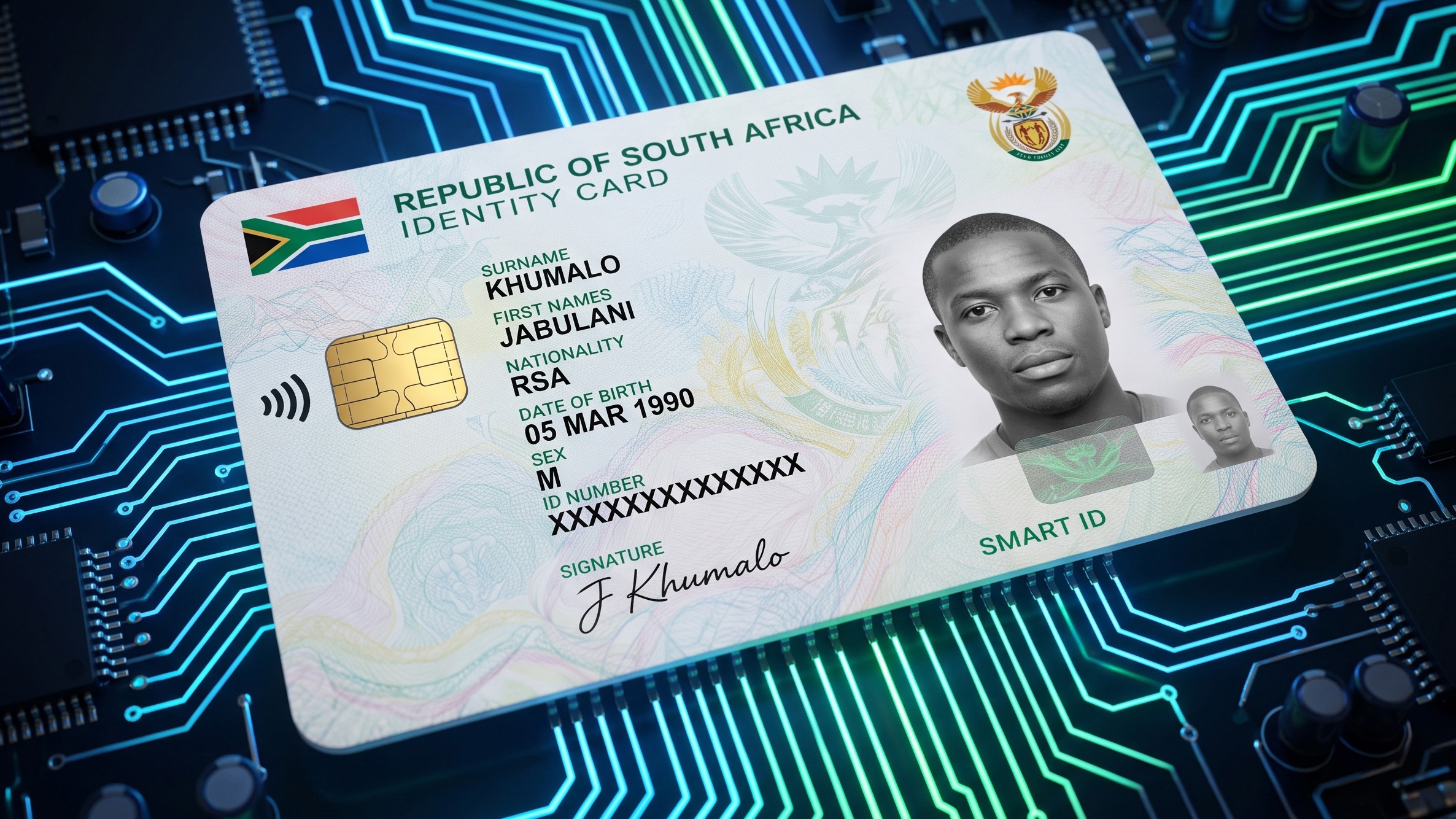
 Illustrative image: (Generated with Google Gemini Flash Image 2.5)
“South Africa is actually building the next evolution of that kind of digital identity system... what we are doing is we are now credentialising your identity in a verifiable format, where at the moment the Estonian solution is card-based ... what we are doing is now made in a purely digital format that’s on your smartphone.”
That was the explanation Lohan Spies, founder of DIDx, gave when Daily Maverick asked his views on the cooperation between Estonia and South Africa in this digital public infrastructure (DPI) journey.

You can trust him because DIDx is, by its own admission in the bio the company’s PR sent over ahead of our meeting in Techno Park, “a technology-based business that builds Africa’s trusted digital identity and payments infrastructure”.
Spies, a cybersecurity veteran who was building with blockchain before it was cool, founded the company in 2019 and established it as the continent’s most experienced builder of decentralised identity infrastructure.
He also shares Communications Minister Solly Malatsi’s sentiment that Estonia is “a reference point for a lot of DPI development that is happening, and there’s nothing wrong with observing best practice and how it can be useful for our context”.
Spies independently confirmed the minister’s claims that what we are building in South Africa is “not just a cut and paste … because the environments are different, and societal digital skills proficiency is also different”.
Someone owes the Estonian ambassador an apology.
Show, don’t tell
South Africa is undergoing a comprehensive digital migration designed to overhaul how civil registration, national security and public service delivery function. It’s anchored by the Department of Home Affairs (DHA) strategy for 2025-2030, with the primary objective of transitioning from an inefficient, paper-heavy legacy system into a digital-first organisation under the banner of “Home Affairs @ home”.
This transformation leverages the DPI infrastructure of a secure digital identity framework, an automated risk engine, data-exchange channels and mobile credentials to grant every South African secure identity authentication from smartphone devices or partner facilities.

According to Home Affairs Minister Leon Schreiber, “digital IDs enable instant, paperless processing for banking, work visas and business registrations through an automated risk engine, eliminating months of administrative delays”.
That DHA Strategic Plan reveals that attracting highly skilled workers and streamlining access to work visas can significantly boost economic output; bringing in 11,000 skilled workers annually adds 1.2% to annual GDP growth, while a 10% increase in tourism (through a digitised travel visa system) adds 0.6% to GDP.
And before we start marching (and marching), a digitally authenticated population register linked to the automated biometric identification system prevents illicit entries, fraudulent citizenship acquisition and internal collusion.
Home Affairs is taking a quantum leap into the future! We’ve unveiled the first-ever working prototype of South African Digital ID. Watch this live demonstration of how it gives you secure digital access to your documentation, enables remote verification, and enhances privacy 🇿🇦 https://t.co/lHLydUaRJj
— Leon Schreiber (@Leon_Schreib) October 1, 2026
When demonstrating the live working prototype using his personal record on the population register, Schreiber emphasised that digital credentials would restore transparency and dignity.
He also confirmed that “on the 31st of March 2028 the Green ID book will officially cease to be recognised as a valid form of identification in terms of section 251B of the Identification Act”.
All the pieces clicking together
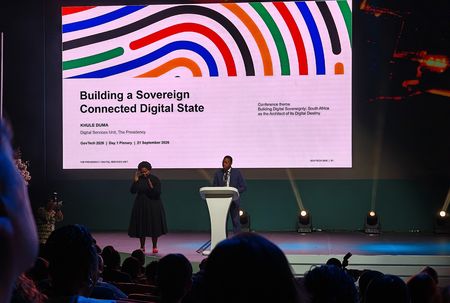
Addressing GovTech on behalf of the Presidency’s Digital Services Unit within Operation Vulindlela, Kule Duma detailed the foundational mechanics of South Africa’s Digital Transformation Roadmap.
“The experience of someone going to a government office is often layered by bureaucracy... They often must borrow money as a first stop, or they must use the very grants that we pay them ... jump on two or three taxis ... get into that long line and at the end they’re told you don’t have the sufficient documentation... We know that we can bring digital services to the tip of people’s fingers.”
He also articulated the central solution: “How should one person experience this one government and one government service ... if I provide government my information once, you shouldn’t have to ask me for that information ... that is the way that we drive it through the data exchange.”

Spies explained the details as best he understands them – DIDx is doing work in an SA Revenue Service skunkworks project, but his experience of these systems bridges the gap.erv
“DHA will be an issuer, and DHA will issue me with my verifiable credential in mDoc format,” he says. “Once I then issue that credential to the holder, which is me, the citizen, that then lives in my mobile device, and on the mobile device we make use of the secure enclave on the device. So we make use of what the OEM manufacturer provides us ... to protect the private keys.”
It’s simple, actually, and Schreiber’s demo, erm … demonstrated it perfectly. “In that demo, the reality is they actually move the data by Bluetooth phone to phone,” Spies points out.
“So there’s no third party involved in that at all ... the security there is literally in proximity. It’s directly Bluetooth phone to phone ... you can be completely offline and I can share my credentials.”
Goodbye, green mamba
The paper-based green ID book lacks modern cryptographic security and embedded biometrics. It is easily forged, altered, or duplicated by criminal syndicates, making it the primary vehicle for identity theft and impersonation.
Green ID books also cannot support automated online authentication, remote Know-Your-Customer checks for banks, or digital wallet credentials required for e-commerce and integrated public services.
The solutions being built like Schreiber’s Home Affairs @ home and the Presidency’s MyMzansi app propose a world where citizens can request, renew or authenticate civic identity products (IDs, birth/marriage certificates, passports) online using facial recognition on a mobile phone or computer, with physical cards delivered directly to their doorstep.

By transferring routine transactions to digital self-service channels, we no longer lose full working days or pay transport costs standing in the queue at Home Affairs offices.
And all that is built on the foundation of a digital ID that anchors the experience with state platforms, including tax compliance with the SA Revenue Service, social grant distribution through Sassa, healthcare records and digital payment systems.
And the future is being built by South Africans. DM
Comments
Scroll down to load comments...