




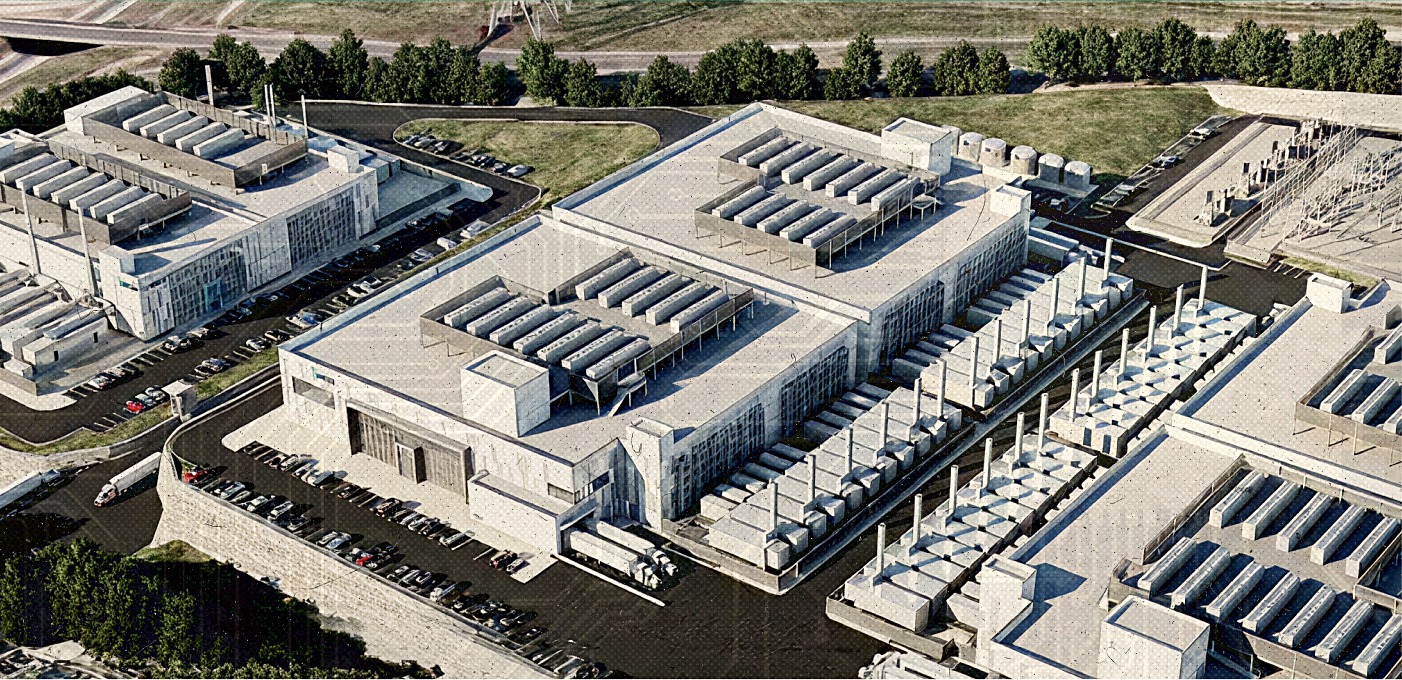
 Several data centre operators, including the Vantage group, are planning expansion or new centres across South Africa. (Image: Vantage website)
Cape Town’s mayor must make a crucial decision within the next 90 days: whether to give final approval to a US tech giant’s data centre that would claim as much grid power as 250,000 households – and that’s before we know how much water it will use, what it will emit, or how many jobs it will really create.
Geordin Hill-Lewis, as the City’s planning appeals authority, must uphold or dismiss Foxglove’s appeal against the Municipal Planning Tribunal’s decision to grant land use rights for Equinix’s proposed hyperscale data centres at King Air Industria.
The appeal goes before the city’s Planning Appeals Advisory Panel on Monday, 12 October; thereafter, the mayor has 90 days to make his decision. While the by-laws give him until January, we’ve asked the mayor to commit to deciding before South Africans elect their local governments on 4 November. It is the first time a South African municipality has had to decide an appeal of this kind, for such a large data centre application.
Grant the rights, and he secures Equinix while signalling to other Big Tech investors that Cape Town is open to the unconstrained hyperscale developments that communities in Australia, the US and much of Europe are increasingly rejecting.
Dismiss the approval and uphold Foxglove’s appeal, and he will be told he risks alienating Equinix and undermining the City’s investor-focused “open for business” mantra – or, as some inside the City describe it, its “development at all costs” ethos.
That is a false choice. Upholding our appeal is not a vote against development. It is a statement that development must put the people of Cape Town ahead of Big Tech – and that big projects should be assessed on the (also big) details before ground is broken.
A facility like this is a permanent claim on land, electricity and water, in a city where Day Zero and loadshedding have not been forgotten. What the mayor gains in upholding our appeal is residents’ confidence that the City recognises common sense and that having the full picture is the minimum a planning authority should demand before giving the thumbs-up.
/file/attachments/orphans/Lunga-Ekurhuleni-DA5_702048.jpg "DA Leader Geordin Hill-Lewis at the Democratic Alliance 2026 Manifesto Launch at Mary Fitzgerald Square on August 07, 2026 in Johannesburg, South Africa. The 2026 South African municipal elections will be held on 4 November 2026 across South Africa, to elect councils for all district, metropolitan and local municipalities in each of the country's nine provinces. (Photo: Gallo Images / Fani Mahuntsi)")
A material concern
For the residents of KTC, Bishop Lavis, Gugulethu, Barcelona informal settlement and Cape Town at large, the “data centre issue” is not an imported moral panic, as our detractors suggest. It is a material concern about what authorities choose to prioritise. It is about transparent decision-making and genuine community engagement. It is about the unsubstantiated promise of jobs. It is about housing backlogs, single taps serving whole areas and electricity that residents can’t afford being placed behind the needs of “investment” – and about a deal over scarce resources being struck without the numbers on the table.
Consider what the Municipal Planning Tribunal approved, by four votes to one: land rights for a facility of up to 174MVA – enough electricity, if run continuously, to match the annual use of a quarter of a million average Cape Town households – roughly one in six households in the city, by one Stellenbosch engineer’s estimate – without water consumption or grid-draw figures, without detail on diesel generators, emissions or noise, and without building plans. The dissenting member, the tribunal’s own lead urban planner, said as much at the hearing.
Then there is the secrecy and obfuscation. At every stage, what should have been an open, accessible process has been undercut by an unjustified lack of transparency.
Equinix’s response to our objection only reached Foxglove through an access to information request, days before that hearing. And more peculiarly, since Foxglove’s appeal, Equinix – describing itself as the “largest global data centre and colocation provider” – insists it has no plans to actually build the items set out in its planning application.
The City has since confirmed it has approved five data centres with two more under assessment, but will not say who is behind them or how much power they will draw. And in May, the mayor himself authorised the land swap that underpins the project’s electricity arrangements. He will now sit in judgment on an appeal against the very project he helped to enable.
Cape Town is not the only city in South Africa receiving hyperscale data centre interest, but it is the only city where the Democratic Alliance appears unquestioningly supportive of these proposals.
In eThekwini, DA councillors abstained from voting on a proposed 400MW AI data centre until there was “full transparency … and proper public consultation”. In Nelson Mandela Bay, DA councillors asked how much water a proposed 556MW campus at Coega would need: “We can buy electricity, but we can’t buy more water.” These are precisely the grounds on which Foxglove objected to the Equinix application in Cape Town. The DA’s answer should not depend on where it governs.
South Africa has a unique opportunity to show leadership in how hyperscale digital infrastructure is built. We have a chance to learn from the many places around the world grappling with the same questions.
If data centres are to be built here, there are steps we can take now to ensure that people and the planet come first and that real value stays on South African shores, rather than letting Big Tech walk away with the profits while the public shoulders the costs. We hope is that the mayor of Cape Town and leader of the DA, takes that opportunity. DM
Daniel Hartford is the South Africa lead at Foxglove, an independent non-profit organisation that fights to make tech fair for everyone.
Comments
Scroll down to load comments...