




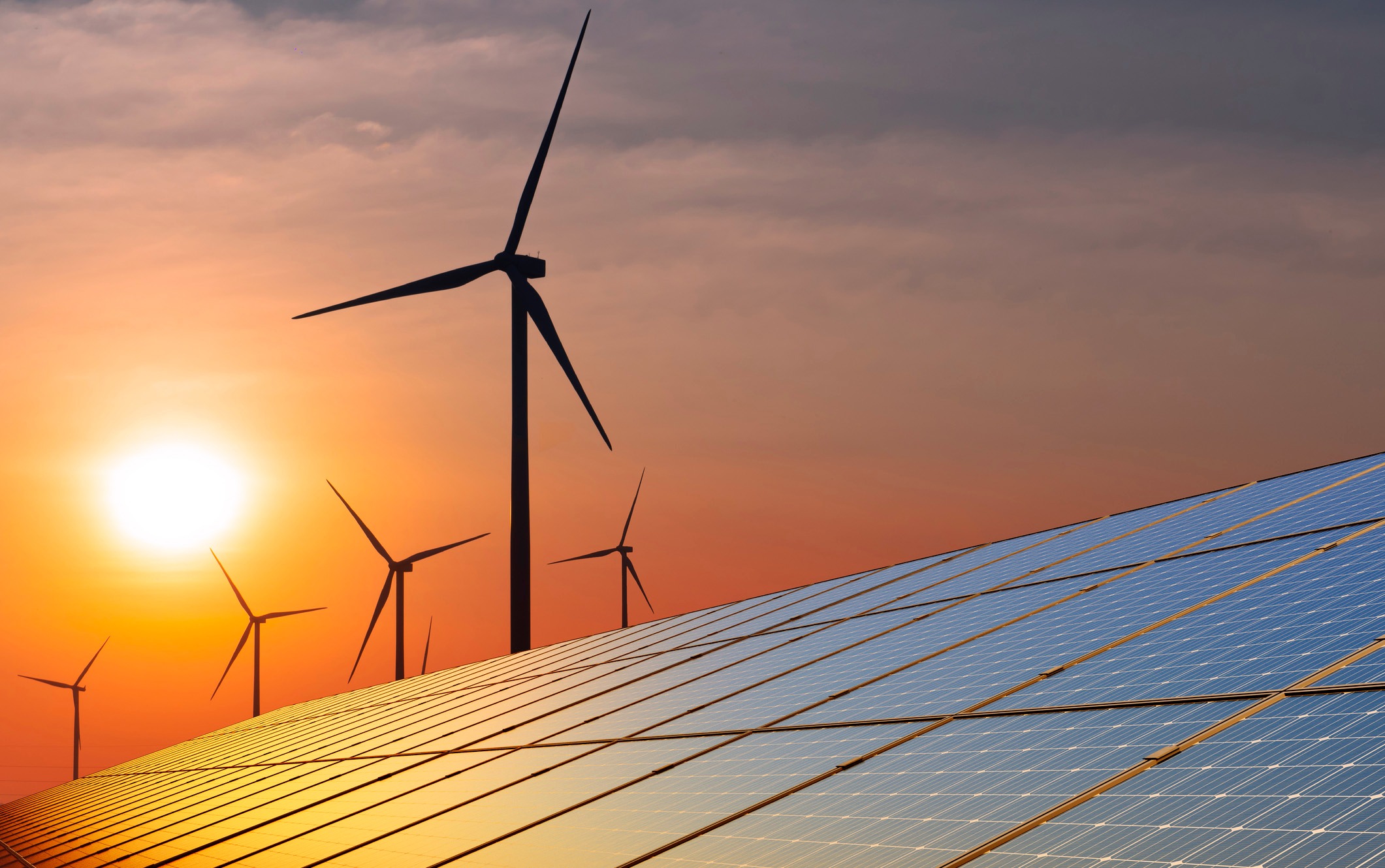
 Far too few countries on our continent have seized the opportunity to leverage the growth in renewable energy demand to develop a robust renewables manufacturing sector that has the potential to create decent work. (Photo: iStock)
Far too few countries on our continent have seized the opportunity to leverage the growth in renewable energy demand to develop a robust renewables manufacturing sector that has the potential to create decent work.
A series of research reports published by the Institute for Economic Justice and partners, in a four-year, three-country study, show that in countries such as South Africa, Kenya and Ghana, unstable demand coupled with limited localisation enforcement have hampered the potential of these sectors. They also reveal deficits in decent work creation, while gender biases persist, care burdens limit entry, and women remain marginalised.
One of the biggest obstacles is the nature of demand itself. Public procurement has played a central role in stimulating the renewable energy sector in the three countries through the Renewable Energy Independent Power Producer Procurement Programme in South Africa, the Energy Act of 2019 in Kenya and Ghana’s 2021 National Energy Policy as well as the Renewable Energy Act of 2011, as amended in 2020. These programmes, policies and legislation have led to substantial growth in capacity, reaching more than 7GW in South Africa, 5.3GW in Ghana and 2.6GW in Kenya.
However, intermittent procurement cycles have created uncertainty for investment, expansion and worker retention. An industry that relies on irregular procurement cycles struggles to provide the certainty required for long-term industrial investment.
Localisation appears to be crowded out by imports of renewable energy technologies, which increased substantially across all three countries. Established manufacturing hubs, particularly China, benefit from mature value chains, large-scale production, technological capabilities and extensive supplier networks. In China, these firms have been supported by robust industrial policies that allow firms to produce at scale and at competitive prices.
The absence of this in South Africa means local manufacturers face higher production costs and intense competition. In Ghana and Kenya, which have nascent renewable energy assembly sectors, these sectors have struggled to develop a strong manufacturing base.
Local content policies that require a proportion of certain designated products to be sourced from local producers can play a central role in boosting demand for local renewable energy manufacturing products. However, these have suffered from implementation challenges across all three countries. In all three countries, weaknesses in the monitoring and enforcement frameworks, capacities and capabilities, and legislative gaps converge to make these policies ineffective at boosting demand for locally produced products.
The apparent price advantage of imported products can also be amplified through tariff misclassification. For instance, “staged consignment” in South Africa leads to large equipment being imported as components using component tariffs that attract lower duties. Staged consignment loopholes have been used to circumvent local content requirements and other regulatory measures.
Ghana has not yet developed a significant domestic manufacturing base for solar PV technologies, although local assembly is beginning to emerge. Firm interview evidence suggests, however, a mismatch in the incentive structure for this segment. Finished PV products can benefit from import duty exemptions, but some inputs and components used for local assembly do not receive such comparable treatment.
Therefore, tariff misclassification in South Africa and the mismatch in the incentive structure in Ghana undermine both countries’ localisation objectives and weaken efforts to build domestic manufacturing capacity. Although steps are being taken by South Africa’s policymakers to correct these through the influence of business associations and labour organisations, in Ghana a lot more needs to be done in this area. Other constraints include weak testing and standards capabilities, which reduce domestic competitiveness and contribute to a preference for imported products.
Employment outcomes across the renewable energy production network reveal the limitations of current localisation efforts. While the sector has created jobs, many of these are concentrated in downstream activities (non-manufacturing activities like construction) and are often precarious in nature across all three countries. In South Africa’s renewable energy manufacturing sector particularly, facing unabated competitive pressures and weak domestic demand, firms employ a range of strategies to keep afloat or face closure. The result is that employment is frequently characterised by short-term contracts lasting up to three months, limited job security and inadequate social protection.
In Ghana, employment is similarly concentrated in downstream activities, particularly installation and after-sales services. Firms often maintain a relatively small core of permanent technical and managerial staff while relying on short-term labour for installation and on-site work as projects arise. Interview evidence suggests that this pattern is shaped not only by Ghana’s limited participation in higher-value segments of the renewable energy production network, but also by the irregular and uncertain pipeline of projects, which makes long-term workforce retention difficult. In some cases, skills gaps and uneven enforcement of labour standards further affect the quality and progression pathways associated with these jobs.
Gendered job segregation
The challenge of inclusion is equally important. Women remain underrepresented across renewable energy production networks, and gendered job segregation is rife in all three countries. The research shows that women’s roles tend to be in sales, administration and assembly lines, while they are hardly to be found in the technical jobs that tend to earn more income. Sexist sociocultural norms at the workplace, mixed with women’s unpaid labour burdens in the household, limit their progression in the sector.
In Kenya, a woman could hold the same technical qualifications as her male colleague and still get steered into sales or administration roles. Renewable energy workers engaged in Kenya reported that customers questioned a woman’s ability to carry out solar installations, and some spouses discouraged women from going into the field due to cultural perceptions that portray the installation of solar panels or working on wind turbines as a “man’s job”.
Additionally, unpaid labour adds another barrier whereby caring for children and the elderly or performing household duties limits women’s ability to travel to remote project sites, work irregular hours or attend training, thus narrowing their opportunities to get into and progress in technical roles.
Ultimately, the success of the renewable energy sector in contributing to industrial development and decent work creation rests on the implementation of robust industrial policies. These include the effective enforcement of local content measures, strategic trade policies, strengthening testing and standards agencies or bodies in alignment with renewable energy localisation, industrial financing and technological transfer and development.
To ensure that the jobs created are decent, there ought to be a quid pro quo between industrial incentives and support and decent work commitments. Crucially, these policies need to be gender-forward so that the benefits of transformation are across the demographic spectrum. DM
The research underpinning this article will be discussed at Making Africa’s Energy Transition Work: Local Manufacturing, Decent Work, and Sustainable Livelihoods conference in Johannesburg on 8 and 9 October 2026. The conference will bring together researchers, organised labour, manufacturers, policymakers and civil society from South Africa, Ghana and Kenya. Register here to join the plenary sessions online.
Seutame Maimele and Basani Baloyi are from the Institute for Economic Justice (IEJ) in South Africa, Charles Ofori is from the Africa Centre for Energy Policy (ACEP) in Ghana and Joan Atenga is from the African Centre for Technology Studies (ACTS) in Kenya. They collaborate on Advancing a Just Energy Transition: Localisation, Decent Work, and Sustainable Livelihoods, a research project examining how renewable energy can support local manufacturing, decent work, gender equity and sustainable livelihoods across the three countries.
Comments
Scroll down to load comments...