



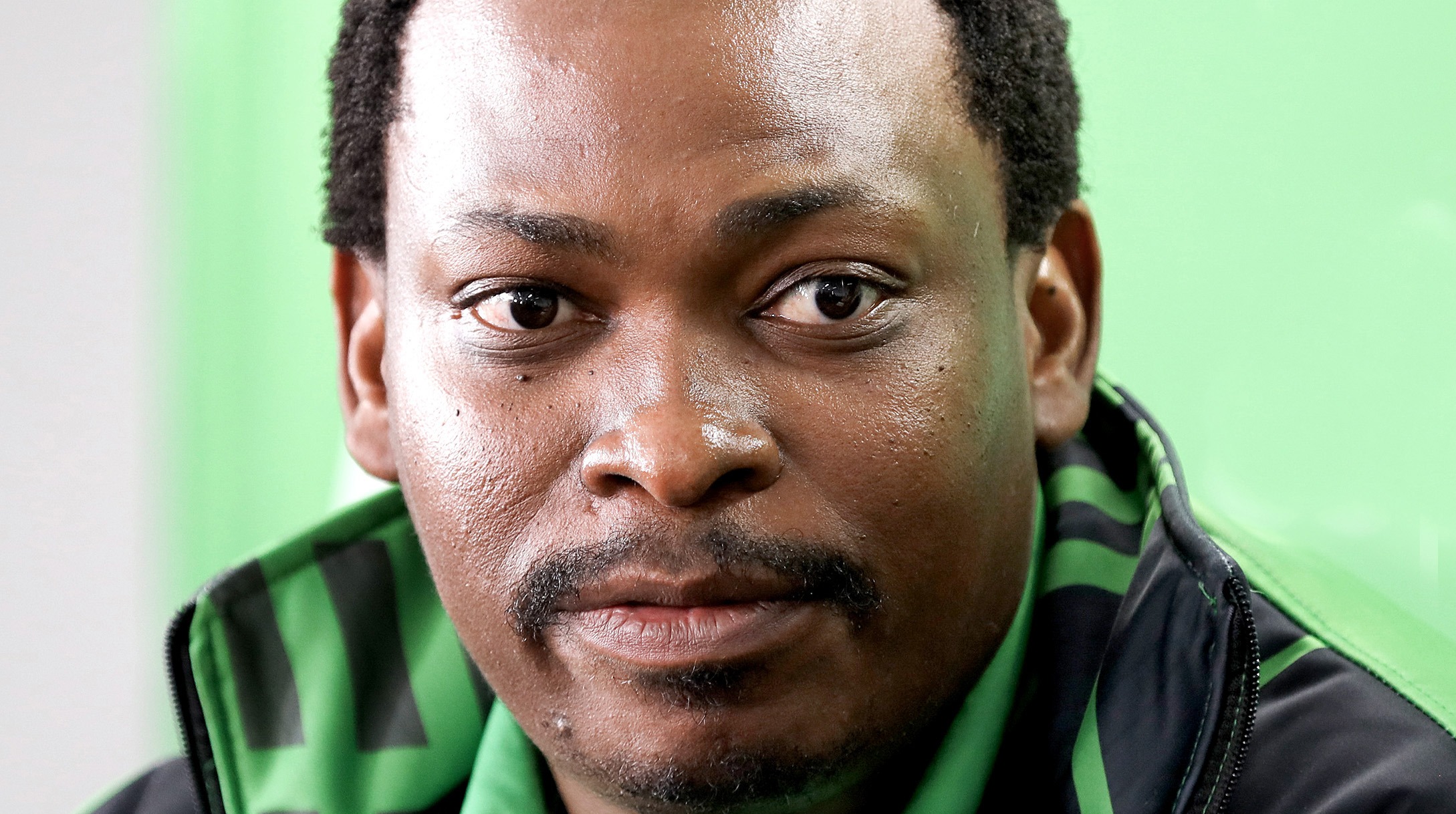
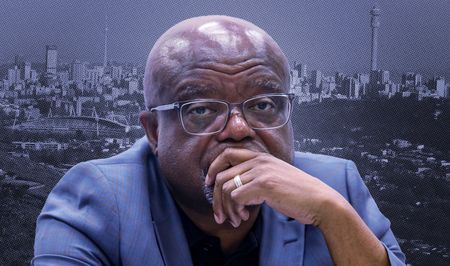
 Bongani Baloyi, MK’s mayoral candidate for Johannesburg, believes his party can win the City outright in the upcoming local elections. (Photo: Luba Lesolle / Gallo Images)
/file/attachments/orphans/Election2026LogoInarticle_260133.jpg "LGE-2026-logo-signpost")
Could a strong showing by the uMkhonto Wesizwe (MK) party hand Johannesburg to an ANC-EFF coalition?
Bongani Baloyi is keeping tight-lipped, while he bets his party can defy the polls and emerge as the biggest political force in South Africa’s economic hub.
The former Midvaal mayor, now MK's mayoral candidate for Joburg, is confident enough to campaign without making assumptions about a coalition ahead of the 4 November municipal elections.
Instead, Baloyi wants voters to believe the party can win an outright majority, even as recent polling paints a very different picture.
The MK party is contesting municipal elections for the first time, making Johannesburg a major test of whether the breakthrough it achieved in the 2024 national elections can be translated into local government power.
/file/attachments/orphans/Lunga-BonganiBaloyi-MKPMAIN_759022.jpg "Bongani Baloyi, uMkhonto weSizwe (MK) Party mayoral candidate for the City of Johannesburg ahead of the 2026 local government elections.
<br> (Photo:
<br>MK Party / X)")
Baloyi told Daily Maverick the MK party was focusing its campaign on townships and informal settlements, including Soweto, Orange Farm, Diepsloot, Alexandra and Ivory Park, as well as the inner city.
“We do not want to prioritise the suburban areas only. Our campaign has been warmly received across Johannesburg. It’s been very surprising,” said Baloyi.
He noted that momentum is particularly strong in those informal settlements and townships. “We really came into the space, and we are eroding the base of IFP and of the ANC,” he said. “The general feeling we get on the trail is a palpable sense of anger from our communities.”
He attributes that anger to failing basic services and ANC leaders becoming “aloof and patronising” towards residents.
“One thing people don’t appreciate about our strength is that we are the ones who eat into the ANC’s base. So if the ANC goes down with whatever percentage, it’s going to be a direct consequence or attributed to uMkhonto Wesizwe’s growth,” said Baloyi.
He said the party was stronger than polling suggested. “We might not have the financial muscle, but we have the human resources, and we’re campaigning across all 15 wards every single day,” he said.
Polls tell a different story
However, MK’s confidence does not align with the polls.
A July poll by the Social Research Foundation, conducted by Victory Research, showed the DA leading in Johannesburg with 42% support, followed by the ANC (18%), MK (13%), ActionSA (10%) and the EFF (8%). The Johannesburg sample comprised 504 registered voters and had a margin of error of 4.4 percentage points.
The poll showed MK’s support had risen from 8% in March to 13% in July, while ANC support fell from 30% to 18%.
A September Ipsos survey presented a different picture, placing the ANC ahead of the DA in Johannesburg, with ActionSA also recording double-digit support.
The latest News24/Sabi poll put the DA ahead in Johannesburg, with 29.2% support, followed by the ANC (22.6%), MK (12%) and ActionSA (7%). In the mayoral race, DA candidate Helen Zille led the field with 36% support, followed by the ANC candidate at 27% and ActionSA leader Herman Mashaba at 13%. No party was on course for an outright majority.
/file/attachments/orphans/Screenshot-2026-08-30-172805_629324.jpg "Helen Zille touring Lilian Ngoyi road. (Photo: Facebook / DA Gauteng)")
The polling places MK well behind the DA and ANC in Johannesburg, despite Baloyi’s insistence that the party can emerge as the city’s biggest political force.
But he believes MK’s performance in the 2024 national elections is reason for voters to take the prediction seriously.
In KwaZulu-Natal, MK won 45.93% of the national ballot in 2024, finishing ahead of the ANC’s 17.62% and becoming the province’s biggest party on that ballot.
Coalition question remains unanswered
While Joburg has already experienced the instability of coalition governments, the current polling suggests another hung council is possible.
The July Common Sense/Social Research Foundation poll produced numbers that could support several coalition combinations, including an ANC-EFF-MK arrangement or a DA-led government involving other parties.
Baloyi ruled out working with both the DA and the Freedom Front Plus, citing those parties’ fundamental policy differences with MK.
When pressed on whether MK’s strategy could hand Johannesburg to an ANC-EFF alliance, Baloyi was reluctant to commit.
/file/attachments/orphans/Lunga-BonganiBaloyi-MKP4_501370.jpg "EFF members during the Economic Freedom Fighters (EFF) 13th Anniversary Rally and 2026 Manifesto Launch at Thohoyandou Stadium on July 25, 2026 in Thohoyandou, South Africa. The Economic Freedom Fighters (EFF) celebrate the party's 13th anniversary and launch its 2026 manifesto, with party president Julius Malema addressing supporters during the event. (Photo: Gallo Images / Philip Maeta)")
He insisted that the party would have to “apply its mind” to the election results before deciding which partners it could align with, adding that the party did not want to send voters the message that it was already preparing for a coalition. Its focus was on securing a majority.
While voters now view coalition rule as inevitable, Baloyi argued that MK intends to shatter that expectation by aiming for an outright majority.
When pressed on whether MK might back a rival party’s mayoral candidate in exchange for executive influence, he remained noncommittal. “You must wait and see,” he said, quipping that asking him to predict the future was like asking him to act “like a sangoma”. He urged residents to give MK a chance and told voters to “brace themselves for a surprise” in Johannesburg.
MK, he said, had become a political force that cannot be ignored.
Can MK actually govern Joburg?
Winning votes is one challenge; governing Johannesburg is another. This will be MK’s first municipal election, and the party has never governed a metro.
Baloyi’s experience as Midvaal mayor gives him a local-government track record, but Johannesburg is a vastly more complex municipality.
However, Baloyi believes, “Voters have a simple choice. They can go for what they know and get the same chaos, the same revolving door.” Or they can vote for a party “anchored by a person who’s led a local municipality before”.
He accused established parties of allowing the metro to decay through questionable appointments, flawed planning and wasteful expenditure.
/file/dailymaverick/wp-content/uploads/2025/03/ED_435862.jpg "Bheki/ Johannesburg / Potholes")
He argued that voters should not cast their ballots for parties that would only win a small share of the vote. “They must not waste their vote on a party that will take 2% or 3%; they must be strategic,” he said. “What you want is a vehicle that will remove the ANC out of political power, and that is able to generate mobilisation and support in the City of Johannesburg.”
He said that despite political differences, parties should find areas of consensus and work together where necessary:
“Inasmuch as they will disagree with us, we must disagree with each other, but find a consensus on areas where we can work together.”
From Midvaal to MK
In 2013, 26-year-old Baloyi became South Africa’s youngest mayor when he took office in Midvaal. He governed the municipality under the DA banner for eight years before cutting ties with the party in 2021.
He was also credited with overseeing seven consecutive clean audits during his tenure as Midvaal mayor, maintaining a run of unqualified audit opinions from the Auditor-General from 2013 to 2021. He subsequently joined ActionSA, then left the party and formed Xiluva before the party was integrated into MK.
/file/dailymaverick/wp-content/uploads/Ayanda-YLprofileBongani-option-2.jpg "Close up with Midvaal mayor Bongani Baloyi")
Baloyi, however, denies being a political opportunist. Describing his journey through different parties as an evolution, he argues that South Africa’s political establishment has failed to improve the lives of ordinary citizens.
Since leaving the DA, Baloyi said, his stint with MK was the longest he had remained in a political party. “I have found a home,” he said.
He described his political work as a calling to serve.
Questions over MK’s stability
The MK party has experienced leadership changes and internal disputes, particularly at the national level.
Baloyi dismissed concerns that those tensions would spill over into the running of Johannesburg, arguing that below the national leadership level, the organisation was stable.
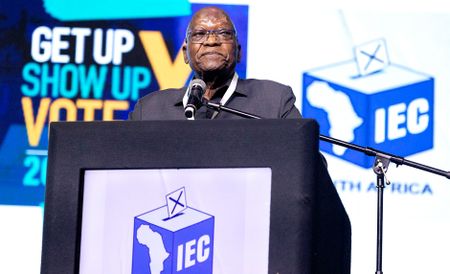
He defended party president Jacob Zuma’s decisions to remove or reshuffle leadership, saying Zuma had his reasons and that such changes were intended to benefit the party.
/file/attachments/orphans/Lunga-BonganiBaloyi-MKP2_457394.jpg "Former President and leader of MK Party Jacob Zuma briefs the media on the outcomes of the National Officials meeting at CedarWoods of Sandton on June 18, 2026 in Johannesburg, South Africa. The briefing also addressed recent developments within the party. (Photo: Gallo Images / Luba Lesolle)")
Baloyi also insisted that MK did not tolerate incompetence or behaviour that brought the organisation into disrepute.
He pointed to the recent controversy involving Johannesburg Mayor Dada Morero, who during a City Power engagement in Tshepisong over persistent electricity problems was accused by a resident of being a criminal. Morero snapped back: “O buwa masepa [You’re talking shit].” He later apologised.
Baloyi said that if an MK member behaved similarly towards a resident, the party would call that person to account and possibly recall the member.
Fixing Joburg starts with the finances
Baloyi’s pitch to Johannesburg voters is built around stabilising the City’s finances, restoring basic services and restructuring the municipality. He said financial stabilisation would be his priority.
The City would need to establish its true financial position, develop a credible adjustment budget and put essential service delivery at the centre of its administration.
He has also argued publicly for a different approach to municipal debt, including distinguishing between households that can afford to pay and those under financial pressure.
He said an MK administration would collapse municipal entities including City Power, Joburg Water and the Johannesburg Development Agency back into ordinary city departments. “We need to streamline our services,” he said.
Baloyi’s economic pitch is focused on moving investment and opportunity closer to township residents.
He envisions townships having greater energy independence through rooftop solar, while pushing to decentralise economic development so that growth moves beyond municipal plans and reaches individual households.
Baloyi said the City could use its procurement and economic value chains to create manufacturing opportunities within communities rather than buying goods and services from elsewhere.
What voters are telling him
Baloyi said residents were frustrated by failing infrastructure and leadership disconnected from their daily struggles.
/file/attachments/orphans/Lunga-BonganiBaloyi-MKP3_286592.jpg "Bongani Baloyi, uMkhonto weSizwe (MK) Party mayoral candidate for the City of Johannesburg ahead of the 2026 local government elections.
<br> (Photo:
<br>MK Party / X)")
MK Party / X)
The complaints include potholes, leaking water infrastructure, unreliable electricity, crime, drug abuse, high rates and municipal accounts, and the deterioration of the inner city.
He said residents wanted a city that worked for both wealthy and poorer communities, arguing there should be no choice between maintaining services in Sandton and improving infrastructure in Diepsloot or Soweto.
“Any sensible political party will deliver for both. You’ll maintain services in Sandton and you’ll deliver transformational infrastructure in townships.”
The gamble
Asking Johannesburg voters to give MK a chance, Baloyi insists the party is focused on securing enough support to implement a new vision for the city, one that responds directly to the problems residents have identified.
“We are focused,” he said, “on getting support back. We are focused on implementing a new vision for the city.” DM
Comments
Scroll down to load comments...