




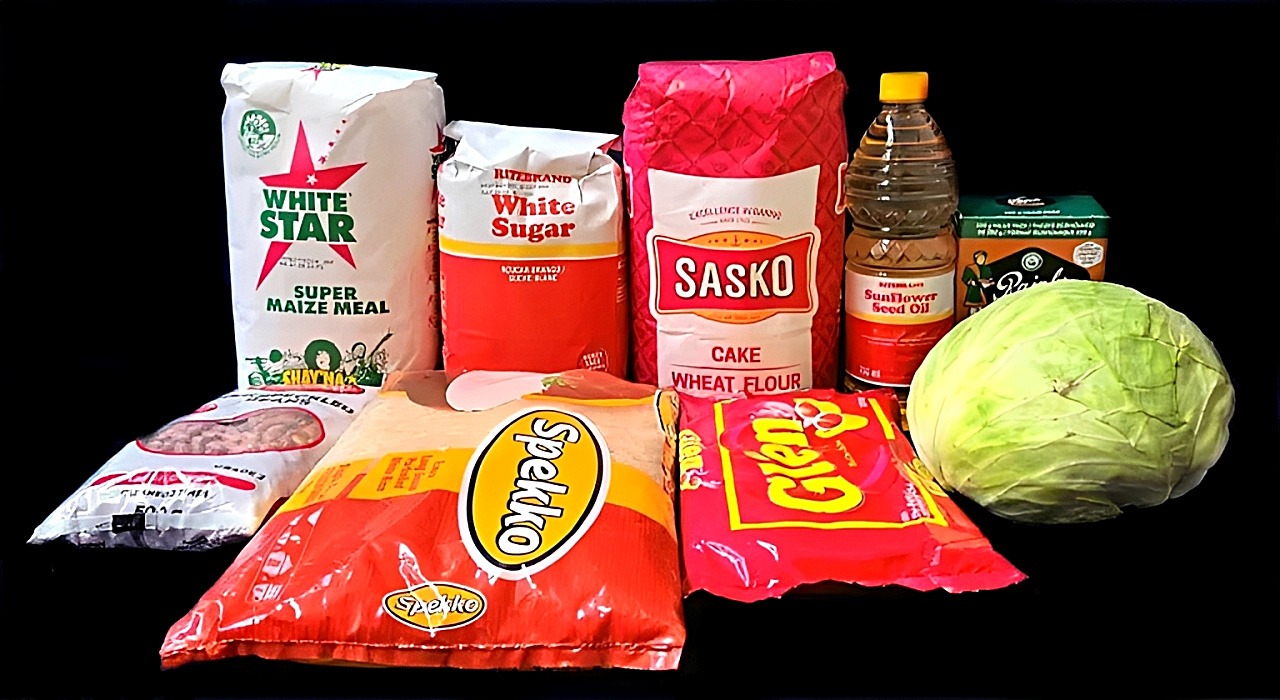
 In September, Maverick Citizen’s food basket decreased by R17, but remains R18.86 more expensive than the Social Relief of Distress grant.
(Photo: Naledi Sikhakhane)
In September, Maverick Citizen’s food basket decreased by R17, but remains R18.86 more expensive than the Social Relief of Distress grant.
(Photo: Naledi Sikhakhane)Although purchasing value brands of basic food items can save consumers money, it does not guarantee the affordability of a basic food basket for South Africa’s most vulnerable.
Maverick Citizen has been tracking the prices of 14 basic food items that can be bought with the R370 SRD grant. Between August and September, Maverick Citizen’s food basket decreased by R17 from R405.86 to R388.86.
Most items did not change in price, with the exception of rice, sugar beans and white sugar. Rice increased by R5, while sugar beans decreased by R2. White sugar decreased by R20, from R69.99 to R49.99.
/file/attachments/orphans/Iman-September-foodbasket2_153021.jpg)
Maverick Citizen tracks the cheapest brand available in-store of each food item near the end of each month. When tracking the price of white sugar near the end of August, the cheapest brands available in stock, in-store were 1kg Huletts and 1kg Selati, both priced at R34,99. Hence if a consumer were to buy 2kg white sugar, it would cost about R69.99.
But when tracking September’s food basket in-store, a cheaper white sugar alternative was available. In late September, 2kg Sugarfields was priced at R49.99, while if a consumer were to buy 2kg of Huletts or Selati it would again cost R69.99 – a R20 difference.
Industry price comparisons put the branded premiums of Huletts and Selati at roughly 15-35% over value and house brands like Sugarfields, according to senior agricultural economist at FNB Commercial, Paul Makube.
This R20 difference could be explained by pack-size economics, value-brand cost model and brand equity and marketing, Makube said.
A 1kg bag uses roughly 2.5 times the packaging, handling and shelf space per kilogram of a large pack. Nationally this alone was worth about R7.47/kg or roughly R15 of the R20 gap, Makube said. He added that Sugarfields competed on price alone with minimal advertising, plain packaging, single large format, and volume sold through one retail channel. Meanwhile Huletts and Selati carried national advertising, sales teams and listing fees adding to their price.
“All Grade 1 white sugar sold in South Africa is refined to the same SASA/NRCS specification. The sucrose in the bag is not what differs – the route to the shelf is,” said Makube.
But despite saving R20 on sugar, the cost of basic food items tracked cannot be covered by the SRD grant. The food basket remains R18.86 more expensive than the R370 SRD grant value. While the grant remains at least R498 below the national poverty lines – an issue civil society is calling SA to explore.
Reassessing the grants
The government is developing a new National Food and Nutrition Security Plan 2025-2033 to ensure that all South Africans have access to safe, nutritious and healthy food. From September, nationwide provincial and district consultations on the plan are taking place.
In preparation for the consultations, the Union Against Hunger and the Just Transition in the Food System Network with support from the Institute for Economic Justice and the DSTI-NRF Centre of Excellence in Food Security, convened around 70 civil society organisations, grassroots groups, academics and provincial delegations for two days in August. The purpose was to build a shared understanding of the draft plan and agree on a common set of priorities and a coordinated approach to the consultations.
According to Union Against Hunger chairperson Busiso Moyo, the group agreed on six main priorities that the new plan should focus on, the most important being calling for food affordability, land reform and maternal and child nutrition support.
Union Against Hunger was calling for the National Food and Nutrition Security Plan to explore an increase in social grants, including the SRD grant as one of the measures to address maternal and child nutrition support, Moyo said.
The Union Against Hunger believed that the value of social grants needed to be reassessed against the national poverty lines and people’s realities of what it cost to afford a food basket, said Moyo.
The Pietermaritzburg Economic Justice and Dignity Group’s household affordability index for the month of September reports that the average cost of the Household Food Basket for a family of seven (which is the average size of a low-income family in SA) is R5,488.06.
The Household Food Basket is not nutritionally complete, but is rather a basket of food items which women in low-income families try to secure each month for their families considering affordability constraints. According to the report, to feed a family of seven a basic nutritious diet for the month of September would cost R6,655.29.
And to feed a child a nutritious diet would cost an average of R970.27, which is about 40% above the R580 Child Support Grant.
Although there was a wide range of grants for people across their lifespans like the Child Support Grant and Old Age Grant, the grants were inadequate to address nutrition, Moyo said. DM
Comments
Scroll down to load comments...