




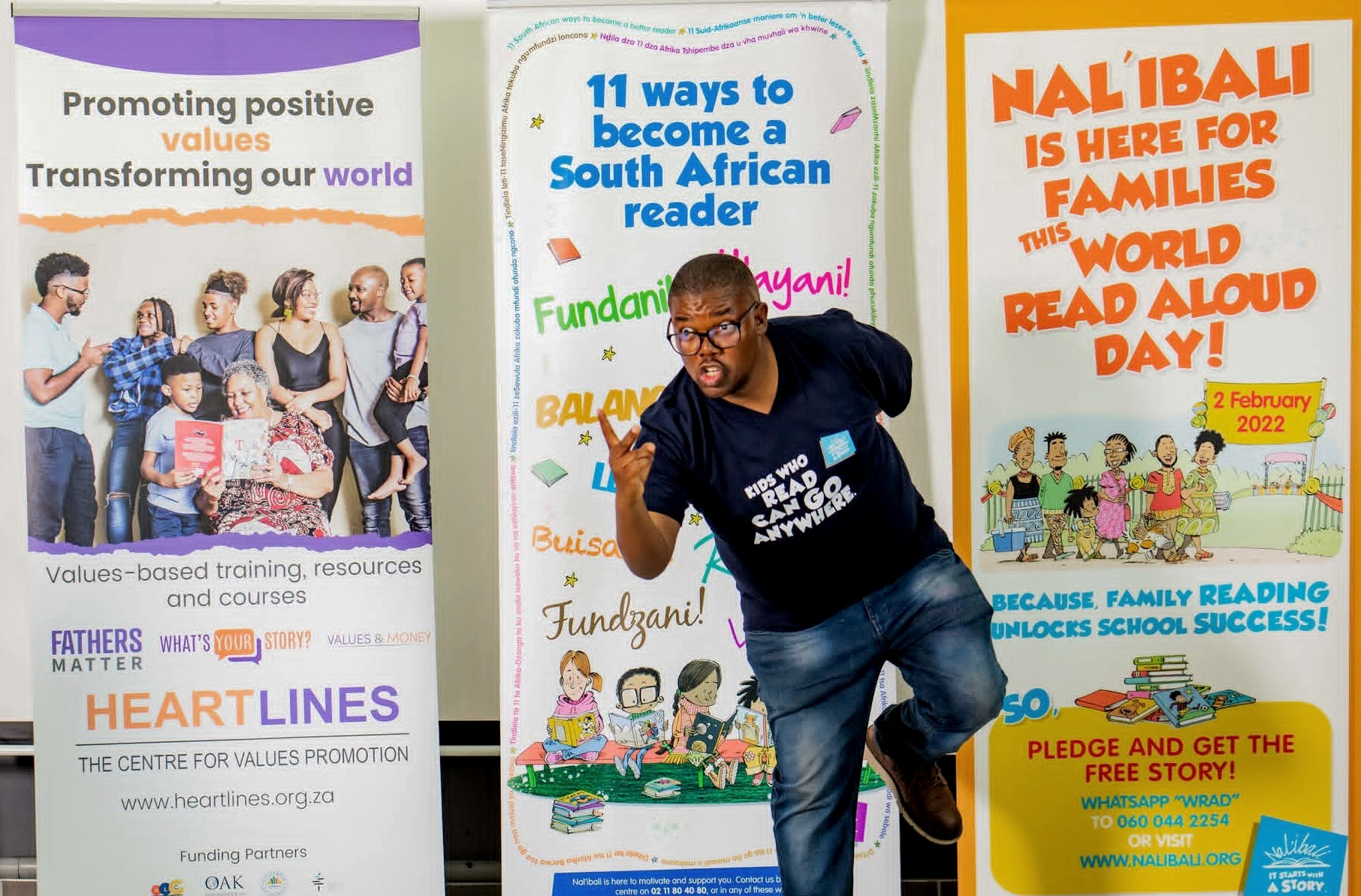
 Madoda Ndlakuse, author and community development coordinator for Nal’ibali in the Eastern Cape, helped found the organisation’s Men’s Literacy Imbizo in Kariega, Eastern Cape, in 2022. His aim is to encourage men to see themselves not only as present parents but also as important participants in their children’s literacy journeys. (Photo: Supplied / Madoda Ndlakuse)
The Nal’ibali Men’s Literacy Imbizo has one overarching goal: provide men with the skills and tools to build a culture of reading for enjoyment in their communities. The programme is breaking down preconceived ideas about the roles of fathers in their children’s education, one workshop at a time.
Madoda Ndlakuse, an author and community development coordinator for the national literacy organisation Nal’ibali, was a driving force behind the establishment of the Men’s Literacy Imbizo in Kariega, Eastern Cape, in 2022. Since then he has helped run workshops across six towns in the province, as well as areas in the Western Cape, encouraging men to see themselves as not only present parents, but important participants in their children’s literacy journeys.
/file/attachments/orphans/Tamsin-nalibali-men3_614943.jpg "Reflecting on the motivation behind founding the Nal'ibali Men's Literacy Imbizo, Madoda Ndlakuse said he was aiming to shift the trend he had noticed in communities where men had limited involvement in their children's education. (Photo: Supplied / Madoda Ndlakuse)
<br>")
“As someone who has been working for Nal’ibali for a decade, promoting the culture of reading, particularly in KwaNobuhle township in Kariega... I’ve noticed first-hand that men are actually not playing a great role when it comes to children’s education,” Ndlakuse said.
“In all these literacy conferences that we attend, there is always this void... [and] people asking, ‘Where are the men?’ The Men’s Literacy Imbizo is an answer to that... We are trying, as much as we can, to be there for our children, and also to be present as far as literacy activism is concerned.”
Ndlakuse is passionate about the idea that children’s education should not only be seen as the responsibility of mothers, teachers and the Department of Basic Education, but also part of the duty of fathers. Through the programme, he and his team teach men across different communities the power of storytelling and reading with their children.
/file/attachments/orphans/Tamsin-nalibali-men2_716162.jpg "Since the inception of the Nal'ibali's Men's Literacy Imbizo, Madoda Ndlakuse and his team have held workshops in six towns across the Eastern Cape and areas in the Western Cape. (Photo: Supplied / Madoda Ndlakuse)")
Getting men involved in children’s literacy is not something Ndlakuse sees as praiseworthy, but simply a case of men “playing the role that we are supposed to play”.
Changing communities
At the Men’s Literacy Imbizo workshops, attendees receive training in how to read aloud and tell stories to children, and information about the importance of play-based learning activities. They are also encouraged to reflect on their own early childhood memories that show the importance of reading.
Ntsika Scott, a librarian with Nelson Mandela Bay Libraries in the Eastern Cape, noted that he first encountered the workshops when they took place at the library where he worked. When he attended one, it was better than he expected, he said.
“As young black guys, we grow up a little differently. Your reading is more focused on the academic side of things, and so even at home, the encouragement to read is never really for leisure or for any other purpose but academics,” Scott reflected.
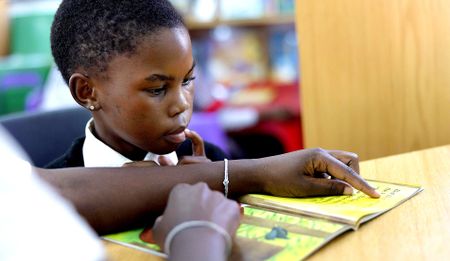
“I like the fact that [Ndlakuse’s workshop] wasn’t focused on the academic side, but... the core function of what literacy actually should be – getting to the kids, getting to making sure that they have access to the books, access to the stories. And making sure that they have someone to read with them.”
/file/attachments/orphans/Tamsin-nalibali-men5_510227.jpg "As part of Nal'ibali's Men's Literacy Imbizo, Madoda Ndlakuse holds workshops teaching men in different communities the power of storytelling, while sharing free resources to support reading and the founding of literacy clubs. (Photo: Supplied / Madoda Ndlakuse)")
The work of the Men’s Literacy Imbizo was intertwined with the social fabric of communities, where many children were growing up in single-parent homes headed by mothers, continued Scott. He emphasised the importance of giving children, and in particular young boys, male role models who demonstrate a love of reading and storytelling.
Another workshop attendee, Thando Mkoyi, said he got involved in the imbizo because of his work as a board member of Dlala Tata, a fatherhood and early childhood development organisation in Khayelitsha, Western Cape.
“We always look for alternatives and also solutions to address the current literacy, education and language [challenges] in our country,” he noted, adding that there was a disparity between children from lower-income and more financially stable families when it came to the exposure to words and language development.
“Madoda [Ndlakuse] has been doing some wonderful work and we wanted some resources as a newly established organisation... How do we make sure that we capacitate the families on [social] welfare in terms of understanding the importance of reading aloud, telling stories, early conversation and play.”
Mkoyi said the free Nal’ibali literacy resources he was introduced to through the workshop had been very useful in his organisation’s work.
/file/attachments/orphans/Tamsin-nalibali-men4_348701.jpg "The Nal'ibali Men's Literacy Imbizo has helped to create male role models for children in the literacy space, according to feedback from participants. (Photo: Supplied / Madoda Ndlakuse)")
Empowering children
Ndlakuse referenced the Progress in International Reading Literacy Study, which released findings in 2023 indicating that 81% of South Africa’s Grade 4 pupils struggled to read for meaning. He noted that the Men’s Literacy Imbizo was one of the strategies being employed to tackled this literacy crisis.
Reflecting on the power of storytelling in his own life, he said that his eldest daughter wrote a book when she was just six years old, and was shortlisted in the children’s category of the South African Literary Awards.
“If you ask her why she wrote a book at such a young age, [she says], ‘I was inspired by my father’,” Ndlakuse said.
“Education can take place in our families. We want our families not only to be rich with stories, but to use each and every useful method that [Nal’ibali] has... And I love the fact that men are taking leadership, men are taking ownership, even though we still have challenges.” DM
Comments
Scroll down to load comments...