




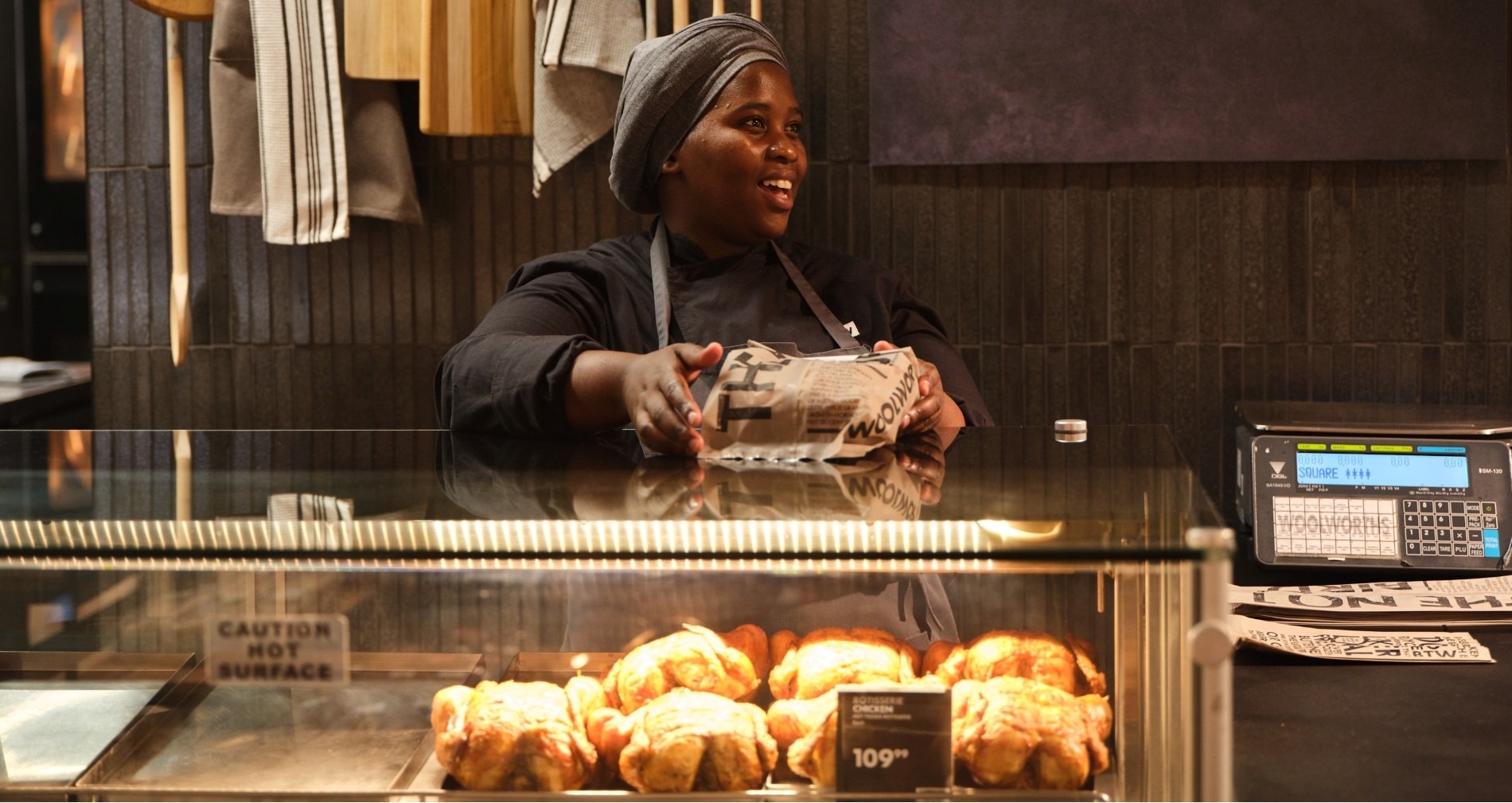
 JBay Bio-Fuels collects and repurposes Woolies’ rotisserie chicken fat into biodiesel
 According to Stats SA, everyday nearly three million South African households experience the harsh reality of hunger, and 15.8 million people face the threat of food insecurity.
The International Day of Awareness of Food Loss and Waste celebrated today, 29 September is an opportunity to consider not only how much food is wasted, but what we can collectively do to make a difference, from farm to fork and beyond.
Preventing food loss and waste has always been a priority for Woolworths and is a key focus of our Good Business Journey. Beyond the social injustice of food being wasted, while many people face hunger, food waste also carries a significant cost to the environment. Every item of food that is wasted represents a loss of precious resources like water, energy and land used in its production and growth.
For Woolworths, the most responsible approach to food waste is to prevent it from occurring in the first place. This means working with farmers and suppliers to improve production and supply-chain efficiency, while measures such as temperature control, stocking and distribution systems help protect product quality and extend shelf life. The Woolworths cold chain keeps lettuce and pears crispier and berries at their freshest, ensuring that all Woolworths products reach customers at their very best, reducing waste.
Packaging also plays an important role in managing waste. While reducing unnecessary packaging remains a priority, appropriately designed packaging can extend the shelf life of products, helping to keep food in use for longer and reducing the greater environmental impact associated with food waste.
At store level, clear information about product dates including ‘Sell By’, ‘Best Before’ and ‘Use By’ helps customers make informed choices and reduce unnecessary food waste. Understanding the difference between these labels is important. ‘Use By’ dates relate to food safety, ‘Best Before’ indicate quality, meaning many products can still be perfectly safe to eat after the ‘Best Before’ date. ‘Sell By’ dates help retailers manage stock and ensure products are sold at their freshest.
Woolworths also reduces the price of certain protein products, such as meat, at the end of the ‘Sell By’ day, encouraging customers to purchase these items before they are removed from shelves. For decades, Woolworths has had a long history of helping customer make informed choices. In 1974, Woolworths became the first South African retailer to introduce ‘sell by’ dates on food packaging.
But even with effective prevention measures, surplus food will always remain. Where food remains unsold but is still safe to eat, Woolworths through its partnership with FoodForward SA prevents waste by donating this edible food to local charities and community organisations across South Africa. Based on collection weights recorded and reported by FoodForward SA’s beneficiary organisations, over 7 tonnes of edible surplus food was collected from Woolworths stores for redistribution between July 2025 and June 2026. This ensures that unsold food can still fulfil its primary purpose of nourishing people, rather than going to waste.
Woolworths recognises that collaboration across the value chain is essential when tackling food loss and waste. The retailer was a founding signatory of the South African Food Loss and Waste Voluntary Agreement, supporting the global ambition of Sustainable Development Goal 12.3 to halve food waste and reduce food losses by 2030. Woolworths has actively encouraged its food suppliers to join the commitment. By August 2026, 53 of the 84 core signatories were Woolworths food suppliers.
Where food is no longer suitable for human consumption, the next priority is to give it a second life and recover some value wherever possible. One example is Woolworths' partnership with J-Bay Bio-Fuels, a family-owned business in Jeffreys Bay.
The partnership began in 2018 when Woolworths approached J-Bay Bio-Fuels with an innovative idea to repurpose the fat generated from its rotisserie chickens into biodiesel.
Woolworths sells millions of rotisserie chickens each year, creating a significant volume of chicken fat. Based on data provided and validated by J-Bay Bio-Fuels, approximately 200 tonnes of fat are collected annually from over 400 Woolworths stores across South Africa and converted into approximately 17,000 litres of biofuel every month.
As the relationship developed, J-Bay Bio-Fuels was also entrusted with collecting other inedible food waste from Woolworths stores. JBay Bio-Fuels says this inedible food waste is sorted and processed through different pathways, including worm farming to produce nutrient-rich worm tea, bokashi processing to create compost and animal feed where appropriate.
The partnership has helped J-Bay Bio-Fuels expand nationally and diversify its product range to include biodiesel, glycerol, cleaners, hand grit and worm tea. It has also contributed to the growth of a sustainable enterprise supporting approximately 20 families.
J-Bay Bio-Fuels story demonstrates the potential of looking at food waste not simply as something to dispose of, but as a resource that can have a second life. It can become renewable energy, return nutrients to the soil, support farmers, create new products and generate economic opportunities. This is at the heart of Woolworths' approach to food loss and waste: measure it, prevent it, redistribute what can still be eaten, and recover value from what cannot.
/file/attachments/2998/83598_FOOD_LOSS_AND_WASTE_DAILY_MAVERICK_120226.png)
The UN's Sustainable Development Goal 12.3 recognises reducing food loss and waste as critical to building more sustainable food systems, protecting natural resources and improving food security.
Reducing food waste is more than just keeping it out of landfill. It is about making every meal count and that more food insecure people are nourished. Woolworths’ journey towards halving food loss and waste by 2030 is ongoing. It requires continued measurement, innovation and collaboration with suppliers and partners. It is not just about what we throw away but finding new ways to keep resources in productive use and making sure that the resources that go into producing our food deliver as much value as possible, for people and planet. DM