




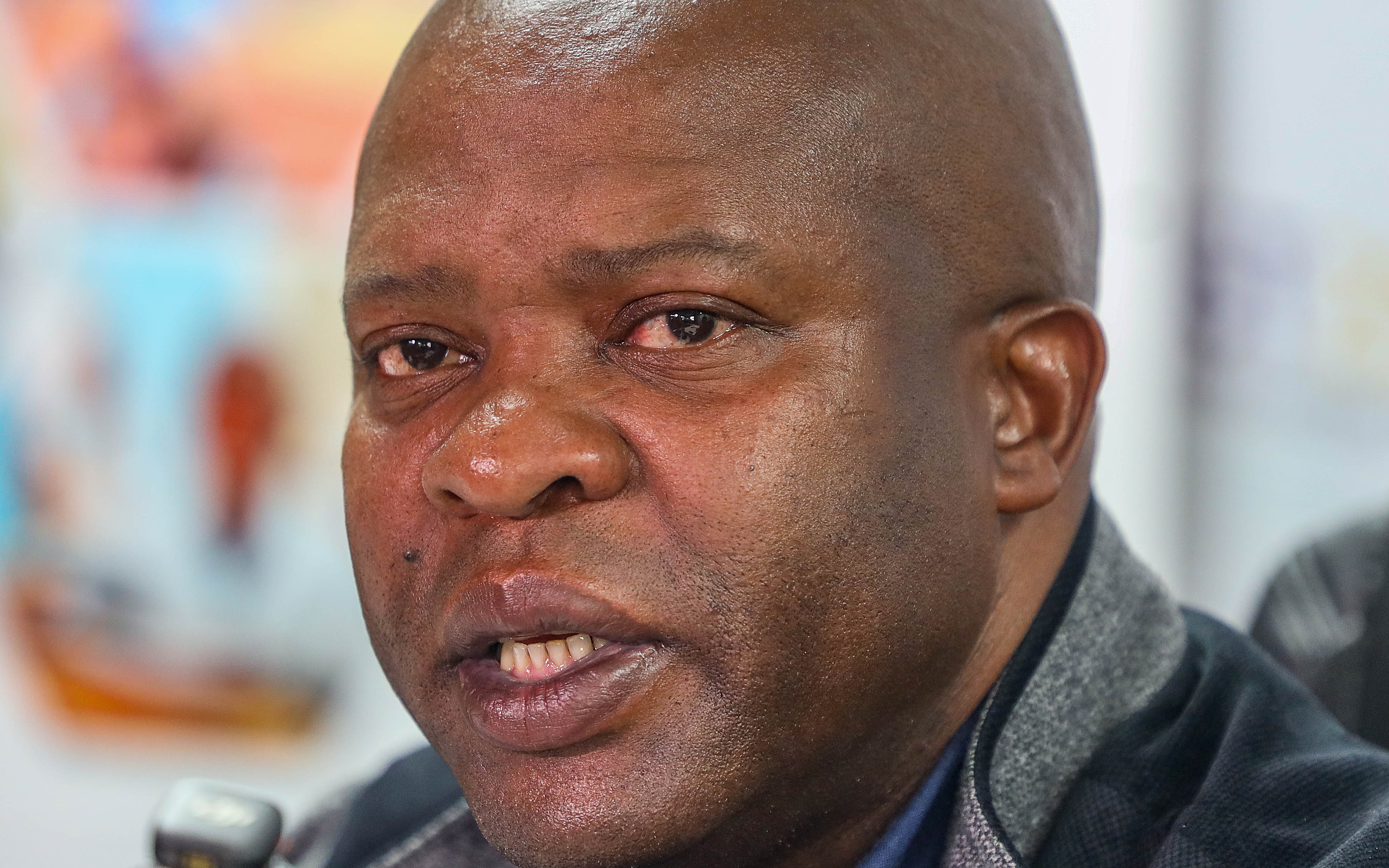
 Gauteng Education MEC Lebogang Maile has warned that Gauteng Department of Education registration and Umalusi accreditation serve entirely different purposes. (Photo: Gallo Images / Sharon Seretlo)
For many Gauteng parents, choosing an independent school is not simply a matter of preference. It may mean finding a school close to home, avoiding overcrowded classrooms or securing education when public-school options feel limited. But families can be left vulnerable when an institution operates without valid registration.
When one mother relocated to the Eastern Cape, she tried to transfer her son from Oceans Private School in Midrand, only to discover that the institution was unregistered, under investigation and sliding into liquidation. When she asked for the transfer letter and academic report needed to enrol him at another school, the principal told her to contact the liquidators.
“I was left to resolve this situation on my own, despite being assured they were registered, and my son’s education was being affected,” said the mother, who asked to remain anonymous to protect her son’s identity.
Without the documents, he missed more than five weeks of school.
“He was extremely distressed and cried almost every day when he saw his classmates going to school while he was at home,” she said.
Another mother paid tuition fees for six months at an unaccredited school in Brakpan before realising she had been misled.
“There are so many fly-by-nights, but I thought I was enrolling my child in a reputable private school offering smaller classes and discipline,” she said.
Department intensifies crackdown on unregistered schools
Speaking at a media briefing on Sunday, Gauteng MEC for Education Lebogang Maile said the Gauteng Department of Education had intensified its crackdown on these institutions. He noted that more than 379,000 learners were enrolled in the 1,083 operational independent schools registered across the province, which employed more than 24,000 educators.
Maile emphasised that one of the most pressing challenges in the sector was the legitimacy of operating institutions, adding that Gauteng Department of Education registration and Umalusi accreditation served entirely different purposes.
Registration with the department gave an institution the legal authority to operate as an independent school, and was tied directly to the physical address and premises. Umalusi accreditation related strictly to quality assurance for qualifications within its mandate.
He urged parents to ask which curriculum and examination body a school used, and how their child would be registered for the final examination.
“Parents should also ask to see the school’s education management information system registration certificates and confirm that the Emis [Education Management Information System] number and physical address correspond with the school that the learner will actually be attending,” Maile added.
Between 2025 and September 2026, officials visited 118 schools suspected of operating illegally and issued 63 closure letters. Seven closed permanently, four applied for registration, and two school directors were arrested.
Maile said closure was not the end of the department’s responsibility because displaced learners still required education.
Mid-year disruptions and long-term educational harm
Faatima Laher, an attorney in the Education Rights Programme at SECTION27, said that research showed that unregistered independent schools were proliferating across rural and low-income communities, preying on undocumented children and anxious parents. When provincial education departments eventually cracked down on these schools, they could inherit a complex placement crisis mid-year.
“We had a case in Kya Sand where a lot of these learners were attending these unregistered independent schools, and it was very difficult to place these learners because they did not have the proper report cards and were also obviously not assessed according to the department standards,” Laher said.
In that instance, departmental officials had to test each learner individually to determine their academic level and place them accordingly.
Because these schools operate entirely outside state oversight, learners’ ages and grades are often badly out of sync. Some learners are far older than they should be for the grade they are attending, while others are promoted without being taught at the required level. In one severe case, a 15-year-old learner could not be reintegrated into a mainstream public school at the academic grade level he required.
“He had to be put on an adult basic education programme simply because it was very difficult to integrate him back at a public school level,” Laher said, adding that while younger learners tended to adjust more easily to new environments and curricula, the experience of being academically demoted could be devastating for older children.
Laher highlighted that stories of illegal independent schools surfaced every few months, pointing to a cycle that required stronger regulatory intervention.
“It can’t be that these schools keep popping up. It’s quite detrimental to learners’ rights to basic education. If they complete matric at these independent schools, it’s not recognised by universities, and it really impacts their future,” Laher said.
She added that to stop fraudulent operators from exploiting vulnerable communities, provincial departments of education required stronger regulation and enforcement mechanisms, including a clearer registration and monitoring system, a demerit or penalty framework featuring fines and legal action against illegal operators, and more proactive inspections alongside community outreach in high-risk areas. DM
Comments
Scroll down to load comments...