



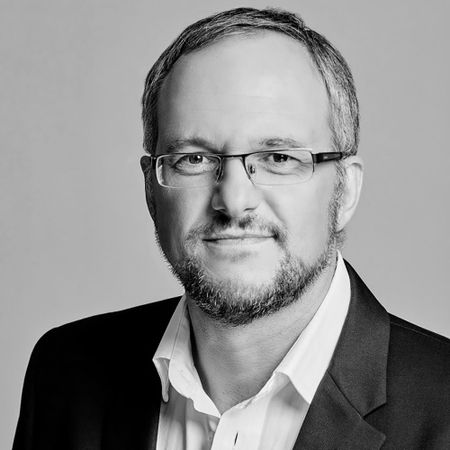
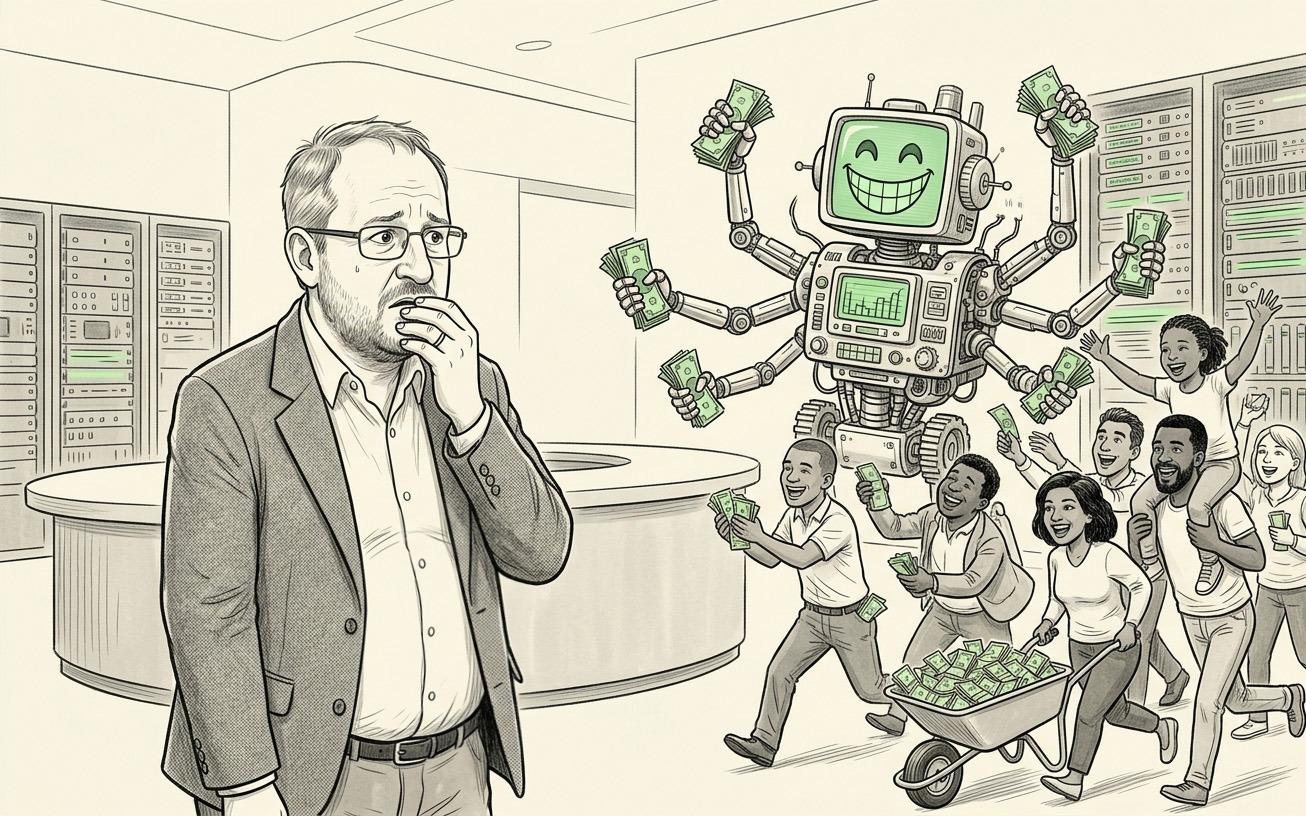
 Fintech is rapidly democratising banking through AI and mobile technology, but this also raises difficult questions about risk, accountability and regulation. | Illustrative image: (Generated with Google Gemini Flash Image 2.5)
When it comes to banking I’m a conservative. I have been with the same South African bank since I got my first account while still a teenager.
I just never really had a strong reason to leave. I know plenty of people who actually find their banks incredibly frustrating and move around often. For a real-life demonstration of this just look at how much advertising banks do (thankfully, many of them advertise in traditional media – so long may it continue!).
But now of course the story of banking is all about fintech. The growth is just incredible. This morning the international fintech operator Optasia said in its interim results that its revenue was up by 58% and its Distributed Value by 46%.
It’s getting a lot more customers, and it’s doing that very very quickly. Part of this is about geographic expansion; It has moved into markets in Gabon and South Sudan while increasing its penetration in places like Pakistan and Indonesia.
I was intrigued by its default rate – it was just 1.3% during the period. This compares really favourably with FNB’s WesBank operations. They reported last week that their default rate there was 1.05%. And this is in a space where there is a car to back up the loan.
As you probably know, the established operators, the more traditional banks, haven’t tried to beat the fintech players – they’ve bought them. FirstRand now owns 26.1% of Optasia, while Absa has brought in Sitiyo Lopokoyit to run its Personal and Private Banking division after his success with the fintech pioneers M-Pesa in Kenya.
This is all a good thing; it should, goes the pompous expression, increase the sum of human happiness. These providers are helping poorer people in developing countries to better control their money. It is, if you like, the final stage of the democratisation of banking.
And none of this would be happening without the incredible changes taking place behind the scenes in information technology. Just as you would not have Uber or Bolt without GPS and cellphones, so you couldn’t have fintech without proper reliable mobile data services and phones capable of managing all of the necessary apps.
And you would not have this incredible growth now without AI. Instead of a person making the decisions, AI is doing it for the banks.
Optasia says it doesn’t ask for bank statements or anything like that, rather it looks at how much cash goes through your account and then how it is withdrawn.
It talks about “10,000 features” it uses to determine who to lend money to and who to avoid.
All of this gives it a massive speed. I imagine that you can submit your information and get a reply very, very quickly. But there are some problems with all of this.
I know for many people the worst-case scenario would be the fact that you could be turned down for a loan by a machine. It would be the ultimate expression of how computers and banks are heartless when they play with our lives.
But that’s nothing compared with the worst outcome. The worst outcome is a large group of people who have all been given loans by a fintech provider based on a faulty algorithm, and now can’t pay the money back.
You can see how easily it could happen. Some gremlin enters the machine, crawls around and starts to give loans to people who can’t afford them. Someone gets a loan when they were not expecting to be approved; they tell their sister, who does the same.
As quickly as AI can make decisions, so can messages through WhatsApp groups. Within an hour you could have entire villages with money in their hands that under normal circumstances they wouldn’t qualify for.
Now, you have to try to get money back from people who obviously can’t pay it. I’m sure in the Ts and Cs of all of these apps there will be ways for the fintech firm to claw cash back in the event of any mistakes that it makes.
But that doesn’t help you when your customers just don’t have the money. And it could take you quite a while to work out where the problem was in the first place.
And who would you hold responsible then? The AI bot? The people who borrowed money your app let them have? The human being responsible for that division? The CEO?
I suspect for regulators all of this leads to a nice little headache, especially because so many of these firms are international in nature.
Some regulators have given this all a lot of thought.
It is in the nature of financial regulators to be a little bit like me. They’re inherently conservative about money.
And I’m sure that means that over time they will make sure they are able to tighten whichever regulations they need to, while still giving fintech space to grow, and continue its banking democratisation mission. DM
Comments
Scroll down to load comments...