




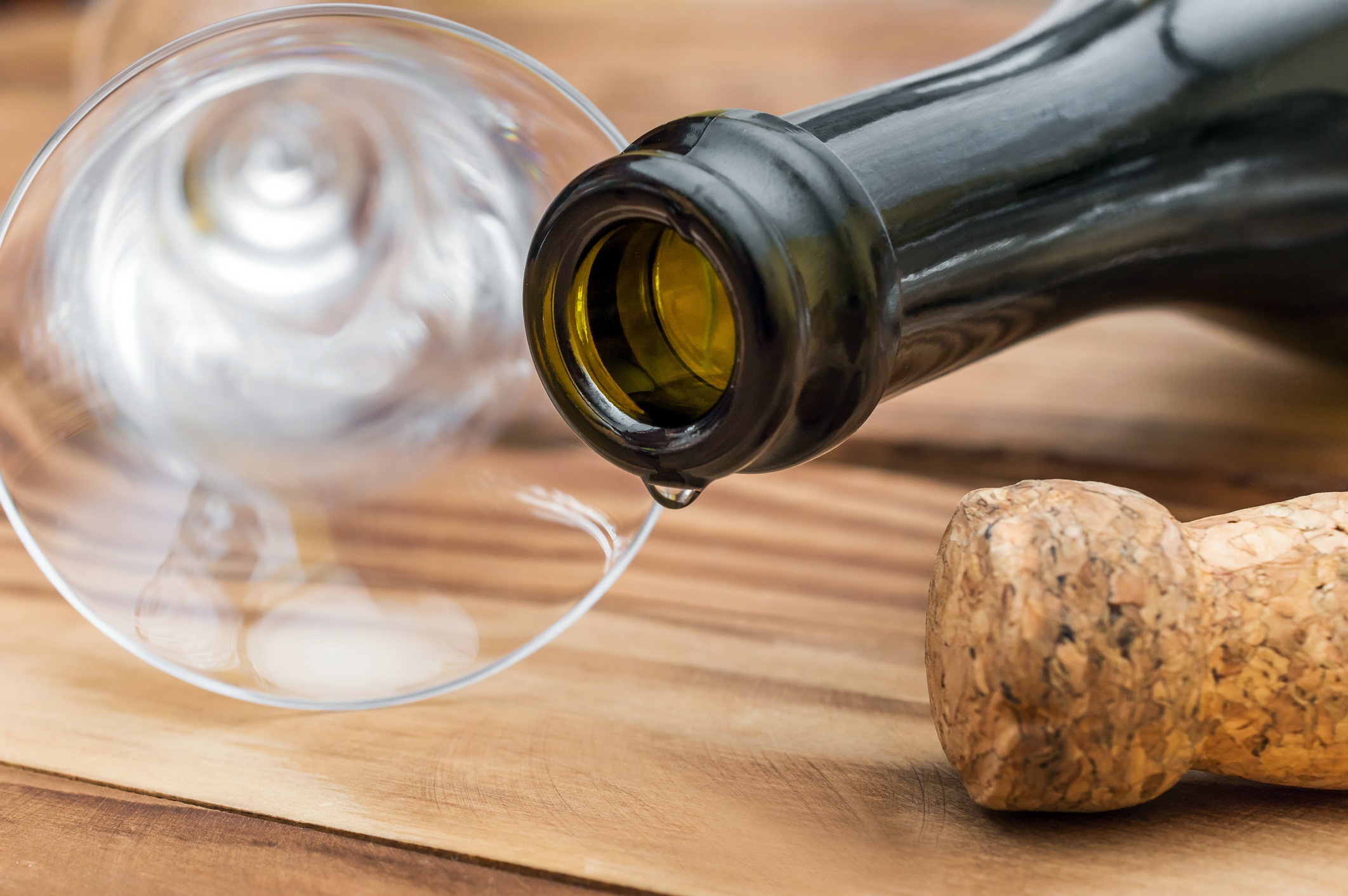
 This year’s severely diminished Champagne harvest could herald a big payday for Cap Classique producers. (Photo: iStock)
“Ons is mos landbouers. Ons moet positief wees. Daar’s genoeg ander negatiewe dinge. [We are farmers. We must be positive. There are enough other negative things.]” – Viticulturist Bennie Liebenberg.
On the seminal luxury rap classic Otis, Kanye West prayed that “all of their pain be Champagne”. While who he was referring to remains open to interpretation, it was certainly not the current agricultural crisis playing out in the French wine regions and heading our way.
If you haven’t already heard, France’s Ministry of Agriculture projects overall wine output for 2026 will be down 6% from last year and 17% below the five-year average. The Champagne region is among the hardest-hit, with production expected to fall by 49% compared with 2025 and 47% below its five-year average.
Extreme weather accelerated grape maturation, forcing pickers back early and forcing harvesting dates to some of the earliest on record.
Maxime Toubart, co-president of the Comité Champagne (CIVC), the industry’s governing body, was blunt in his admission: “We were not quite ready.”
/file/dailymaverick/wp-content/uploads/hennesy-LARGE.jpg "Inside All Bar One Bar Ahead Of Results")
Compounding problems
The irony is that sunny conditions prevented mildew and yielded exceptional grape quality, but the extreme heat resulted in high potential alcohol levels – introducing technical winemaking challenges during fermentation.
To compensate for the severe shortfall, Champagne houses will draw heavily on reserve wines from previous vintages. However, CIVC leadership says some producers may limit reserve drawdowns or bottle smaller volumes to preserve stocks for future blends.
/file/attachments/2997/25101_480700.jpeg)
The production slump follows compounding economic challenges: falling global wine consumption (at a 60-year low), rising inflation, changing consumer tastes and uncertainties surrounding US tariffs.
Total Champagne revenue declined from €6.5-billion to €5.7-billion in 2025. In response to structural oversupply and declining demand, French winemakers uprooted 2.5% of vineyard land, and the French government announced more than €1-billion in emergency agricultural aid.
South Africa has seen similar conditions before, and local viticulturists are drawing on lessons learnt during the Western Cape’s severe 2016-2018 drought.
But that doesn’t mean that El Niño is a known quantity. In fact, it is a variable that is difficult to plan for. However, Spier Wines viticulturist Bennie Liebenberg reassured Daily Maverick that Cap Classique grapes are somewhat protected from the effects of a hot summer because they ripen and are harvested early in the season.
“We are all expecting it [a dry summer driven by the El Niño], but we don't know what the intensity is going to be. Everyone says it will warm and dry, but how warm will the heatwaves be? How bad will the drought be? So it’s the big question: What will the intensity be of this El Niño?”
Making your own luck
Liebenberg warned that hot, dry conditions inevitably lead to smaller berry sizes and reduced yields, explaining that while irrigated blocks look healthy, with good flower clusters, dryland vineyards in regions such as Paarl and Drakenstein face the greatest threat.
To combat the dry conditions, Liebenberg outlined the standard strategy playbook of strict resource management designed to preserve soil moisture by intentionally curbing excessive vegetative growth.
Rather than cultivating “lush vineyards”, he explained that farmers must use irrigation scientifically and apply less fertiliser to limit the growth of the vines.
Conserving water also means eliminating any competition in the soil (read: remove weeds) to sustain the main crop without wasting precious water on unnecessary greenery.
Mandla Mathonsi, brand ambassador for Beck Family Estates (which includes Steenberg farm and the House of Graham Beck), is understandably all in on Cap Classique – although he is also an equal opportunity bubbly promoter who hates to see challenges in the international market:
“It is sad news to hear what’s happening in Champagne this year – from what I’ve read it is their lowest yield since 2003, some of the vineyards losing up to 35% of what they normally harvest. With the amazing quality sparkling wine we produce in South Africa, it is a great opportunity for our forever shining Cap Classique to grow and tap into that Champagne market.”
/file/dailymaverick/wp-content/uploads/2021/05/NatGoldZAlookingdown-210516.jpg "Natalie Goldsmith")
It is, indeed, an opportune moment for the Cape heritage bubbly. Cap Classique has emerged as the fastest-growing wine category in South Africa, doubling its production volume about every 4.5 years and reaching 10.2-11 million bottles annually.
Domestic consumers overwhelmingly favour local Cap Classique over imported French Champagne by a 4.5:1 ratio (6.1 million bottles of Cap Classique versus 1.34-1.42 million bottles of Champagne imported into SA).
And with local currency pressures driving the landed retail price of entry-level Non-Vintage Champagne above R1,000 per bottle, Cap Classique offers an exceptional value proposition.
More than 90% of Cap Classiques retailed at above R160/bottle in 2022, with one-third priced above R265, reflecting strong consumer willingness to premiumise.
Tale of the tape
While there is Prosecco and other regional bubbly, SA’s finest is the best contender to fill the Champagne gap. The UK is Cap Classique’s primary export destination, importing 86,600 nine-litre cases (about 1.04 million bottles) in the rolling year to May 2024 (+5% YoY growth). Expert panels and Masters of Wine in the UK frequently endorse Cap Classique for delivering Champagne-equivalent autolytic complexity at accessible prices.
We have also upped our own quality game. Effective from the 2023 vintage, the Cap Classique Producers’ Association (CCPA), chaired by Pieter “Bubbles” Ferreira, successfully legislated a mandatory minimum of 12 months on the lees (up from nine months). This brings Cap Classique very close to Champagne’s 15-month legal minimum, guaranteeing superior autolytic depth (those brioche, biscuit notes) and finer bubble structure. Additionally, whole-bunch pressing is now legally mandated.
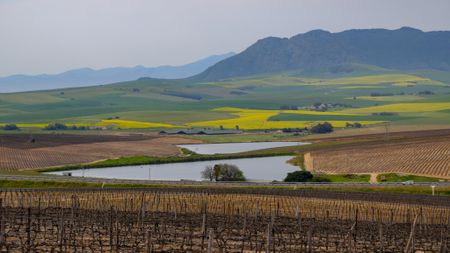
Unlike French vineyards battered by late-summer droughts and heatwaves, Cap Classique grapes (Chardonnay and Pinot Noir) are picked early in January at 18°-19° Brix (10.5%-11.5% potential alcohol by volume).
As Liebenberg explained, this early harvest window avoids late-summer heat stress, locking in piercing natural acidity and vibrant fruit concentration.
As proven during the severe 2016-2018 Western Cape drought, early picking produced some of the highest-rated, most ageworthy Cap Classique base wines in history.
This festive season may be a classic for the Cape-based bubbly makers, but the local industry is aware that these seasonal shifts can change the game for any wine region at any time. And Liebenberg does believe we need good rains before the summer sets in. DM
Comments
Scroll down to load comments...