



Judicial appointments are a key feature of our constitutional democracy. Most South Africans intuitively understand this – so many major political controversies end up being decided in the courts, making it impossible to overlook the importance of who our judges are, and how they come to occupy their positions.
The crucial role of the judiciary goes beyond the high-profile, often highly controversial cases – the Constitution gives judges widespread and extensive powers to test government conduct, and to develop the law in line with the prescripts of the Constitution. This means we must be perpetually vigilant to ensure the process of appointing judges is as good as it can be. We cannot afford good candidates to be cast aside, or bad candidates to make it onto the bench.
The focus of this scrutiny is the Judicial Service Commission (JSC), because the JSC is the central actor in the selection of judges for appointment. It effectively makes all appointments to superior courts below the Constitutional Court (the President formally appoints these judges, but is bound to follow the JSC’s recommendations) and plays a crucial role in the selection of Constitutional Court judges. It must also be consulted on the appointment of the leaders of the Supreme Court of Appeal (SCA) and Constitutional Court.
What happens when this process goes wrong? Unfortunately, there have been several instances where the JSC has erred grievously in carrying out its constitutional mandate and has been successfully challenged in court. The latest such case involves litigation brought by Freedom Under Law (FUL) to challenge the JSC’s decision-making process when it interviewed candidates for vacancies on the SCA in October 2023. This litigation has now been settled.
It is worth recapping why this litigation was so important, and what the settlement means for constitutional democracy and the rule of law.
The genesis of the litigation was the JSC’s October 2023 sitting. One of the rounds of interviews involved candidates for the SCA. The SCA is the second-highest court in the country, and absent a successful appeal to the Constitutional Court, it has the final word on many legal disputes. Having high-calibre judges on the court is therefore extremely important.
The JSC interviewed 10 candidates for four vacancies on the SCA. At the end of the process, it recommended only two for appointment, leaving two vacancies open. This was a perplexing decision. It meant that several highly-regarded candidates were overlooked – two of whom (judges John Smith and David Unterhalter) have subsequently been appointed to the SCA. The SCA had lost many very experienced judges around that time, making the decision to leave vacancies unfilled even more concerning.
FUL instituted legal proceedings that challenged the JSC’s decision on two fronts. In the first part of the litigation, FUL sought an order compelling the JSC to determine whether the remaining candidates were fit for appointment, and if so, to fill the remaining vacancies. This addressed the urgent need for the court to have a full complement of permanent judges. This part of the case was settled, and in May 2024 the JSC held further interviews following which it recommended the appointment of candidates to fill the two remaining vacancies.
The second part of the litigation was directed at the underlying issues with how the JSC conducted the interview process, which had led to the problems at the October 2023 interviews (and in other instances).
FUL sought an order compelling the JSC to develop and publish criteria to assess candidates for appointment through an assessment of objective criteria. While the JSC had developed criteria in 2022, it was clear that these had not been applied lawfully, if at all, in the October 2023 interviews. This part of the litigation sought to address fundamental concerns that the JSC’s selection process was not fit for purpose.
The second part of the litigation has now also been settled between the parties. In terms of the settlement agreement, the JSC has undertaken to conduct a review of its Criteria and Guidelines for Judicial Appointments, pursuant to a public consultative process. The JSC must publish this request for public comment on the Criteria and Guidelines for Judicial Appointments within one month of the settlement agreement.
Public input
At least one month is to be provided for public comment, and the JSC must then make a decision on the outcome of the review and reconsideration of the guidelines at its October meeting. This decision must be publicly announced within one week of the meeting. These provisions are significant, as they ensure that the JSC must engage with public input meaningfully and without delay.
The JSC has since released an invitation for public comments on its revised procedures for shortlisting, interviewing and recommending candidates for judicial appointments. This document also deals with breaches of the duties of confidentiality, law and ethical standards by members of the JSC. Comments on the revised procedures are due by 17 September.
This outcome is important for the undergirding of the rule of law and upholds core constitutional principles which should inform how the JSC does its work. It commits the JSC to a process of fully reviewing not only the substantive selection criteria it applies, but also the process by which commissioners make their decisions on whether to recommend candidates for appointment.
The settlement is also important in that it ensures that this process allows for public input and comment and imposes crisp timelines for the JSC to engage with input and make a final determination of the criteria which it will then apply in future. There can be no latitude for the JSC to drag its feet and delay engaging with the issue.
The ultimate impact of the litigation should be to improve the judicial appointments process. No longer will the criteria employed by the JSC and the basis for its decisions remain unclear to candidates and the public. This should improve public confidence in the appointments process, not to mention the confidence of candidates who will now appear before the JSC with a clear sense of what the JSC is looking for and how it will go about evaluating their candidacy.
Of course, good criteria and processes on paper will not, on their own, be enough to guarantee an optimal appointment process. It will still be necessary for individual commissioners to carry out their role appropriately, guided by the new criteria and procedures, and it will be important that the JSC is effectively chaired to ensure that the new processes are followed in practice. But the litigation does also give a basis to hold the JSC accountable in terms of clear, publicly articulated criteria, should things go wrong.
All these factors will hopefully mean a consistent, sustained improvement in the process of appointing judges. DM
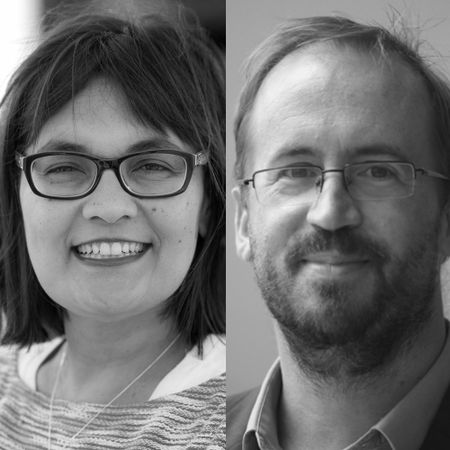
Judith February is the executive officer at Freedom Under Law. Chris Oxtoby is a research consultant at Freedom Under Law.
Comments
Scroll down to load comments...