



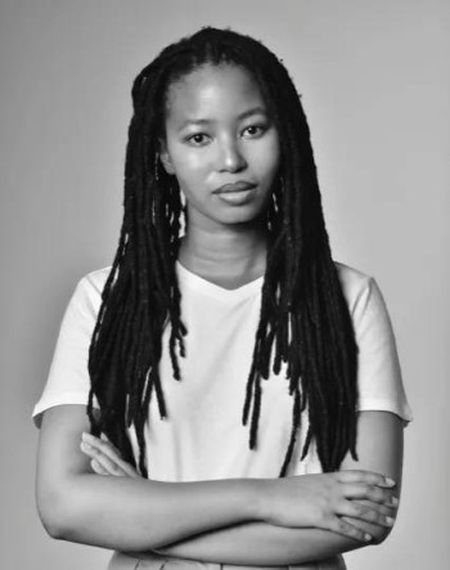
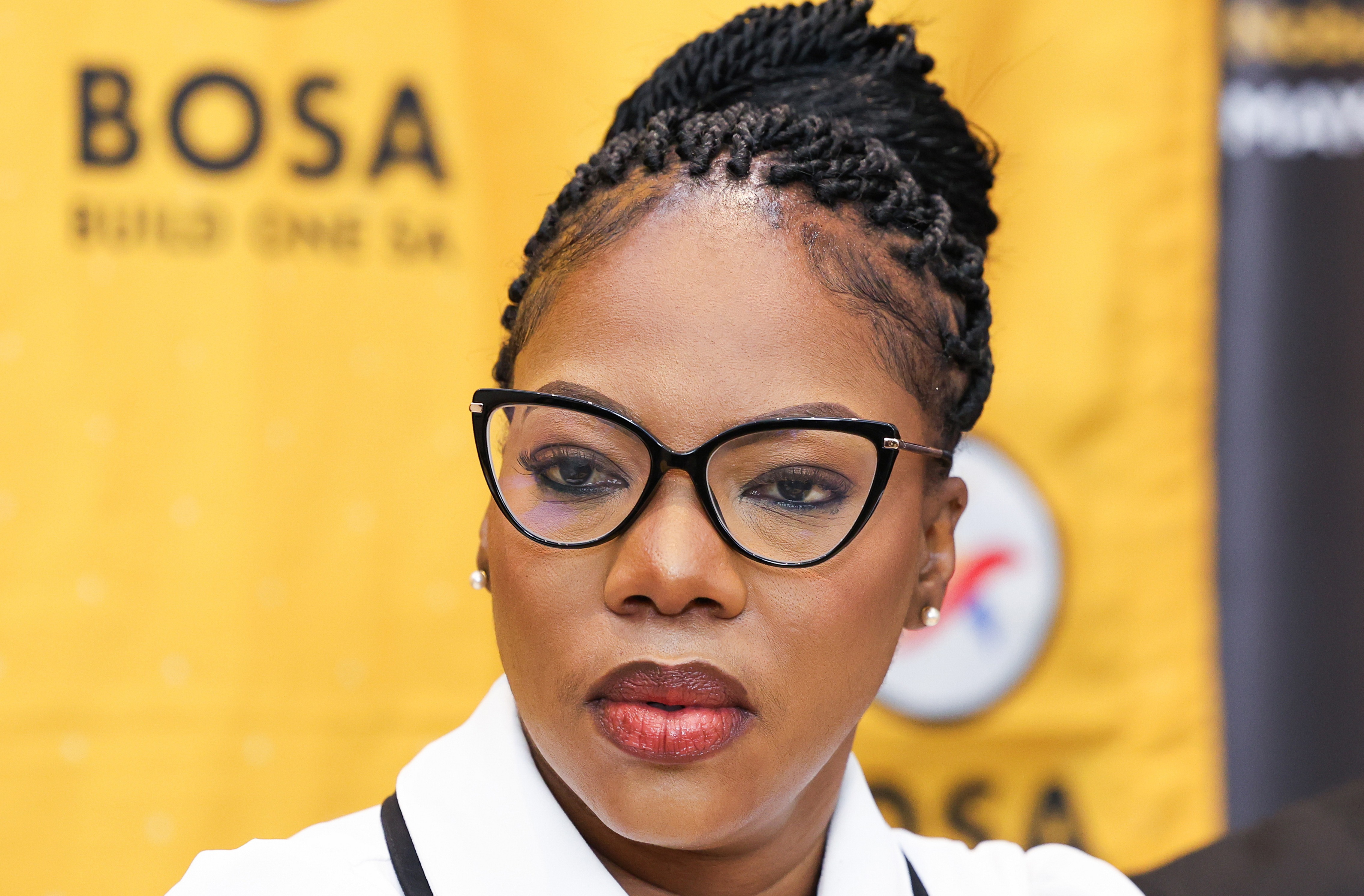
 Bosa’s Joburg mayoral candidate, Nobuntu Hlazo-Webster. (Photo: Luba Lesolle / Gallo Images)
The upcoming local government elections have seen a surge of small parties after the Electoral Commission of South Africa (IEC) confirmed on Wednesday, 2 September, that 546 parties are contesting these elections, up from the 323 parties that contested in 2021.
Small parties face ongoing criticism for destabilising coalitions, most notably in Johannesburg, which has cycled through 11 mayors in 10 years. That volatility looks set to persist, with a record 80 parties contesting proportional representation seats in the city.
The 2021 municipal polls recorded 66 hung councils. In 2023, Al Jama-ah councillor Thapelo Amad was elected Johannesburg mayor despite the party winning just 0.95% of the vote. As a result, larger parties such as the African National Congress and Democratic Alliance are contesting for outright majorities, urging voters not to vote for smaller parties to avoid “coalitions of chaos”.
But Build One South Africa’s (Bosa’s) Johannesburg mayoral candidate, its deputy leader, Nobuntu Hlazo-Webster, argues that new parties like Bosa are emerging as a viable alternative to the big, established parties, which have lost the trust of voters.
Emergence of new parties
Originally from Durban, Hlazo-Webster has called Joburg home for the past 14 years. She launched Bosa with former Democratic Alliance party head Mmusi Maimane in 2022 and has represented the party in the National Assembly since 2024. She argues that small political parties have emerged as a response to weaknesses within existing parties.
“First of all, you have to ... ask – and I don’t want to use the word ‘small’, I want to use the word ‘new’ – why are ... new parties ... emerging?
“And you have to answer that question quite honestly and say there are new parties emerging because the current parties that exist are not trustworthy and have not been able to deliver. And so that’s why there are now other options and new options,” she said.
Before her career in politics, Hlazo-Webster worked in business and advocacy. In 2007, she co-founded the marketing and advertising firm Ayano Communications. She went on to start a consulting firm named African Pursuit, which took on clients from the private and public sectors.
/file/attachments/orphans/IMG_97292_965855.jpg "BOSA co-founder Nobunmayoral candidate for Johannesburg Nobuntu Hlazo-Webster addressing Fairview Junior School at a Women's Day celebration on 9 August. (Photo: Supplied / BOSA's Instagram)")
She was inspired to pursue a career in politics in 2022 after she founded the South African Women’s Commission.
“We brought women together to say: How do we turn around our country and our cities? What do we do? And in that event I was commissioned by women [who said]: Go into politics, go and lead us, go represent us in politics. And so I took on Johannesburg,” she explained.
Daily Maverick sat down with Hlazo-Webster to discuss her turnaround plan for Johannesburg.
Q: You have a lot of experience in business, but less practical experience in running municipalities. Why should residents trust you with a city as complex and critical as Johannesburg?
A: In business, some of the work that I did involved consulting to the government, consulting to municipalities. So I’ve done work in economic development and the development of informal trade policy.
I did a municipality rejuvenation project as well as part of a consortium some years back. So I have worked in a different context with municipalities and with the work of developing policy from municipalities and even implementing for municipalities. That’s the first.
The second is the importance of the leadership of a municipality is being able to appoint the right people, people with the right skills, converging and convening a team that is able to deliver, that has not only the skills, but also the integrity and the competence to ... deliver for the city.
Q: Why do you believe people should vote for a small party like Build One SA?
A: I think the importance of a party like Build One SA and what voters need to ask themselves is: Who do I want in the room as the kind of political party that will not only deliver, but that will also be inclusive in the way they deliver? I think South Africans have, for a long time, felt that they have to choose between the narrative of competence on the one side and corruption on the other side. But we’re saying that there’s a new alternative that actually is both competent and ethical as well.
Q: What is your plan to get Johannesburg back on its feet, and how long will it take?
A: So my plan to get Johannesburg back on its feet is to first of all get basic service delivery and the functioning of the city back on track. How to turn that around is to ... make sure that we’re investing enough in the infrastructure of the city. Currently, the city spends only 10% on infrastructure instead of what is the model of a functioning city, at least 30% of its budget. We’re always in crisis mode in Johannesburg, and that is because of the lack of investment in infrastructure.
We have 13 entities within the municipality. We have all of these as individual entities that all sit with their own bureaucracies, that all sit with their own CEOs, and therefore you have a fragmentation of accountability. So it’s important to review those functions and to determine which of those functions have to come back into the city and be under the accountability of the mayor and of the city council.
We have to make sure that we get billing right. It is incorrect. It is inaccurate. And so it’s difficult for businesses and residents to stay on board with the payments. Then there is revenue collection. The biggest debtors to the City are public institutions. And so it’s ensuring that public institutions are paying their bills and that there’s consequence management when it comes to the non-payment of bills. And management of the finances of the City, to make sure that whatever comes into the City that is meant for water ends up exactly there.
Then there’s the economy. Johannesburg has got to be, again, the economic hub of the country. We’ve got to make sure it’s easy to do business in Johannesburg for entrepreneurs and informal traders. You can’t keep townships on the margins of the economy in Johannesburg. I think it’s important that we build our economy to integrate it with what is the mainstream economy and that we have infrastructure in townships.
Q: There have been at least a million power interruptions over the past three quarters. So energy is a very big problem in the city. What is your energy plan?
A: A lot of what we see is because we’re not investing in the infrastructure that makes it possible to distribute electricity consistently. I must tell you that 60% of outages are actually caused by ageing equipment.
The reality is that you’re asking residents to keep paying electricity tariffs, and then they’re absorbed into a dysfunctional municipal system. So it’s about ring-fencing revenue that does come in and then substantially increasing planned maintenance and capital renewal when it comes to infrastructure.
And then the last thing I want to speak about is the issue of the indigent register. That register has got to be adequately updated, maintained and administered so that you can then differentiate between the non-payers and you have consequences for that, and you can differentiate between people who genuinely do need support to be able to make sure they still get electricity.
/file/attachments/orphans/ED_524685_731060.jpg "Bosa deputy leader Nobuntu Hlazo-Webster during the announcement review of the GNU First 100 Days in Johannesburg. (Photo: Sharon Serelto/Gallo Images)")
Q: The JoJo tank has become one of the most important assets that citizens are buying or hiring. What is your plan for water?
A: Our plan starts with a ward-by-ward programme to replace pumps, pipes and reservoirs that have had repeated failures. We have to increase planned maintenance, increase infrastructure renewal, protect the water budget and make sure revenues go to water.
Reduce the losses through early leak detection, and that’s part of the maintenance issue. In the first 100 days, identify ... the worst-performing water areas [and] water zones. What is the infrastructure condition? Fund the repair plans and the restoration targets. We will make sure that this is accountable, transparent, and there’s a dashboard that citizens know about. DM
Comments
Scroll down to load comments...