




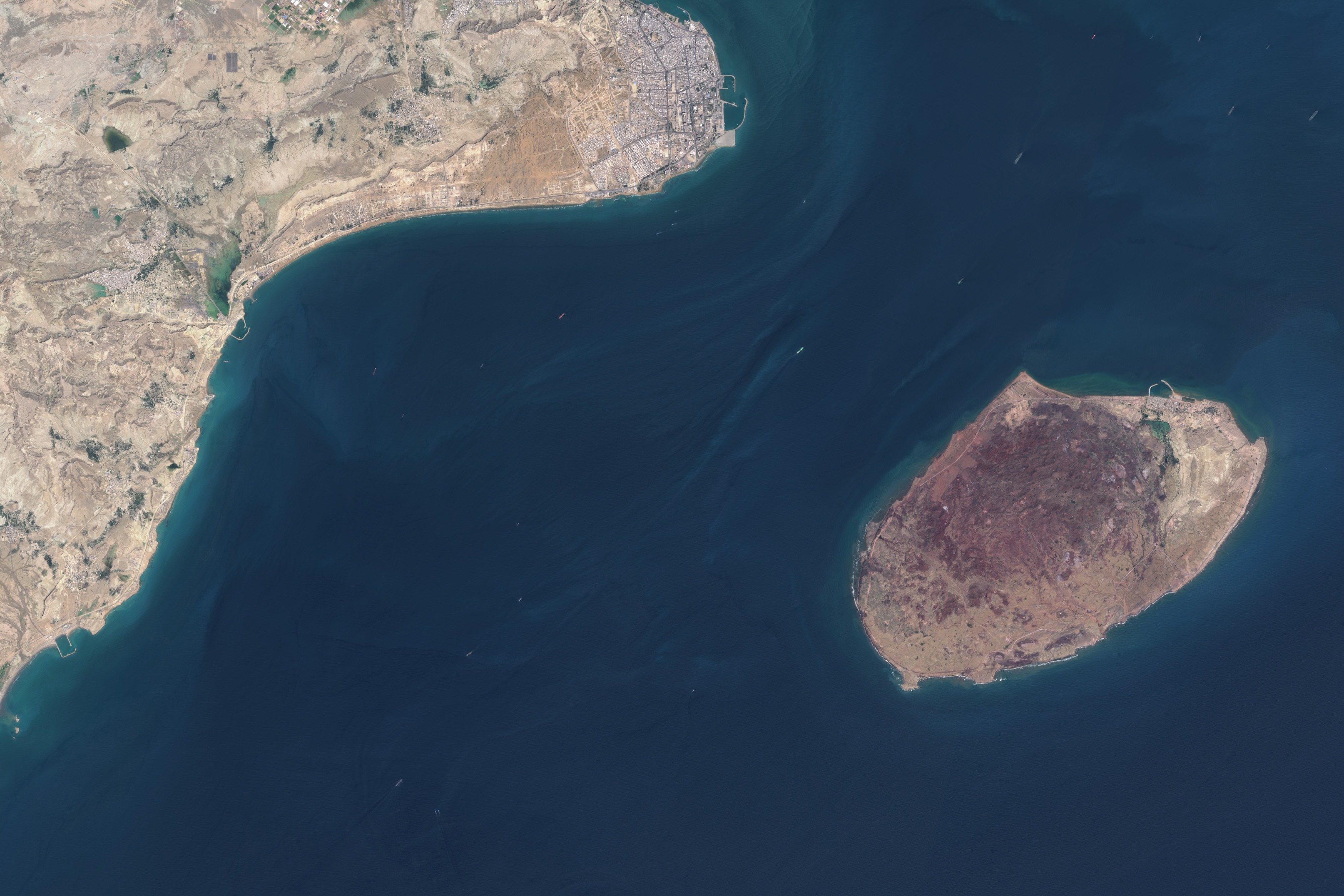
 STRAIT OF HORMUZ - 7 APRIL 2026 : Satellite view of vessels transiting the Qeshm–Larak Passage in the Strait of Hormuz. Shipping was diverted into this corridor after Iranian mine warnings closed Hormuz’s main lanes. Tehran’s 5‑nautical‑mile route near Larak Island, enforced selectively, has raised concerns of Iran acting as a de facto toll booth on global oil and shipping markets. Imaged 7 April 2026. (Photo by Gallo Images/Orbital Horizon/Copernicus Sentinel Data 2026)
 The reports in several South Korean media outlets said the government was preparing procedures to seek parliamentary approval for the deployment, including submitting a consent motion to parliament this month after cabinet review.
The government was considering options including sending a maritime patrol aircraft, a logistics support vessel or a mine detection and clearance unit, and had been discussing the scale and nature of a potential contribution with countries including the United States, Britain and France, the reports said.
South Korea's presidential Blue House said Seoul had been discussing practical ways to contribute to freedom of navigation in the strait, but reports that the government had settled on a deployment were "different from the facts".
U.S. President Donald Trump said in an August social media post that he had scaled back U.S.-South Korea joint military exercises in part because South Korea had declined to help the U.S. in the waragainst Iran.
(Reporting by Kyu-seok Shim; Editing by Stephen Coates)
Comments
Scroll down to load comments...