




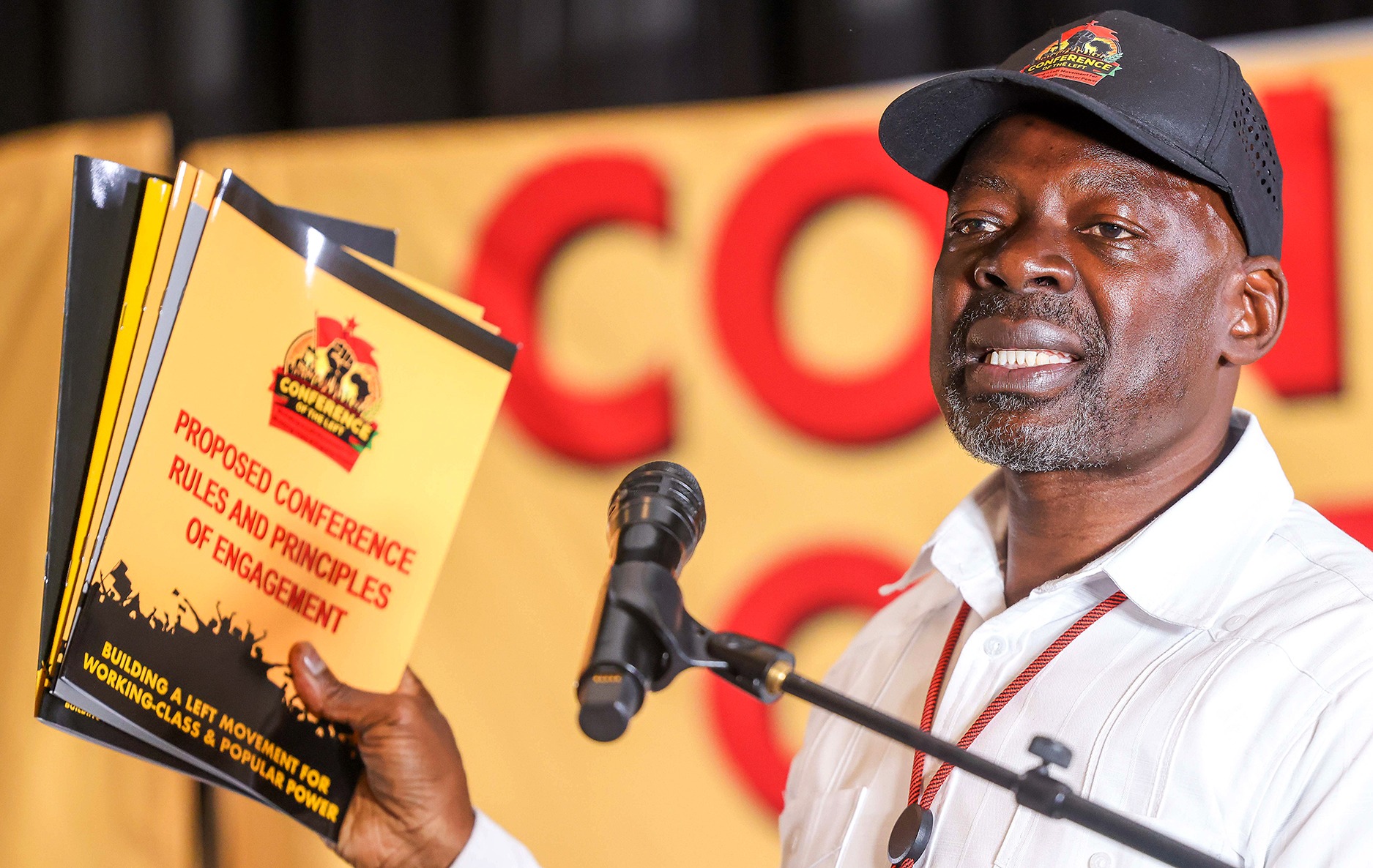
 The SACP general secretary, Solly Mapaila. (Photo: OJ Koloti / Gallo Images)
Flipping through the party’s campaign manifesto in Braamfontein on Sunday, 30 August, South African Communist Party (SACP) general secretary Solly Mapaila beamed with pride as he showed the farms the party has established and the boreholes it has drilled across six provinces.
“This water pump, it was costing about R72-million in a government tender. We did it for less than R20,000, and the people have got water,” he said, pointing to a photo of a water pump the party installed in a village in North West.
The community projects are part of the SACP’s People’s Red Caravan campaign, launched in the build-up to the 2026 local government elections.
/file/attachments/orphans/ED_610795_449999.jpg "Solly Mapaila (General Secretary of SACP) address the South African Communist Party’s (SACP) \"Conference of the Left\" at Birchwood Hotel & OR Tambo Conference Centre on May 29, 2026 in Boksburg, South Africa. The conference aims to consolidate leftist and progressive forces in response to the current balance of forces facing the working class and the poor. (Photo: Gallo Images / OJ Koloti)")
The party has run in multiple by-elections before, but it is fully contesting elections independently for the first time and has fielded more than 4,000 candidates. Its candidate list draws from beyond its membership base to include community leaders through strategic partnerships, including religious leaders, community activists, youth and women’s organisations, and civic organisations. The party is still in the process of finalising its mayoral candidates for metros.
So far, its actions have included setting up community farms, sinking wells and repairing local infrastructure. One farm established in Mpumalanga has already produced 15,000 eggs and 35,000 heads of spinach. In another project in the Eastern Cape village of Qunu, the party drilled a 160m borehole that provides drinkable water.
“We are left with three provinces to launch this as a national intervention. Then provinces will also launch districts and districts will also launch branches. So the people will no longer have to be poor when they can do something for themselves, because we have got enough land,” said Mapaila.
Tensions between old allies
/file/attachments/orphans/ED_620758_226200.jpg "Solly Mapaila and Blade Nzimande briefs the media after Central Committee Meeting at Cosatu House on August 28, 2026 in Johannesburg, South Africa. The media briefing covered the political situation, the economy, elections, and the international situation, among other issues. (Photo: Gallo Images/Fani Mahuntsi)")
Despite the independent contestation, Mapaila insists the party is not breaking away from the Tripartite Alliance with the ANC and Cosatu.
The party announced its decision to contest elections in December 2024, citing ideological differences with the ANC. These included “political deviations” on key issues such as land ownership and wealth, declining voter turnout, corruption, and a drift towards neoliberal policies.
The decision caused a rift between the two parties after the ANC delivered a contentious ultimatum instructing those with dual party membership to formally declare which party they intend to represent.
Tensions between the two parties ramped up at the weekend when the ANC expelled SACP Western Cape secretary Benson Ngqentsu from the provincial legislature over his decision to stand as an SACP candidate in the local elections.
On Sunday, 30 August, the SACP delivered its key manifesto pledges, unveiling its campaign strategy and defending its decision to go independent.
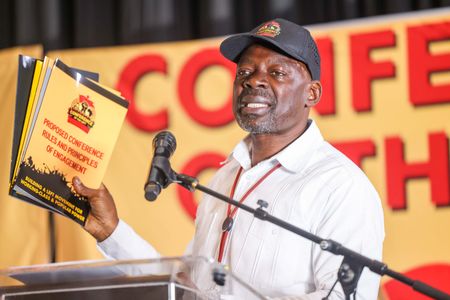
“Our independent electoral contest is not a withdrawal from the alliance, or [from] the struggle for socialism. It is an exercise of our democratic and organisational independence and forms part of the struggle to rebuild working-class political representation and secure the reconfiguration of the alliance in order to maximise revolutionary forces for the advancement of our revolution,” said Mapaila.
Mapaila told Daily Maverick that the party had initially agreed to allow the ANC to keep SACP members who served as senior public representatives for the ANC. The party has condemned the removal of SACP members from key positions as “unacceptable”.
“This matter, we think, has not been managed properly, at least from the side of the ANC, because they’ve also managed it in violation of their own constitution, which accepts dual membership. And they've only read one aspect of dual membership and emphasised that without reading the other.”
He said the party would pursue all available avenues, including legal avenues, if the ANC continued to expel SACP members.
Towards a broader left movement
/file/attachments/orphans/ED_620766_752049.jpg "SACP briefs the media after Central Committee Meeting at Cosatu House on August 28, 2026 in Johannesburg, South Africa. The media briefing covered the political situation, the economy, elections, and the international situation, among other issues. (Photo: Gallo Images/Fani Mahuntsi)")
Rather than seeking an outright majority victory, the party aims to use the elections to organise workers and poor communities, fight corruption, and build a broader left and socialist movement.
“We will use our election contest to strengthen our campaign against the corrupt tender system, privatisation and unnecessary outsourcing of government functions, including, in this case, at the municipal level,” said Mapaila.
“The SACP is calling for insourcing and capable, democratic and properly funded people’s municipalities, with adequate resourcing and equipping of municipal workers, participatory planning, local production and public representatives accountable to communities.”
These aims are apparent in the manifesto. Its key principles include insourcing workers to conduct essential maintenance work, prioritising basic public services, and ensuring local procurement and investment support local workers, producers, and co-operatives.
The manifesto also prioritises identifying suitable municipal land to develop into farms for local food production, housing, clinics and other state services. DM
The SACP’s key election priorities
Reliable public services, preventative maintenance and prompt repairs. By conducting a ward-by-ward audit of water, sanitation, electricity, roads, stormwater, free public Wi-Fi, and refuse removal and putting in place a labour-intensive public maintenance programme. Fair and transparent tariffs with support provided to qualifying low-income households.
Decent work and sustainable livelihoods where people live. Shifting away from tenders towards insourcing, expanded public employment linked to useful community work, ensuring municipal procurement prioritises local producers, workers and cooperatives, and ensuring municipal-owned land is put to productive use, including ensuring municipal-owned farms support local food production.
Land, homes and food for social needs. An open audit of municipal land, releasing suitable municipal land for housing, food production, schools and clinics, and upgrading informal settlements with water, sanitation, electricity, and other basic services.
Safe, caring and healthy communities. Introducing democratic community safety forums representing women, LGBT+ people, young people, workers and community organisations. Ensuring clinics have adequate resources and supporting health education and screening for communicable diseases.
Municipalities free from tender corruption and capture. Fully transparent budgets, performance reports and appointment processes for proposed work, regular independent lifestyle audits of councillors and officials, and protection and support for whistleblowers.
Councillors who answer to the people and people who have a real say. Councillors will convene regular open ward assemblies. Municipal labour forums, trade unions, cooperatives, and dedicated youth councils will have meaningful representation in local development, planning and investment decisions. DM
Comments
Scroll down to load comments...