




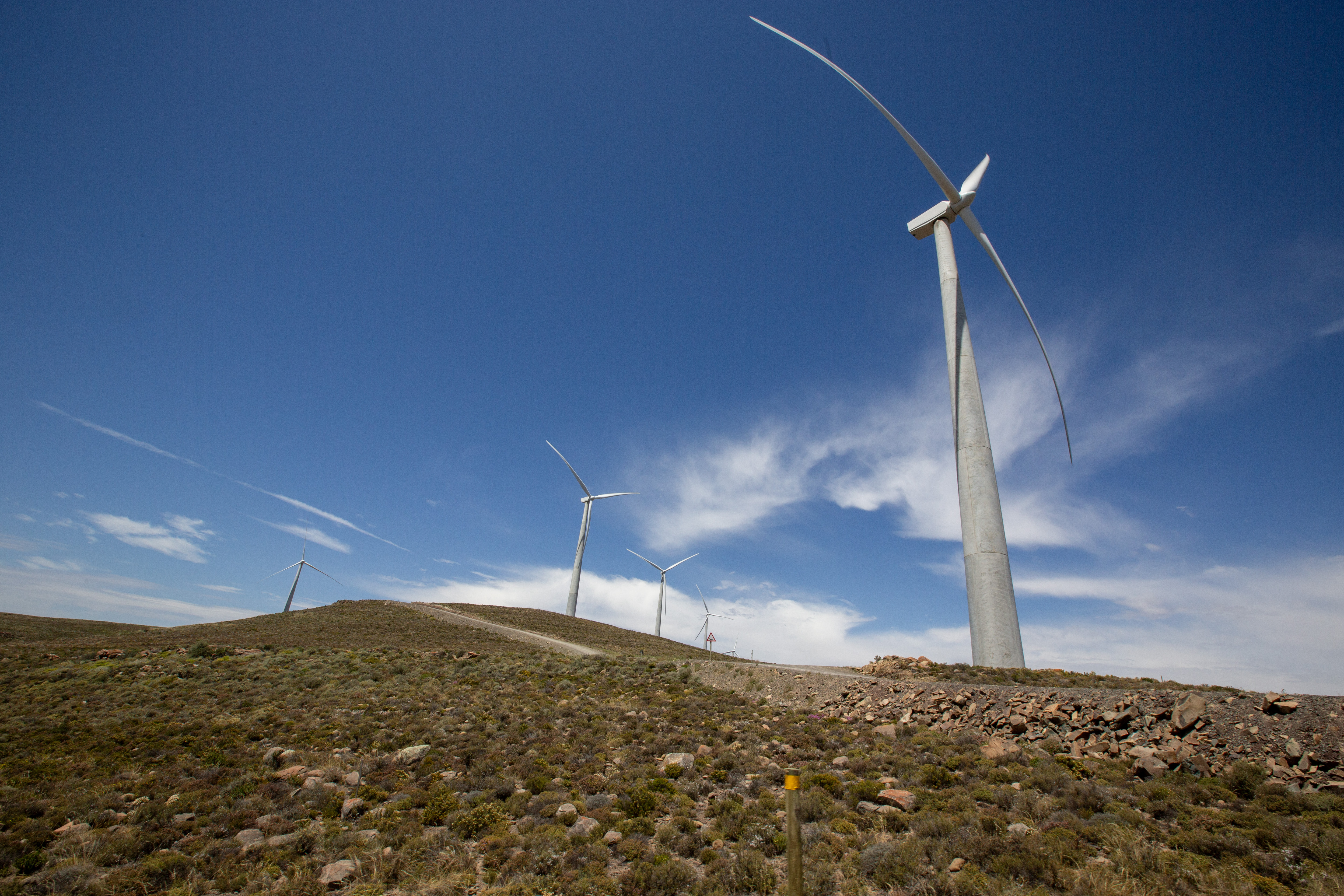
 (Photo: Shelley Christians)
South Africa’s energy future is no longer determined only by government departments, new climate legislation, or even the Just Energy Transition Framework.
It is being hammered out in court by communities and non-profits stopping unlawful projects, protecting public funds and insisting that new projects are evidence-based and benefit – rather than bypass – the people they claim to serve.
The Constitutional Court’s recent judgment blocking Shell and Impact Africa’s Wild Coast exploration right is the latest in a string of cases where civil society has forced the state and industry to account over major energy projects.
If those cases had never been filed, South Africans would already be on the hook for billions in bad debt, locked into an unaffordable fossil-fuel path, and faced with enormous environmental damage.
That track record warrants consideration, as powerful interests continue to lobby against energy accountability. As Daily Maverick has exposed, South Africans for Constitutional Reform – a campaign founded and chaired by a nuclear industry communicator – has touted constitutional amendments to bring NPOs and NGOs under State oversight, limiting their capacity to litigate.
Meanwhile, Mineral Resources Minister Gwede Mantashe has accused environmental NGOs of having “veto power over development”, while telling an energy investment forum “drill baby drill”.
The evidence tells a different story. Transparency, public participation and lawful decision-making are not barriers to development – they are its foundation.
A contested energy future
South Africa has committed to a Just Energy Transition (JET), away from coal, oil and gas toward renewable energy, while protecting workers and communities. The Climate Change Act now requires government policy to align with climate goals, and renewable energy’s contribution to electricity is growing.
Yet, 95% of the coastline has been mapped for fossil fuel exploration; a new state petroleum agency is being established; a gas bill is before Parliament, and the IRP 2025 – the latest electricity plan – still includes gas.
In this contested space, communities and civil society organisations are collaborating with the only tools that can hold power to account: constitutional rights, public participation and legal action.
Stopping the trillion-rand nuclear deal
Between 2013 and 2016, the Zuma administration pursued a secret deal to procure 9.6 GW of nuclear capacity at an estimated R1-trillion – a cost the National Treasury warned would cripple the fiscus. The agreement with Russia was negotiated in secrecy, bypassing the Treasury.
Earthlife Africa Johannesburg and the Southern African Faith Communities’ Environment Institute (Safcei) challenged the deal in the Western Cape Division of the High Court in Cape Town. The judgment was damning: the National Energy Regulator’s approval was procedurally unfair due to the lack of public participation.
On the secret Russia deal, the court found that then minister of energy Tina Joemat-Pettersson had either failed to apply her mind or deliberately bypassed constitutional requirements, for an “ulterior and unlawful purpose”.
Had it not been for these NGOs’ willingness to litigate amid political hostility and threats, South Africans could today be repaying an unsustainable loan for nuclear infrastructure that no independent analysis supported.
They were not obstructing development; they were defending public finances and democratic governance.
Protecting Wild Coast communities
The Constitutional Court’s recent ruling against Shell and Impact Africa followed a 2022 high court finding that the companies’ consultation with affected communities was “inadequate and substantially flawed”. That ruling was temporarily suspended by the Supreme Court of Appeal, whose verdict the Constitutional Court overturned.
Shell had planned a seismic survey across 6,011km2 of the Eastern Cape coastline. Nine communities, supported by nonprofits including Sustaining the Wild Coast and Natural Justice, argued that Shell’s consultation was not meaningful and that the survey threatened their constitutional rights to a healthy environment, culture, and livelihood.
The court agreed. Crucially, it ruled that Shell’s anticipated financial loss could not justify infringing constitutional rights. As the communities told the court:
“The sea is our Great Home. It is the source of all life and is a sacred place as it is the home of many of our Ancestors… We ask you to respect our culture, our lives and our livelihoods and protect the future of all.”
This case exposes a harsh truth: governance failures create real risks to people’s rights and wellbeing.
Cancel Coal: protecting future generations
In December 2024, the Cancel Coal judgment affirmed that energy planning must account for the interests of children and future generations. The ruling set a critical legal precedent by recognising that short-term energy choices cannot mortgage the future.
Rather than learning from the Cancel Coal judgment, the government is contesting it, thereby choosing to defend an outdated and costly energy model that places the interests of the coal lobby ahead of the long-term welfare of South Africans.
The cost of unchecked extraction
South Africa’s energy sector has long been plagued by corruption and mismanagement. Coal has been associated with corruption: the Zondo Commission found that R14.7-billion in Eskom contracts were “afflicted by State Capture”, with coal supply deals identified as one of the clearest sites of abuse.
These revelations underscore the dangers of opaque deals struck in the name of “development”. The country can credibly be associated with the resource curse – the paradox where abundant natural resources lead to increased inequality, economic stagnation, corruption and conflict, rather than prosperity.
The Council for Scientific and Industrial Research has found that new wind and solar projects are at least three times cheaper than the electricity Eskom supplies. Renewables provide more economic resilience than fossil fuels, which have risky supply pipelines. face volatile international markets and need an ongoing supply of fuel.
JET can’t happen without civil society
South Africa’s energy future should not be shaped by the agendas of politicians or the fossil fuel industry. It should be shaped by whether decisions are lawful, evidence-based, and made for the benefit of ordinary people.
Civil society’s legal victories – from blocking the nuclear deal to protecting the Wild Coast and affirming the rights of future generations – show that accountability is not an obstacle to development. It is the cornerstone of a just and sustainable energy transition.
The fight is far from over. The fossil fuel lobby and its allies in government will continue to push for short-term gains at long-term cost. But the legal victories prove a powerful point: that when communities and NGOs stand together, they can safeguard our constitutional rights, our environment and our shared future.
The Just Energy Transition is not just about shifting from coal to renewables; rather, it concerns whether it is governed with integrity, foresight and justice.
Civil society has already shown its crucial role in bringing this about.
The question is whether we will let it. DM
Jonty Cogger is an attorney at the Centre for Environmental Rights, Jo-Anne Smetherham is the media manager for Fossil Free South Africa, Lisa Makaula is The Green Connection’s Advocacy Officer, Mpho Gerald Makhubela is an activist, urban activist, and communications officer at Lawyers for Human Rights, Luthando Vilakazi is a lawyer at Open Secrets and Claire Martens is the Senior Communications Officer at Natural Justice.


Comments
Scroll down to load comments...