




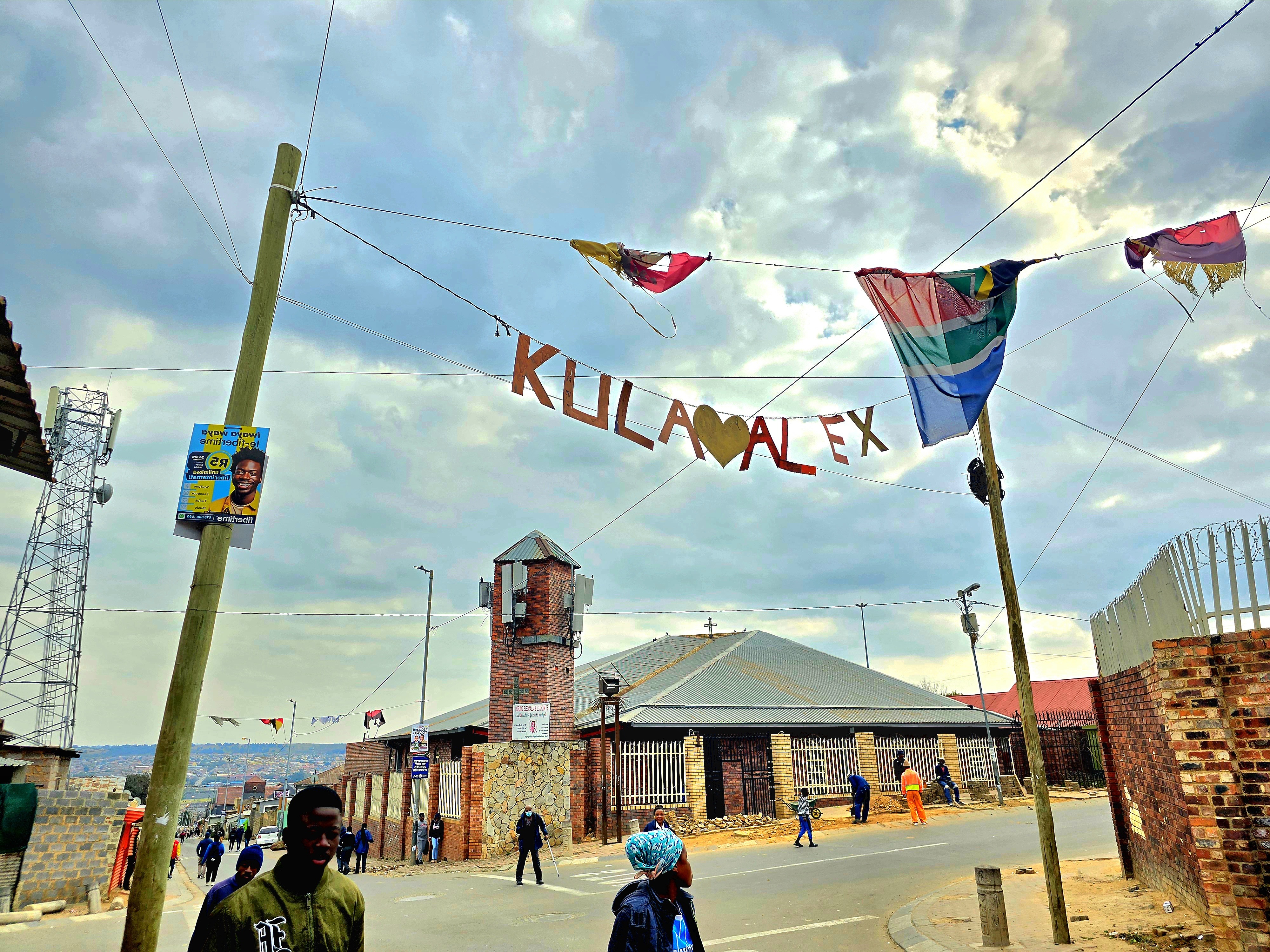
 The women-led Kula Marolen Foundation shows its love for Alexandra in Johannesburg. (Photo: Bridget Hilton-Barber)
“We would love to turn Richard Baloyi Street in Alex into a creative heritage hub,” says Thatho Mary-Ann Marolen Ngcobo, founder of the Kula Marolen Foundation.
“Everybody knows Vilakazi Street is Soweto,” she says, “but Alex is nobody’s baby. The Kula Foundation would like to adopt this baby, nurture it and see it grow and thrive.”
The Kula Foundation is a women-led, community-based organisation that focuses on heritage, arts and environmental issues. It’s based in Richard Baloyi Street (formerly Second Avenue) at Kula House, Ngcobo’s grandparents’ house, which is now a museum, gallery and venue also known as the Underground.
The foundation, says Ngcobo, is the driving force behind the Alexandra Heritage Art Precinct, which envisions the street and surrounding area becoming a vibrant cultural precinct attracting both local visitors and tourists.
Richard Baloyi was the first black person in Johannesburg to own a bus company, after starting out as a taxi driver. The street named after him is bustling, and it’s easy to imagine this as a lively precinct.
It already has all the right ingredients: a rich history, a heritage centre, several blue plaque buildings (sites of significant heritage), beautiful murals and street art, and loads of foot traffic. Nearby is one of Baloyi’s old buses, which is also begging to be transformed into something interesting.
A few blocks up from Kula House is the Alex Heritage Centre, whose exhibits on the Dark City (so nicknamed as a result of it being denied electricity under apartheid) are poignant and powerful.
But the museum is clearly in need of some TLC. The ground floor, intended as a community space, is empty and neglected, and the museum and the street suffer from crippling water and power cuts.
/file/attachments/2996/MuralofBaloyiinsideAlexHeritageCentre_586976.jpg "A mural of Richard Baloyi inside the Alex Heritage Centre. Photo: Bridget Hilton-Barber")
There are four fascinating blue plaque sites close by. First is Mandela’s Yard, a humble single-room property that was rented by the young Nelson Mandela when he moved to Johannesburg from the Eastern Cape in 1942.
Second is the PLD Hall, the first community hall in Alex, which was a centre for anti-apartheid gatherings and a safe house for freedom fighters. Samora Machel, the first president of independent Mozambique, lived secretly in a back room there in the early 1960s.
Third is the Anglican Mission School, one of the independent schools that provided formal education before apartheid was legislated, and finally there is St Hubert’s Catholic Church, which dates from 1919.
Ngcobo says there are many ways to breathe new life into the precinct – improved lighting, turning street-level spaces into micro-retail incubators for artists, designers and crafters, partnering with local food spots and establishing youth-focused digital spaces. She says community members could be trained to be security guards and tourism ambassadors – and she hopes the Kula Foundation can partner with tourism and community groups, as well as city improvement movements like Jozi My Jozi.
“We don’t want to create a sanitised tourism bubble,” says Ngcobo, “but a street where people can gather and chill, eat local food, buy local stuff, immerse themselves in history and enjoy a street-level Alex experience.”
/file/attachments/2996/VerticalgardeninsideKulaHouse_285714.jpg)
The Kula Foundation works in other areas too. “We partnered with the Alex Water Warriors to try to clean up the Jukskei River. We trained local youth and elders in macramé and crochet techniques to make litter traps from plastic waste,” she says.
“The Kula Loves Alex Green Corridor is another project, in which we are turning local streets into green boulevards.”
Through the KulaKasiKitchenAid programme, the foundation builds vertical food gardens to improve local food security and promote sustainable urban farming. It also operates a local manufacturing hub producing ecofriendly lifestyle products such as handmade bottle holders and shopping bags. DM
To book a tour of Alex with the Kula Foundation, email info@kulamfoundation.org or call +27 83 575 6455.
Bridget Hilton-Barber is a freelance writer who writes for Jozi My Jozi.
This story first appeared in our weekly DM168 newspaper, available countrywide for R35.
/file/attachments/2996/DM-210826_450460.jpg)
Comments
Scroll down to load comments...