




 Image supplied
“From R5,999 per month.”
It's often the first number people notice when shopping for a car. It’s the figure printed across the windscreen, placed at the top of the online listing and shared in the family WhatsApp group. It’s also the number many South Africans use to decide whether a car fits their budget.
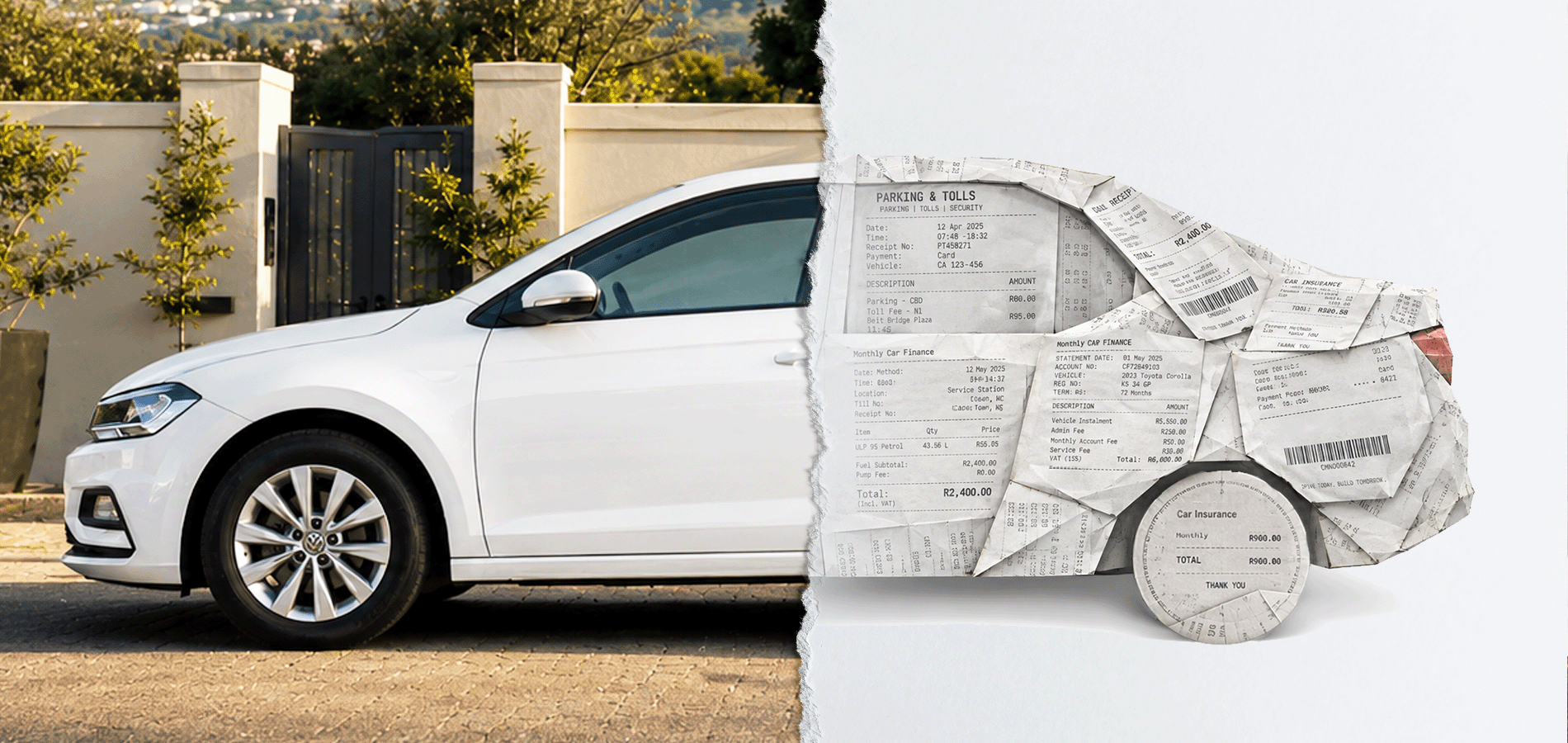
Once the car comes home, the instalment becomes only one part of a much larger monthly commitment. Petrol, insurance, maintenance of tyres, servicing, licence fees, tracker costs, parking and repairs all compete for space in the household budget. By the time these costs are added together, a R6,000 instalment can easily become a monthly car cost of R11,000 or more.
The financial pressure is real and substantial. South Africa’s annual transport inflation reached 12.7% in June 2026, reflecting rising costs across petrol, public transport and car-related expenses. As transport costs increase, understanding the true cost of car ownership has become more important than ever.
Looking beyond the instalment
Dealership advertising has trained buyers to think in monthly amounts. A R450,000 purchase price feels distant, while a monthly repayment feels easier to compare with a salary.
But two cars with the same monthly instalment can have very different ownership costs.
That repayment itself is influenced by factors such the purchase price, deposit, interest rate, finance term and any balloon payment structures. Together, these factors provide a clearer view of what the finance agreement will ultimately cost and whether it fits comfortably within the household budget. A lower monthly repayment does not necessarily mean a cheaper car.
Petrol takes a serious bite out of the budget
For many South African motorists, petrol is now one of the largest monthly car costs after the instalment itself.
The starting point is usually the daily commute. Travelling to and from work, dropping children at school and managing regular weekday routines can add up quickly over the course of a month. For commuters covering long distances, petrol often becomes a significant fixed expense before any other travel is considered.
However, household transport needs rarely end there.
Weekend activities, grocery shopping, family visits, sports events, social gatherings and holiday travel all add kilometres that are easy to overlook when calculating affordability. Individually, these trips may seem small, but together they can add substantially to a monthly petrol bill.
This is why car affordability should be assessed using realistic driving patterns rather than ideal conditions or occasional use. A motorist who travels 2,000 kilometres a month will face very different petrol costs from someone who uses a car mainly for short local trips.
The challenge is that petrol costs remain difficult to predict. Although motorists benefited from petrol price reductions during July 2026, petrol prices remain significantly higher than they were just a few years ago and continue to fluctuate based on factors such as international oil prices and the exchange rate.
As a result, petrol should form part of every affordability calculation before purchasing a car.
The quiet months don’t last long
One reason car ownership costs are often underestimated is that many expenses don't occur every month.
A car can run smoothly for several months before a service is due, a battery fails or a tyre needs replacement.
Then several expenses arrive together.
Licence renewals, tyre replacement, wheel alignments, brakes and routine maintenance are all predictable ownership costs, even if they occur at irregular intervals. Setting aside a monthly reserve for these expenses can help avoid financial surprises later.
This remains true even after the finance agreement has ended. Petrol, insurance, servicing and maintenance continue for as long as the car remains on the road.
What a R6,000 instalment can really cost
Consider the following example:
Car expense illustrative monthly amount
Finance instalment: R6,000
Petrol: R2,400
Car insurance: R900
Service, tyre and licence reserve: R1,000
Parking, tolls and security: R500
Tracking subscription: R200
Estimated monthly total: R11,000
In this example, the household needs around R11,000 a month for the car. While these figures are illustrative, they demonstrate how quickly ownership costs can add up.
Every household still needs to accommodate groceries, housing costs, utilities, education expenses and savings goals alongside car expenses.
Looking for savings elsewhere: where Prime advantage can help
While motorists cannot control every ownership cost, many are taking a broader view of household finances. The same household budget that funds transport costs must also cover everyday essentials. Savings on recurring household expenses can therefore help create additional financial breathing room.
Prime South Africa policyholders can add the Prime Advantage membership for only R60 a month. It offers discounts on selected grocery essentials from participating retailers, along with qualifying lifestyle benefits. The grocery benefit covers 100 essential items at Shoprite, Checkers and Pick n Pay, with potential savings of up to R4,500 a month. Prime Advantage also includes two Bolt rides a month, which can help when the family car is unavailable.
Get an insurance quote before buying your car
Insurance is one of the most commonly overlooked ownership costs during the car-buying process.
Two cars with similar purchase prices can attract very different insurance premiums due to differences in repair costs, parts pricing, theft risk and other rating factors.
Obtaining an insurance quote before committing to a car provides a more realistic picture of affordability.
Prime SA offers a range of car insurance options, including Comprehensive, Customised and Third-Party PLUS cover, allowing households to choose protection that aligns with their needs and budget. Prime also does not require a tracking device as a condition of cover, helping motorists avoid additional installation and monthly subscription costs.
Predictability can be especially valuable when managing household finances. With Prime SA car insurance, premiums are fixed for 24 months when the policyholder remains claim-free. This provides greater certainty around one of the key costs associated with car ownership.
Prime Comprehensive policyholders can also benefit from a reducing basic excess, which decreases each claim-free month and can reduce to zero after 36 consecutive claim-free months, subject to policy terms and conditions. This means that while motorists enjoy ongoing cover for unexpected events, their potential out-of-pocket contribution at claim stage may reduce over time.
Getting a quote before committing to the car gives the buyer a clearer view of the full monthly cost. It also helps to check the excess, optional benefits and any additional cover that may suit the car and the roads you drive most often.
Click to see how much Prime SA could save you
Add it up before signing
Before committing to any car, add together the instalment and the costs required to petrol, maintain, licence and insure it.
Use your actual travel distance. Research tyre prices, service intervals and insurance costs. Understand the finance agreement and any balloon payment obligations.
A car plays an important role in work, family life and daily mobility. But affordability is about more than the number printed on a dealership advert.
Understanding the full monthly cost of ownership can help ensure that a car remains a benefit to the household rather than a financial burden. DM
Disclaimer
This article provides general information about the cost of buying and owning a car in South Africa. Individual costs will differ according to personal circumstances, finance agreements, driving habits and the car selected. Insurance benefits underwritten by Santam Structured Insurance Ltd, a licensed non-life insurer and authorised FSP 1027. Prime South Africa is an authorised FSP 41040. Prime Advantage is a non-insurance benefit and administered by Advantage Rewards. Savings based on monthly reward allowance. T&C’s apply.