



 Illustrative Image: Pregnant person. (Image: Istock) | (By Daniella Lee Ming Yesca)
 Irene Bourquin is the honey badger of birth and pregnancy doulas – regarded as fierce, focused and fearless in the doula world. Her rallying cry isn’t the chainsaw rattle of the honey badger but rather the words: “Education, education, education.” Her children, recognising her as an avid researcher, call her Mrs Podcast.
Bourquin is careful not to position herself as anti-medicine. She has “one foot in mainstream obstetric care and the other in physiological birth”; “Modern obstetrics saves lives,” she says.
Her concern is what happens when medical intervention becomes indistinguishable from unnecessary intervention – and when women aren’t given enough information to understand the difference.
The word doula has its roots in ancient Greek, from the word “doule”, meaning a slave or serving girl. Today, a doula provides non-medical physical, emotional and informational support during pregnancy, labour and the postpartum period – someone who, in Bourquin’s words, “mothers the mother”.
The difference between a midwife and a doula is clear cut.
A midwife is a trained medical professional who provides clinical care, whereas a doula provides non-medical support and care.
Bourquin is one of the pioneers of doula education in SA. She is a registered nurse and midwife, perinatal and childbirth educator, birth and postpartum doula, author and longtime doula trainer. She has been training doulas since 2002. Currently she is a volunteer at a local state hospital maternity ward, as a birth doula.
She recently published the ninth edition of Practical Pregnancy, Birth & Early Parenting Guide. When she qualified, she looked for South African books on pregnancy and found very few – and those that existed were expensive. So she decided to write one herself: it had to be affordable, accessible and easy to read. She wanted pictures showing women of different races and a book that partners would actually read.
Each edition is different, and what sets this edition apart from previous publications is its readership.
“Science changes for the good,” she says. So she keeps researching through conferences, podcasts, seminars and workshops.
“Until I fall off my perch, I will keep learning,” she says.
This edition doesn’t just speak to mothers. It also speaks directly to partners and is inclusive of every family: adoptive parents, same-sex parents and those growing a family on their own terms. The book covers planning parenthood, pregnancy week by week, labour and birth, newborn care, feeding, postnatal recovery and the baby’s first year.
She was drawn to nursing while still in her teens, when her father was admitted to ICU after suffering two massive coronary events. What she saw of nursing impressed her.
Bourquin was 17 when she began nursing and remembers an amusing incident on her first day, when she was sent to the children’s ward. Above the ward was a sign saying that no person under the age of 18 was permitted to enter. At 17, she briefly wondered whether she was allowed in.
She initially thought she might specialise in cardiac nursing. Then she saw her first birth and was blown away by the “tremendous force of the woman”.
Bourquin explains that you either love or hate midwifery.
“When it was good, it was mind blowing. And you’re watching life. And the transformation of the couple, if they are a couple, was amazing.”
When Bourquin was pregnant, she realised that nobody was providing childbirth education. They were taught exercises, but not necessarily instruction on what to expect. She felt she could provide that education, but knew that to be taken seriously she needed the qualifications.
She went on to qualify in international childbirth education, followed by further training in postpartum care and the Wits two-year perinatal certificate, as well as the South African perinatal certificate, which no longer exists.
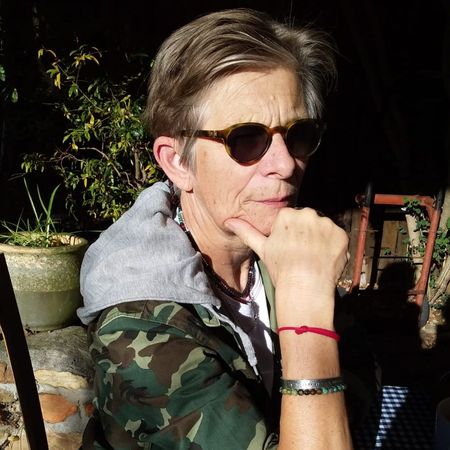
/file/attachments/orphans/bourquin-pregnancy-doula_239285.jpg "Irene Bourquin the author of Practical Pregnancy (9th Edition) is a registered nurse and midwife, perinatal and childbirth educator, birth and postpartum doula, and long-time doula trainer. (Photo: Helene Bourquin)")
The invisible angel
Bourquin believes postpartum care is routinely underestimated. The first six weeks are often treated as the period requiring attention, but she argues that mothers often need support for much longer.
Partners return to work, families return to their own lives, and suddenly a new mother can find herself alone with a newborn without having been taught what to expect.
“Nobody’s educated about how to be a [parent],” she says. “Everybody thinks it’s instinct. It’s not.”
She believes new mothers can become overwhelmed and isolated, and that practical support – somebody to hold the mother, somebody to listen, somebody to make sure she eats – can be enormously important.
For Bourquin, the doula “is an invisible angel”.
Doulas that work in state hospitals, like the ones Bourquin trains people in through the organisation Wombs (Women Offering Mothers Birth Support), and which she helped found, are not paid for their services. For them its about giving back to the community, whereas those in private hospitals receive a nominal fee for their work.
A doula gets to know the woman behind the medical record: what she wants, what frightens her, what matters to her and what questions she needs answered.
If you want to make Bourquin’s hair stand on end, call the client “Mommy”. She encourages doulas to use the woman’s name.
“Once they hear their own name, they are yours,” she says.
The doula’s role also extends to the partner – asking if they need something to drink, showing them where the toilets are or teaching them how to massage their pregnant partner’s feet. Bourquin’s training encourages doulas to treat clients as they would like to be treated themselves, while keeping within their field of expertise.
The circle of care
She describes the doula as part of a “circle of care”: not a replacement for the midwife or obstetrician, but another person in the team, with the woman at its centre.
“So, it’s a part of holding space, isn’t it?” I ask.
“It is,” she says.
Some doulas refer to the circle of care as creating a “sacred space” – Bourquin, however, is less concerned with the terminology than and what actually happens inside the space: the care, communication and reassurance provided. Practically, it means staying present, listening, reassuring, comforting. And most importantly, allowing the woman to remain a person rather than becoming simply a patient.
The doula provides continuous physical, emotional and informational support. The midwife and obstetrician provide clinical care. And the partner and family are part of that circle too.
The important distinction is that the circle works around the woman, rather than the woman being expected to fit into the medical system.
Bourquin believes doulas should be available in every hospital whenever a mother wants one. Their role is not to interfere with medical care, but rather to support the mother, partner and medical team.
Stitched onto each of the Wombs doulas’ scrubs is a cloth badge with the words “Be kind, be gentle” — not so much for the doulas themselves but as a reminder to an overstretched medical staff.
It is a surprisingly simple motto for a complex system.
And the doula’s role does not necessarily end when the baby arrives.
Bourquin gives another example of the effectiveness of the doula network. A Somali woman came in to give birth; two Muslim doulas were attending to her, but neither spoke her language and the patient could not speak English. Serendipitously, one of the doulas knew somebody who spoke the woman’s mother tongue. They connected her by phone and she was able to talk to the woman throughout the birth.
The woman in labour, remarkably, had actually been at school with the woman they called.
/file/attachments/2996/PracticalPregnancybyIreneBourquin_MaskewMiller_253524.png)
Birth, inequality and choice
SA’s maternity system complicates the picture further. Bourquin describes a country with highly skilled medicine alongside deep inequality.
For her, access to information, support and respectful treatment should not depend on what a woman can afford.
Her central principle remains simple: “The mother is the centre of care.” But as she says, mothers are not always treated that way.
Practical Pregnancy, Birth & Early Parenting Guide taught Bourquin something she did not expect. She is grateful for updates from Emeritus Professor Mark Cotton on HIV and Dr Anthony Allwood on pain relief, epidurals and caesarean births.
“I’ve written a lot about what to expect. What is the woman’s right to have her culture respected, her dignity respected.”
If there is one outcome she wishes for the book, it is that readers will use it to educate themselves.
“Find out everything you can, good and bad.”
Ask Bourquin the one thing she would change about the way society approaches pregnancy and birth, and her answer comes without a pause: “Education. Education. Education.”
And then, like the badge stitched onto her doulas’ scrubs: Be kind. Be gentle. DM
Comments
Scroll down to load comments...