




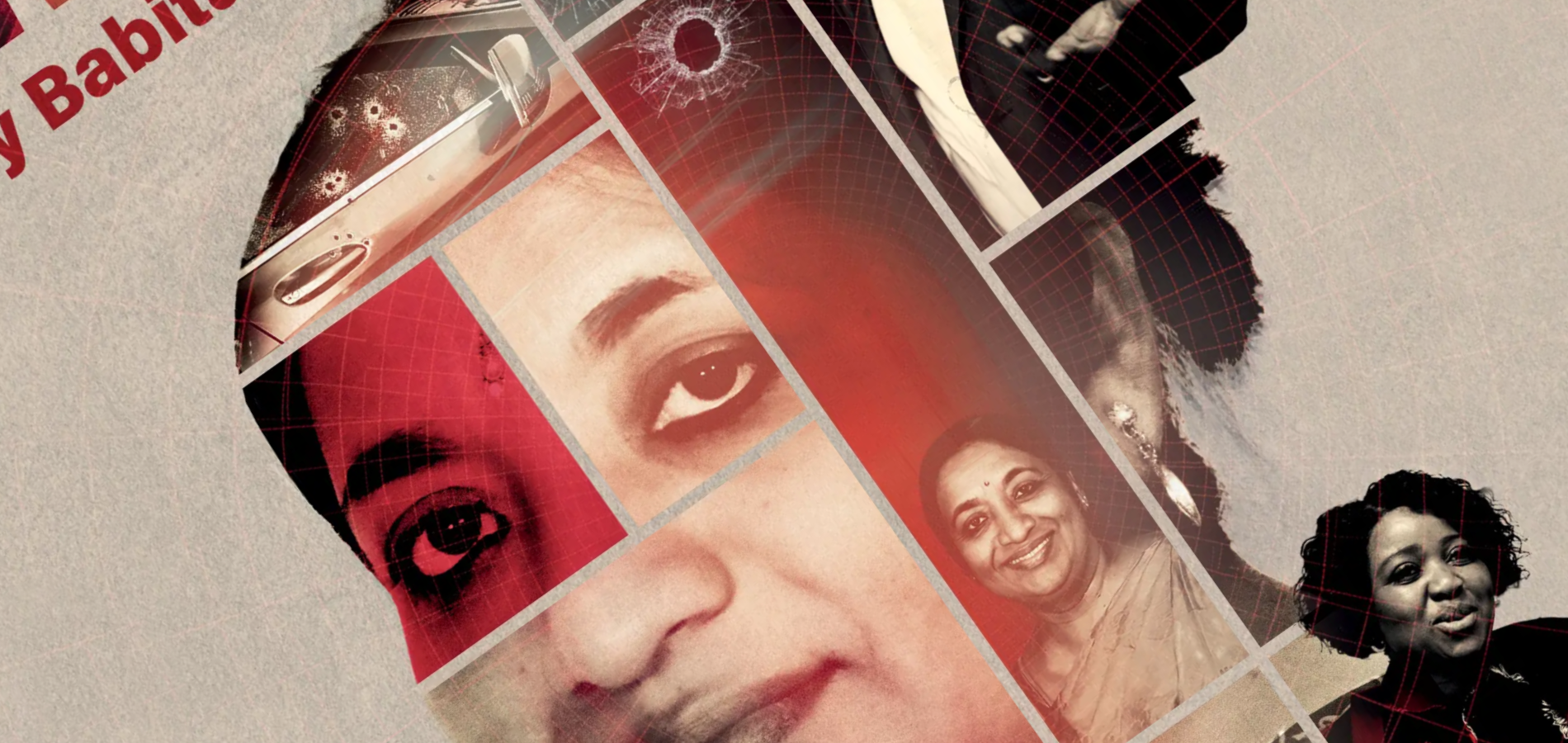
 Image: Jonathan Ball Publishers
On 23 August 2021 South Africa was stunned into grief-stricken silence as we learned that Tembisa Hospital whistle-blower Babita Deokaran had been gunned down in her driveway, just days after expressing concern that her revelations about tender corruption at Tembisa Hospital had brought danger upon her. Since then, we have learned of the loss of R2-billion in tender corruption at the hospital, we have seen the sentencing of low-level hitmen, and we have heard the calls for accountability mounting – but we have not seen any change that makes the situation safer for whistle-blowers.
Babita’s sacrifice has been commemorated in many ways. However, commemoration is not justice, and it is definitely not reform. We owe Babita and the many whistle-blowers who gave their lives in search of the truth, including Moss Phakoe (2009), Jimmy Mohlala (2009), Pamela Mabini (2025), and Marius van der Merwe (2025), among others, much more than mere commemoration.
From the minute it opened its doors, Corruption Watch has been calling for stronger protection for whistle-blowers and indeed, for whistle-blowers simply to be taken seriously. For over 14 years we have also called for meaningful accountability and demanded that those implicated or found guilty in corrupt activities must face the consequences of their actions.
Whistle-blower reports have been the foundation of our work since the beginning, and we have not let up in our support for them. Our new Impempe campaign issues a bold call to action targeting all interest groups, community members, and business to join and add their voice to a national call against corruption. At the same time, the campaign aims to de-stigmatise the act of whistle-blowing while playing tribute to those who have sacrificed their livelihoods, freedom, and at times lives by blowing the whistle.
Limited protection
In March 2012 – two months after Corruption Watch’s establishment – we wrote (in an article about the Protection of Information Bill, which has apparently stalled): “For employees in both the public and private sector, protection is limited to the Protected Disclosures Act, which is already criticised for its weak protection mechanisms.” The issues we raised in that 14-year-old piece, such as no protection for the public outside the employer/employee context, and the fact that private and political elite can afford to use the law to thwart whistle-blowers, are still valid today.
The Protected Disclosures Bill, currently before Parliament, is an attempt to remedy those flaws and adapt the current protection framework to more efficiently deal with disclosures and their consequences. For some, like Babita, those measures have come too late.
Tardy response
The shortcomings exposed by her death are nothing new. We did not learn about them at that moment. Rather, these are reforms we have been demanding for years, to address:
The dangers faced by whistle-blowers and ethical public servants – and their families.
The weak institutional responses to whistle-blower warnings.
The slow or erratic investigations into whistle-blower allegations.
The lack of prosecutions, convictions, and sentences for those found guilty of corruption.
The brazenness of corrupt individuals and networks in believing they can intimidate, victimise, threaten, or eliminate those who stand in their way.
Babita’s death should have triggered much more urgent reforms in whistle-blower protection, the reporting of corruption, institutional accountability, and consequence management. The longer those reforms are delayed, left incomplete, or poorly implemented, the longer the system continues to fail the very people who take enormous risks to protect the public interest.
We should have seen an immediate circle of protection around her and the others. Protection should have begun when the risks were first identified, not when the danger began to escalate, because by then the decision had already been made to eliminate her. Nor does the sentencing of the six hitmen bring comfort to her family, because they were paid by someone – and that someone still walks free.
The kind of support whistle-blowers need goes way beyond the physical. They need legal assistance, psychosocial support, employment protection, financial protection, and assurance that their claims are being investigated. Babita was told, by Gauteng Health head Lerato Madyo, that an investigation was under way – that was not true, and just days later Babita was dead. It was under Madyo’s watch that much of the tender corruption at Tembisa happened, but she was never held to account – rather, she clung onto her job for a further three years before reportedly resigning and receiving a settlement.
This highlights a significant shortcoming, that in many cases corruption reports involving public funds are not acted on quickly enough. Delays only benefit the accused, while they exacerbate the danger for whistle-blowers and allow implicated persons to put their own protection mechanisms into place, even as evidence is at risk of disappearing or being tampered with.
It is Corruption Watch’s firm view that officials – such as Madyo – who ignore warnings, fail to act, condone suspicious payments, or protect corrupt networks must face full consequences. Justice must extend to the enablers and decision-makers who make whistle-blowing so dangerous, and not only to those who carry out the orders.
But ‘should have, could have, would have’ is not going to bring back our slain heroes. A country, and government, that praises whistle-blowers after they are gone but fails to keep them alive, has not learned the right lessons.
What will make a different is sustained pressure on government from civil society, the public, and all interested parties to make the reforms that we need. If we claim to be serious about honouring Babita, then the important thing is not just what we remember – it’s what we change. DM