



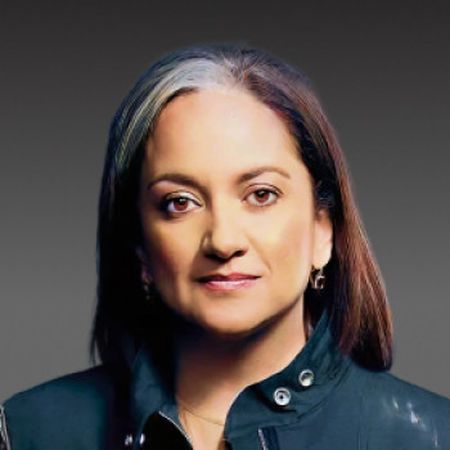
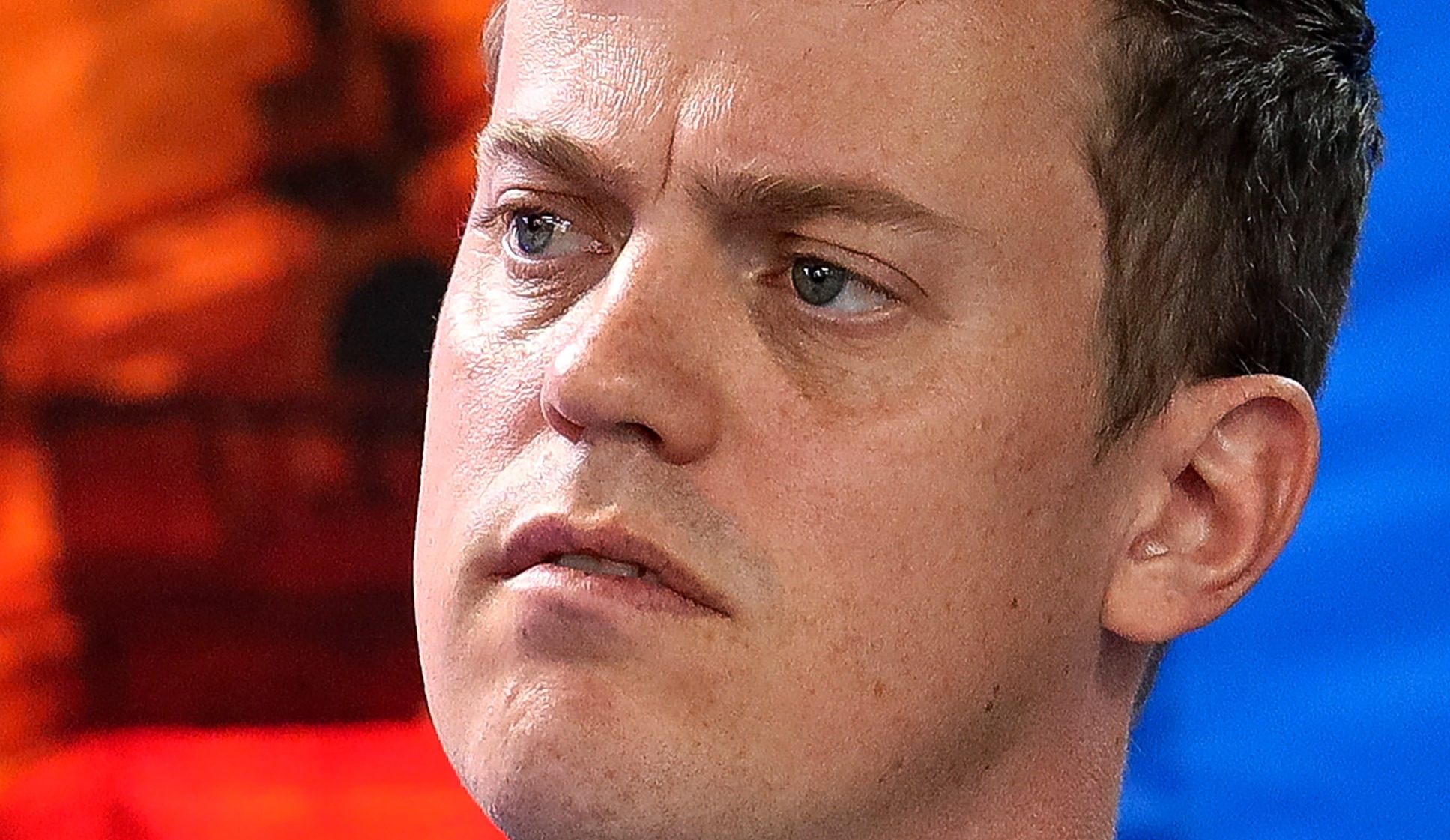
 DA finance boss Mark Burke has been under scrutiny while the Reserve Bank investigates a company he founded. (Photo: Gallo Images / Fani Mahuntsi)
A critical court judgment delivered on 28 July sets out the questions facing DA MP and party head of finance Dr Mark Burke. He has stepped aside from three financial oversight and appropriation committee roles at Parliament this week pending the finalisation of a central bank investigation which could take two-and-a-half more years to complete.
The judgment found that the SA Reserve Bank’s (Sarb’s) investigation into Kastelo and its decision to freeze a bank account is legal. It did make a finding on whether the company committed any wrongdoing. An earlier judgment in January denied the company an application for an urgent interdict because of the impact of the Sarb action on its reputation and fortunes.
The July ruling reveals that the company’s own bank triggered the investigation: “The applicant’s own authorised dealer, Access Bank, triggered the investigation, when it reported suspicious transactions and conducted its own forensic review.”

The judgment records Sarb’s case that Access Bank “raised serious concerns regarding Kastelo’s business model” and was considering off-boarding Kastelo. The reason given for not off-boarding it was that the bank did not want to pass what it considered contraventions of the regulations to another bank; it therefore informed FinSurv (the Sarb’s financial surveillance division).
Individuals and whistleblowers also reported it for alleged transgressions and problems in its business model.
Money for FIA
Burke, with his brother Nicholas Burke, founded the fintech Kastelo Pty Ltd in 2018 and did a roaring trade helping people use their single discretionary forex allowance (SDA) and foreign investment allowances (FIA) to trade crypto. When their clients could not afford it, they loaned them the money and paid them small allowances on the benefits.
On Kastelo’s own numbers, 891 clients potentially represented R891-million in SDAs and R8.9-billion in FIAs in an annual cycle.
For people earning an average R15,000 a month and facing the difficulties of lower middle-class life, signing up was a no-brainer. Kastelo rode high, as the numbers reveal.
Sarb is considering how to phase out foreign exchange control, an anachronism in modern markets. It dates back to the Great Depression when apartheid South Africa had to protect its foreign reserves.
Until the rules are scrapped, it remains law, and the Burkes’ company allegedly fell foul of regulations, Sarb contended. In November 2025, it blocked the company’s account with R13-million in it, leaving it stricken and its reputation in tatters, lawyers for Kastelo argued in court.
The Gauteng high court ruled for Sarb with costs in July.
/file/dailymaverick/wp-content/uploads/2025/04/IMG_3610-1.jpg "sune-DA court case")
‘Devastating effect’
While Burke has shown that he stepped down from the company in 2024 to start his political career, the investigation goes back to 2021 when he was an executive director.
The Young Turk MP, who was part of a generational group of stars revealed to the public by the DA ahead of the 2024 election, has serious questions to answer.
The court did not make a final finding that Kastelo committed the underlying exchange-control contraventions; it found that Sarb had reasonable grounds for its suspicions and dismissed Kastelo’s challenge to the blocking order.
“The blocking order has had a devastating effect on Kastelo’s reputation, and it has the potential to put Kastelo out of business,” the judgment records.
The blocked Access Bank account was used as a “fund flow in Kastelo’s algorithmic trading model”. Kastelo said the account held funds “for and on behalf of clients”.
Kastelo said the blocking order “halts an indispensable aspect of Kastelo’s business” because it “locks clients’ funds and cripples Kastelo’s ability to conduct its business and meet its client obligations”.
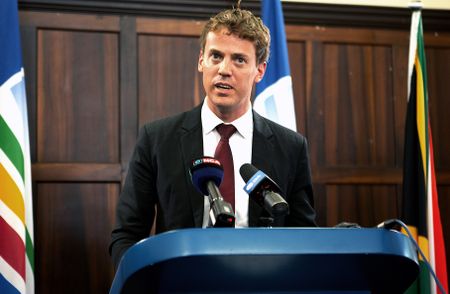
The 10 key questions facing
Kastelo’s owners and executives
1. Why was Kastelo using its clients’ personal foreign-exchange allowances?
Sarb says Kastelo systematically used clients’ R1-million Single Discretionary Allowances (SDA) and R10-million Foreign Investment Allowances (FIA) to move money offshore. The question is whether clients were genuinely investing their own money for their own benefit, or whether Kastelo was effectively using hundreds of individuals’ allowances to externalise money for its business.
2. Did clients actually understand what Kastelo was doing in their names?
Sarb alleges that clients did not properly understand the transactions conducted using their allowances and that some were unaware that foreign bank accounts had been opened in their names. What exactly were clients told, and what did they agree to?
3. Why were clients being paid to make their allowances available?
Kastelo advertised bonuses of up to R2,000 for an SDA investment and R10,000 for an FIA investment. Why was Kastelo paying people to participate, and was this effectively payment for access to unused foreign-exchange allowances?
4. Why was Kastelo lending clients’ money so they could use those allowances?
Sarb suspects Kastelo lent its own money to individuals and then used their SDA or FIA to take the money offshore. Sarb characterised this as potentially a simulated transaction designed to circumvent exchange controls.
5. How were people earning around R15,000 a month qualifying for loans of about R249,000?
Access Bank reportedly found that many clients earned about R15,000 a month but received loans of about R249,000. It questioned the security of the loans, affordability assessments and the risk of over-indebtedness.
6. Who was really controlling the money and foreign-exchange transactions – Kastelo or the client?
As a Treasury Outsourcing Company (TOC), Kastelo was supposed to operate as an intermediary while the client remained principal to the foreign-exchange transaction. Sarb suspects Kastelo instead bought or sold foreign currency for its own account, or indirectly controlled the foreign currency flows.
7. Where are the individual client instructions and audit trail for each transaction?
When you buy forex to travel, you’ll know there are lots of documents – it’s a whole palaver. The law requires a Treasury Outsourcing Company to be able to demonstrate a complete audit trail, including clients’ instructions. Sarb said clients appeared unclear about their arrangements with Kastelo and questioned whether Kastelo had the required mandate for each foreign exchange transaction.
8. How does Kastelo explain the scale of the money moved offshore?
Sarb’s cross-border data produced a reasonable suspicion involving at least R4-billion. The judgment records that, in just three months from 4 August to 21 November 2025, the suspected contravention amount was R4-billion. Whose money was it, where did it go, what crypto assets were bought, and where did the proceeds and profits ultimately land?
9. Why did Kastelo’s own bank become sufficiently concerned to report it to Sarb?
Access Bank conducted its own forensic investigation, reported suspicious foreign exchange transactions and was considering off-boarding Kastelo because of the risks it identified. What did the bank find, and how does Kastelo answer those findings?
10. Did Kastelo accurately tell FinSurv what its business was actually doing?
Sarb says there was a reasonable suspicion that Kastelo misrepresented its activities in compliance declarations submitted to FinSurv, and that the suspicions were consistent with Kastelo’s own 2025 compliance letter. Kastelo needs to explain what it disclosed about its loan-funded crypto-arbitrage model, use of client allowances and control of foreign exchange flows.
The young MP may have to answer additional political questions to DA leaders, including when he knew about the Sarb investigation, whether he was party to meetings with the central bank, and whether he helped sculpt the company’s defence.
He may also have to show that he recused himself from all relevant meetings at Parliament, not only with Sarb, but also with the National Treasury, as one of the respondents in the application to have the accounts unblocked and the investigation set aside is the Minister of Finance.
While he has stepped down as a director, it is not clear how he holds his interest in the company – whether it is in a blind trust or an individual or family trust. DM
Kastelo’s defence
Kastelo’s lawyers put up a spirited defence which is summarised here.
• Its crypto-arbitrage business model is lawful. Kastelo says it operates an algorithmic trading product that identifies pricing differentials in crypto markets, executes trades for clients and repatriates the resulting value to South Africa in rands.
• The money does not stay offshore. Kastelo’s central argument is that the funds are converted to foreign currency, externalised for the trading cycle and returned to South Africa in rands, sometimes daily or multiple times a day. It says this is not a permanent export of value.
• Clients are the investors, not Kastelo. Kastelo says each client gives it a discretionary investment mandate allowing it to make and implement investment and trading decisions on the client’s behalf without obtaining prior instructions for each individual transaction.
• Clients are properly onboarded. Kastelo says customers undergo Fica due diligence, identity and address verification, tax and mobile number checks, biometric authorisation and liveness checks, and provide a special power of attorney.
• Using the SDA and FIA is legitimate. Kastelo says South African residents are entitled to use their foreign investment allowances and that it acts as their agent.
• Clients participate on their own account and risk. Kastelo disputes FinSurv’s assertion that the foreign currency was acquired for Kastelo’s benefit rather than the clients’ benefit.
• Its loans are genuine credit facilities. Where a client participates using a loan advanced by Kastelo, it says the client makes a credit application, undergoes credit vetting and an affordability assessment under the National Credit Act, and applications are declined where the client cannot service the facility from their own means.
• The Reserve Bank misunderstood how the business works. Kastelo argued that FinSurv relied on untested, incorrect and biased allegations, failed to obtain all relevant information and did not engage directly with Kastelo before acting.
• Sarb should have spoken to Kastelo before freezing its account. Kastelo complained that it received no prior notice and no opportunity to make representations before the blocking order, and initially was not given reasons.
• The freezing order was disproportionate and damaging. Kastelo said the Access Bank account was integral to the fund flow in its trading model, held funds for and on behalf of clients, and that blocking withdrawals crippled its ability to conduct business and meet client obligations.
We used ChatGPT to assist with summarising the judgment. A human editor was part of the research, writing and editing all the way.
Burke’s statement
Burke released the following statement on the matter.
I note the recent reporting concerning the South African Reserve Bank’s investigation into Kastelo Proprietary Limited and the judgement concerning a blocking order issued by the Bank.
I take this matter seriously and fully respect the independence of the South African Reserve Bank and its responsibility to investigate potential contraventions of exchange control regulations.
It is equally important that the facts are reported accurately.
I am not the chairperson of Kastelo Proprietary Limited, the company that is the subject of the litigation, and I am not involved in its daily operations. I previously served as chairperson of the broader Kastelo group but have since ceased serving in that position in February 2026. I resigned from Kastelo in 2024 to pursue a political career.
The High Court judgment does not make any finding of wrongdoing against Kastelo, nor myself.
Nor does the judgment constitute a finding that exchange control contraventions have been proven. The matter before the Court concerned whether the Reserve Bank had grounds to issue a blocking order while its investigation continues. The Court found that it did.
At all times I have and will act ethically and lawfully, and I am confident that once Sarb’s inquiry is complete, it will find no wrongdoing on my part.
Since entering parliament I have consistently informed my party and the finance committee secretary that I cannot be involved in any matters relating to Sarb to avoid any conflicts of interest. The record of recusal is very clear. I did this to maintain strong ethical boundaries and will continue to do so.
I have furthermore ensured that all necessary declarations to parliament and the members interest register was done timeously and accurately.
No allegation of misconduct or malfeasance has been made against me personally, and I am personally not subject to any investigation by any entity or agency.
Comments
Scroll down to load comments...