




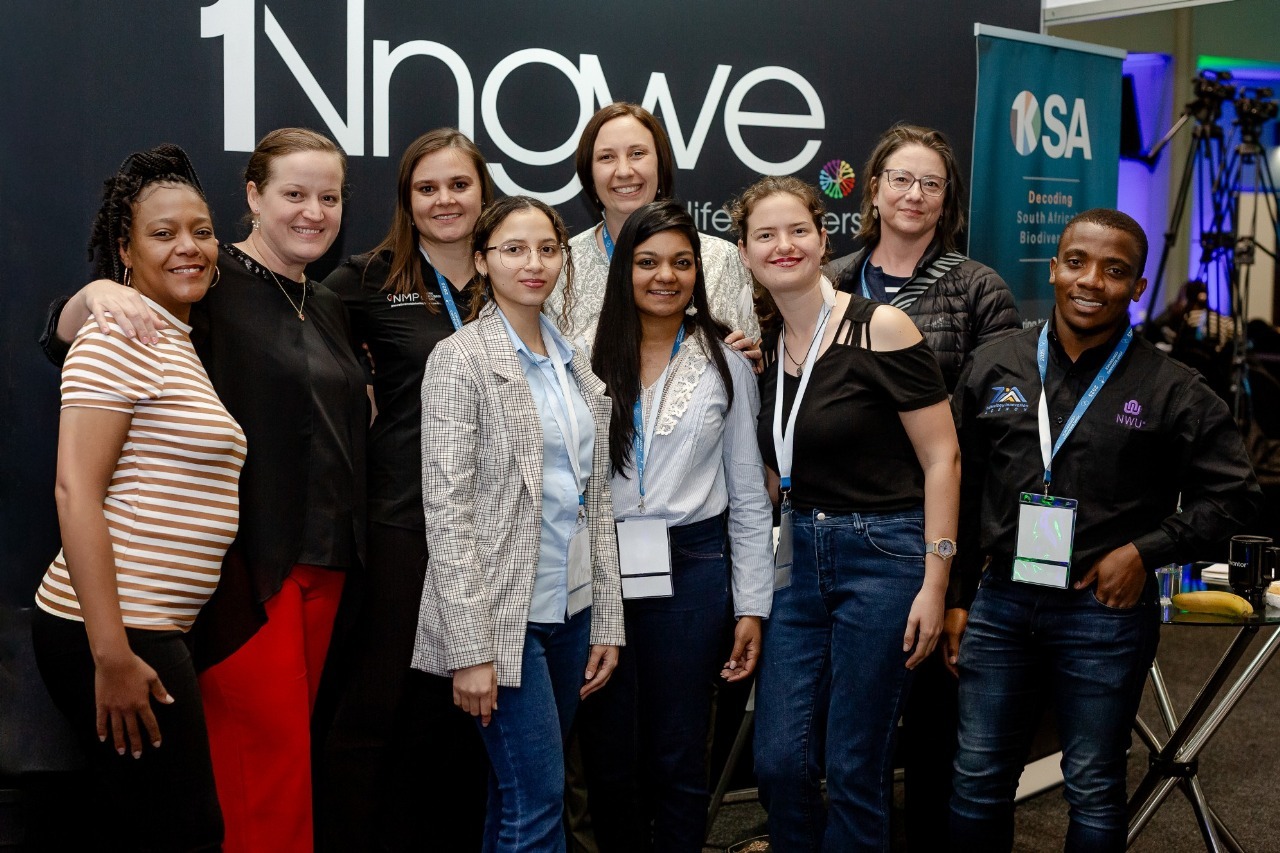
 NWU Biobank conference.
For the Oosthuizen family from Pretoria, that was their reality.
Their “diagnostic odyssey” – researchers’ term for a long, exhausting search for answers – involved years of referrals, tests and uncertainty before siblings Wian and Lumé were diagnosed with UNC80 deficiency, an exceptionally rare genetic disorder. Fewer than 50 patients have been reported worldwide, and to the researchers’ knowledge, the siblings are the first diagnosed with the condition in Africa.
The Oosthuizens are, however, among the fortunate few who eventually received an answer.
Worldwide, there are more than 7 000 identified rare diseases. In South Africa, an estimated 3,5 to 4,2 million people are living with one.
For many, the search involves repeated consultations, tests and even misdiagnoses.
For others, answers never come.
Biobank offers hope
This is a story researchers at the North-West University’s (NWU) Centre for Human Metabolomics (CHM) aim to rewrite through their Rare Disease Biobank.
Established in 2019, the centre is Africa’s first dedicated Rare Disease Biobank, a specialised repository that stores biological samples such as blood, urine, plasma, tissue and DNA, together with detailed clinical information from patients living with rare diseases.
The CHM Biobank is a growing library of knowledge that could help scientists unravel poorly understood diseases, especially in African populations, and improve diagnosis, says Prof. Ilse du Preez, deputy director of the CHM and head of research and development.
“By combining high-quality biological samples with detailed clinical information, the biobank creates opportunities for discoveries that would not have been possible through isolated studies,” she says.
The need for a dedicated biobank came from the university’s specialised work in inherited metabolic disorders, says Dr Elne Conradie, the biobank manager. As increasing numbers of patients were referred to the CHM for diagnostic testing, researchers realised they needed a way to preserve valuable biological samples.
/file/attachments/2996/ElneConradieWebsitephoto_409568.jpg)
It is estimated that more than 70% of rare diseases have a genetic cause. Many appear during infancy or childhood, and some can be treated or managed if diagnosed early enough.
Yet in many cases, says Prof. Du Preez, obtaining that diagnosis remains a mind-boggling challenge.
In Africa, the task is particularly acute.
“Limited access to specialised diagnostic services is only part of the problem. The continent’s populations, despite representing the greatest genetic diversity on Earth, remain significantly underrepresented in rare disease research,” she says.
“Much of what clinicians know about these conditions, and many of the genetic databases they rely on, have been built using populations elsewhere in the world.”
Researchers at the NWU’s CHM believe progress starts with preserving the biological clues that rare diseases leave behind.
“What makes the CHM Biobank particularly special is that it places patients at the centre,” says Dr Conradie.
/file/attachments/2996/20260723_084900_951472.jpg)
“The biobank is not simply a collection of samples – it is a growing community dedicated to improving diagnosis, advancing research, supporting families, and creating hope for future generations affected by rare diseases.”
Its greatest value lies in the knowledge attached to every sample, says Prof. Du Preez. Wherever possible, samples are collected at different stages of a patient’s healthcare journey, allowing researchers to study disease progression over time.
Clinical information stored alongside each donated biospecimen may include a patient’s medical history, symptoms, laboratory findings, genetic results, family history, diagnosis and, where available, long-term health outcomes.
“Every donated sample represents a family on their journey to finding answers and contributes to research that may benefit future generations,” says Dr Conradie. “While an individual patient may not immediately benefit from their own donated sample, their contribution has the potential to improve diagnosis and care for thousands of future patients.”
/file/attachments/2996/WhatsAppImage2026-08-12at122959_239693.jpeg)
Participants contribute valuable data
Prof. Du Preez likens the concept to a crowd at a rugby stadium. “One person singing has very little impact,” she says. “But when the crowd unites, the effect is awe-inspiring.”
Today, the CHM Biobank’s collection includes just over 1 000 participants, including patients living with rare diseases as well as their family members.
According to Dr Conradie, including relatives helps researchers understand inheritance patterns, identify disease-causing genetic variants and improve the interpretation of genetic test results.
“Our vision is to ensure that no patient is left behind simply because they have a rare condition or because rare disease research in African populations remain markedly overlooked,” she says.
The CHM Biobank hopes to strengthen partnerships between clinicians, laboratories, hospitals and researchers across South Africa and, increasingly, the rest of the continent.
Because rare diseases are uncommon by definition, a single hospital may never see enough patients with one condition to answer important scientific questions. Pooling medical information across Africa can help researchers identify disease patterns and genetic variants, validate diagnostic tests, discover biomarkers and better understand how these conditions affect African populations.
“It helps build the scientific knowledge needed to ensure that future patients receive answers more quickly and have earlier access to appropriate care and, where available, targeted treatments,” says Prof. Du Preez.
The CHM biobank also provides an educational resource by bringing together real clinical cases, biospecimens and associated information for teaching and training, she says.
/file/attachments/2996/IlseduPreez_websiteNEW_122164.jpg)
A stronger network is key to further success
Connecting the CHM Biobank to other repositories is central to extending its research value.
The CHM team is working towards linking the biobank with rare disease registries and international research networks, creating a platform where biological samples and long-term clinical information complement one another. While the biobank stores biospecimens, patient registries capture diagnoses, disease progression, treatments and health outcomes.
Linking these resources would allow researchers to examine how rare diseases develop and affect people’s lives over time.
Working across hospitals, countries and disciplines creates the critical mass needed to identify patterns, improve diagnosis and healthcare planning, says Dr Conradie.
“For us, looking at the future, success means a larger and stronger network, more participating countries and institutions, more clinicians trained and empowered. Success means more patients receiving diagnoses and more African data contributing to global knowledge,” she says.
The case of the Oosthuizen family, Prof. Du Preez says, illustrates why the CHM Rare Disease Biobank is essential.
“Their story is a powerful reminder that every participant in the biobank has the potential to make a lasting impact far beyond their own family.”
Because ultimately, that is the CHM Biobank’s goal: To ensure fewer families must spend years searching for answers.
“The question is no longer whether this approach can work, but how quickly it can be scaled,” says Prof. Du Preez.
“Achieving our vision will require continued partnership among clinicians, researchers, patient organisations, policymakers and funders. Every clinician trained increases diagnostic capacity, every patient enrolled strengthens the evidence base, and every country added expands the network’s reach.”
Dr. Conradie agrees. “Together, we can ensure that more patients receive answers, more families receive support and more healthcare professionals have the tools they need to make a difference in the lives of those affected.”
Healthcare professionals and patients who would like to learn more about the CHM Rare Disease Biobank, the consent process or participant information can visit the National Metabolomics Platform’s webpage. DM
/file/attachments/2996/Centre-for-Human-Metabolomics-logo_867524.png)
/file/attachments/2996/NMPLogo_584677.png)