





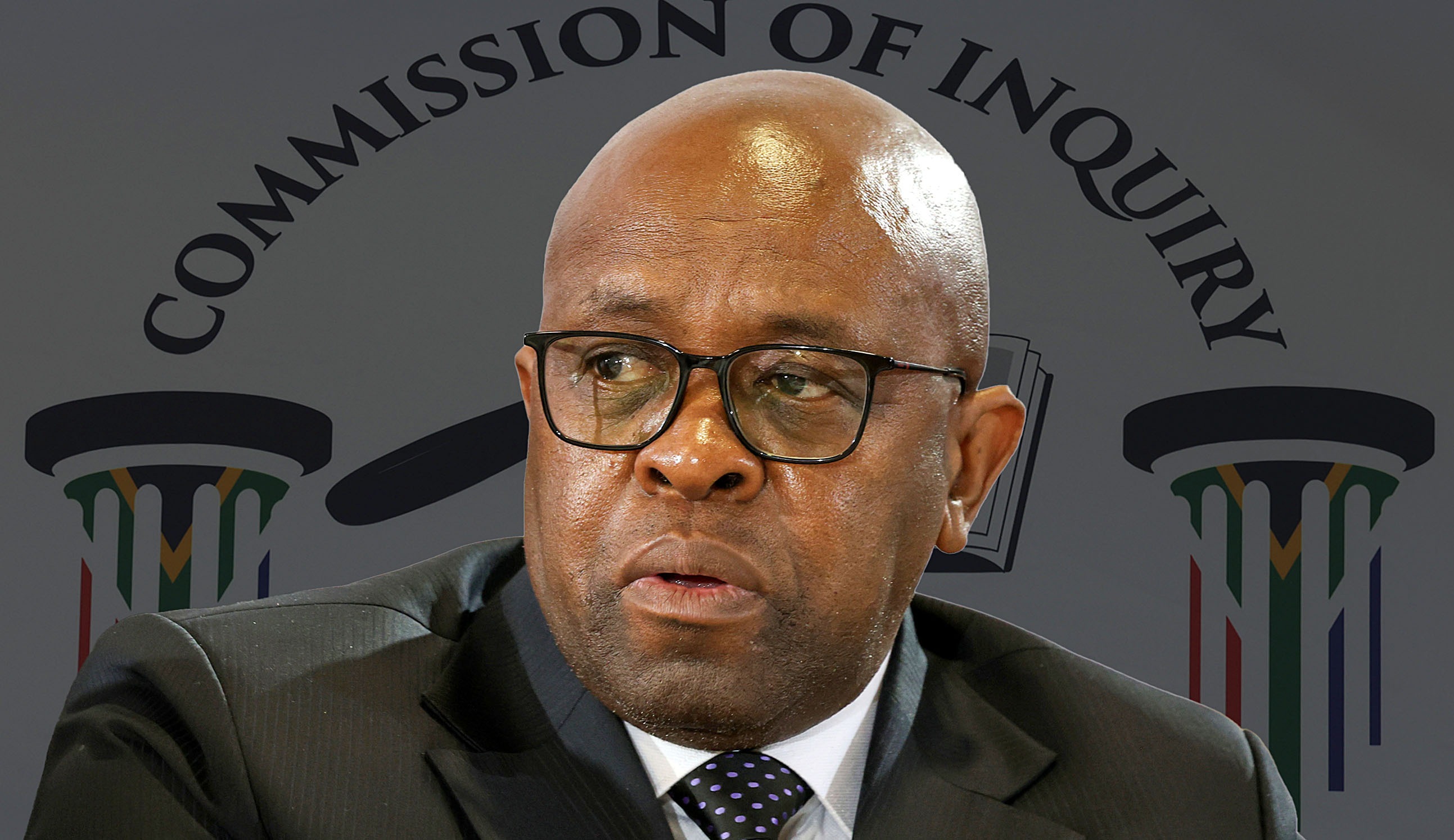
 Retired Justice Mbuyiseli Madlanga. (Photo: Felix Dlangamandla)
From LinkedIn commentators to radio talk show callers and working-class township residents, everyone has high praise for the Madlanga Commission, which has given us an insight into the underbelly of our criminal justice system.
Why? First up, it’s great theatre and a prolific source of social media memes. There is glee in seeing powerful figures sweating under examination, unable to untangle their lies. But it’s more than theatre. What differentiates this from other commissions of inquiry is that there are consequences. Or at least this appears to be where we are headed.
If the commission is a three-part play: Exposure, Arrests, Punishment, then we are still anticipating Act III.
/file/attachments/orphans/ED_574134_166360.jpg "Advocate Sesi Baloyi, Justice Mbuyiseli Madlanga and advocate Sandile Khumalo at the Madlanga Commission Of Inquiry in Pretoria on 19 September 2025. (Photo: Gallo Images / Lefty Shivambu)")
The intensity of praise for the commission is even more remarkable when we acknowledge a home truth: everyone is susceptible to corruption. From syndicates milking billion-rand contracts to negotiating a tjotjo to overlooking unaccountable units in the electricity meter.
The Sesotho saying, matsoho a hlatswana (hands wash each other), has become the way we get things done within crumbling systems. Sometimes with enthusiasm, sometimes with resentment, sometimes out of desperation. Only those with morals of steel, and serious money, can stand apart from this way of living.
Hooking the big fish
Enthusiasm for the commission stems from two very differently expressed elements. The first is that while we might all be corrupt, we aren’t stupid. Trapped as we are in colluding with corruption to make ends meet or get things done, we can see where this will lead: chaos and the law of the jungle.
The second is that the commission is, for the most part, taking on big fish. The theatre audience is full of resentment, and jealousy, at the greed of these senior officials looting the public purse. To see them sweating is sweet!
Fundamentally, the commission’s audience is appreciative, unlike the commissions that we have become weary of, because it has teeth and is using them. What accounts for this difference?
To begin, the whistleblower who triggered this commission, General Nhlanhla Mkhwanazi, was taken seriously and can protect himself. Many whistleblowers are ignored, and we’ve seen what can happen when they aren’t, but unable to surround themselves with armed men.
It is inquisitorial, sidestepping South Africa’s adversarial legal system that allows justice to be indefinitely delayed if you have money; and
It was given powers of summons, search, seizure, and, critically, referral of matters for immediate criminal investigation and urgent decisions on prosecution; and
From January this year, instead of seeing referrals bounce from the SAPS to the NPA, who refer to Idac before arrests are made and charges laid (or get lost in the wings), the public is finally getting to see the curtain rise on the latter acts – referrals going directly to the Special Investigating Task Team set up after the commission’s interim report.
Finally, there are the commissioners, evidence leaders, investigators and secretariat who have demonstrated how state institutions can work: openly, efficiently, and with purpose. And to whom we take our hats off.
The success of the commission has spawned suggestions as to what should follow. These include more and better legislation, policies, regulations and institutions.
Such proposals are well and good, but they miss a fundamental point: it is people who must make these proposed innovations work. But if we haven’t made our existing laws, policies, regulations and institutions work, why will these innovations be different? Remember: everyone is susceptible to corruption; it’s how things work.
Dramatic examples
The real value of the commission is not suggested institutional or legal changes, but the sharp, sobering effect of big fish being hooked. This could all come to nothing if punishment is not enforced. But if we see powerful officials going down, the example for the rest of society will be dramatic.
Serious penalties for corruption have long been on the books. The Prevention and Combating of Corrupt Activities Act of 2004 permits courts to impose life imprisonment for corruption, while the Criminal Law Amendment Act of 1997 imposes minimum sentences. For corruption involving sums greater than half a million rands, the minimum sentence is 15 years, for first-time offenders.
Examples are most effective when made at the top. If big fish are given life-changing prison sentences, the rest of us will check our behaviour. Even smallanyana corruption can result in lengthy incarceration. If a law enforcement officer is guilty of corruption involving more than R10,000, the minimum sentence is also 15 years for the first offence.
A theatre of consequences that runs to the final act sends a powerful message to those lower down the food chain: cut out the cool drinks if you don’t want to end up in the can.
It is the exemplar effect that gives hope that our ship of state can be turned around. It is not about punishing every corrupt act; there’d be more in jail than out. Rather, it’s about ending a culture where corruption intertwined with public service is how you get ahead, how things get done, or how it’s possible to navigate laws, regulations and rules. That means that the bureaucratic systems of state must work for people. Batho Pele. Remember that?
For the social cancer of corruption to be curbed, the theatre of consequences must continue beyond its current remit to other implicated state institutions, making examples of corrupt leaders and officials and sending a warning to those below.
More commissions
The Madlanga Commission has shown us what can be done. What is now needed is a broader set of commissions, using the Madlanga Commission’s formula. Though the success of this extended run will also depend on the judiciary, who also appear in the commission’s terms of reference, to impose the necessary sentences.
Perhaps the next focus should be on the metros, already drawn into the Madlanga spotlight.
With the looming local government elections, expanding this theatre of consequences to municipalities can only benefit us further. Local municipalities form the absolute bedrock of state delivery. If this foundational rot is not aggressively excised through a dedicated commission of inquiry right now, the contagion will inevitably infect whatever political coalitions take power next.
Without exposure and accountability frameworks in place, any new administration will be built on compromised, rotten wood, allowing the current networks of corruption to simply camouflage themselves and thrive under the incoming regime.
The Madlanga Commission has undeniably set the stage, but a successful run requires more than an engaged audience; it requires a cast of millions.
We cannot simply wait for the final curtain call to applaud – we must become the directors of the next act. Everyone must step in, claiming true ownership of our rights and refusing to normalise the rot.
Because corruption operates as a sprawling, shadowy network across our institutions, it demands a relentless campaign to dismantle it. Progressive civil society is the indispensable engine in this fight, providing the strategic framework and continuous advocacy needed to keep the spotlight bright.
Ultimately, this theatre of consequences will stay open only if we, the people, refuse to let the stage go dark. DM
Nabeelah Mia is the national director of Lawyers for Human Rights; David Dickinson is an attorney with LHR and emeritus professor of sociology at Wits University.
Comments
Scroll down to load comments...