



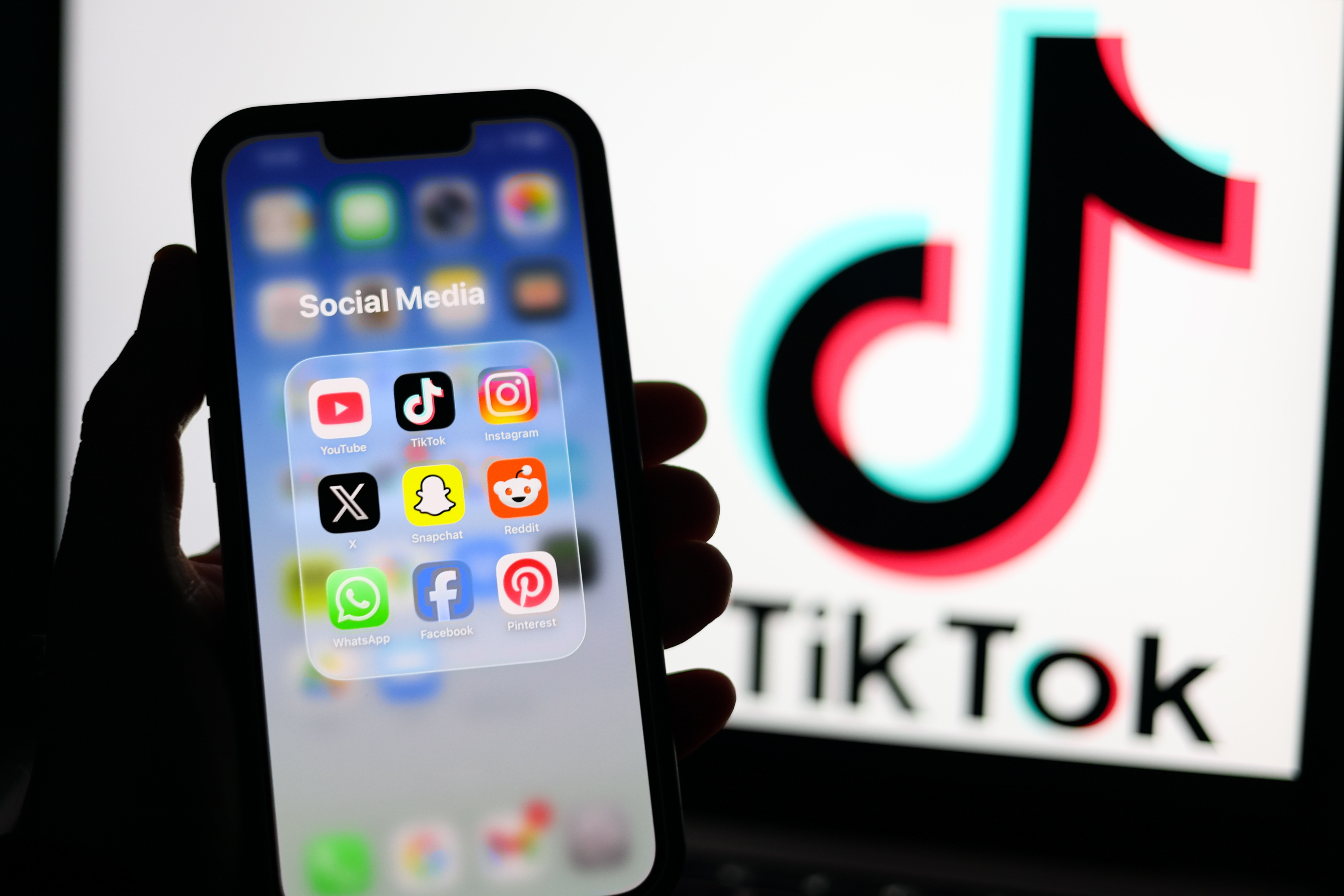
 Social media applications displayed on a mobile phone alongside the TikTok logo displayed on a laptop screen in Liverpool, Britain, 23 January 2026. A proposal to ban under-16s from accessing social media in the UK will be considered in the House of Commons after peers in the House of Lords voted 261 to 150 in favour of an amendment to the Children’s Wellbeing and Schools Bill. If adopted, the amendment would require social media companies to implement strict and effective age checks in order to prevent underage users from signing up. EPA/ADAM VAUGHAN
The companies have denied allegations that their products have contributed to depression, anxiety, body-image issues and a broader youth mental health crisis, saying they take action to protect the youngest users on their platforms.
The companies have also argued Section 230 of the Communications Decency Act shields them from claims based on the content their users post. But the lawsuits are increasing pressure on social media companies as lawmakers consider stricter rules aimed at protecting young users.
Here is a look at the current state of the litigation in U.S. courts.
STATE LAWSUITS
Nearly every state in the country has filed claims against social media companies like Meta or TikTok over the platforms’ alleged impact on children. The lawsuits seek damages or financial penalties, as well as court orders directing the companies to make significant changes to their platforms.
A lawsuit filed by the state of New Mexico against Meta accused the company of failing to protect young users from sexual exploitation on Instagram, Facebook and WhatsApp and misleading consumers about the platforms' safety.
In March, jurors ordered the company to pay $375 million in civil penalties. In a second phase of the case, a judge issued a ruling finding Meta had created a public nuisance in the state by harming children. He ordered the company to pay another $567 million and directed it to implement youth-safety measures. Meta has said it will appeal.
A similar trial is ongoing in a state court in Nashville, Tennessee, over the state’s claims Meta violated its consumer protection law. The state is seeking financial penalties and a court order directing Instagram to modify aspects of the platform that the state says are harmful to teens' mental health.
A trial in California federal court that starts on August 12 will test Colorado, Kentucky, California and New Jersey's allegations that Meta designed its platforms to keep young users hooked and misled consumers about their safety. It will also address claims by 29 states that the company illegally collected and used children's data in violation of federal law.
SCHOOL DISTRICT LAWSUITS
More than 1,000 school districts across the country have filed lawsuits over claims the companies designed their platforms to keep young users hooked, contributing to anxiety, depression and self-harm and leaving schools to deal with the fallout. The schools are seeking compensation for what they say they have spent dealing with social media's effects on students, plus additional funding to limit its impact going forward.
A small school district in rural eastern Kentucky was selected as the first school district case to go to trial, but the June proceeding was canceled after the companies reached settlements with the district. Public records revealed that the district was set to receive $27 million under the agreements.
INDIVIDUAL LAWSUITS
More than 3,300 lawsuits brought largely by individuals against the companies have been consolidated in Los Angeles state court, while a smaller group of individuals have sued in federal court.
In the first trial to test an individual's claims that social media caused personal harm, a young woman alleged that her addiction to social media led to depression and anxiety. The case was selected as the first bellwether, or test case, for the consolidated state court cases.
Attorneys often use bellwether verdicts to gauge how juries may view similar claims, helping them assess the potential value of remaining cases and guide settlement negotiations. Snap Inc and TikTok parent ByteDance, which were also defendants in the case, settled before trial.
In March, a Los Angeles jury found Meta and Google negligent and ordered Meta to pay $4.2 million in damages and Google $1.8 million. Both companies have said they will appeal.
The second trial over an individual’s claims against the companies, scheduled for July in Los Angeles, involved a young Florida teen who said he began using social media around age 8 and suffered from depression and anxiety as a result. The trial was canceled after the plaintiff reached settlements with TikTok, Snap and Google and dropped his claims against Meta just days before the trial date.
Three more bellwethers have been selected to move forward in California state court this autumn, and TikTok has tentatively agreed to settle those cases, a lawyer told Reuters. The plaintiffs' claims against Meta, Google and Snap will continue.
(Compiled by Diana Novak Jones; Editing by Alexia Garamfalvi and Jamie Freed)
Comments
Scroll down to load comments...