




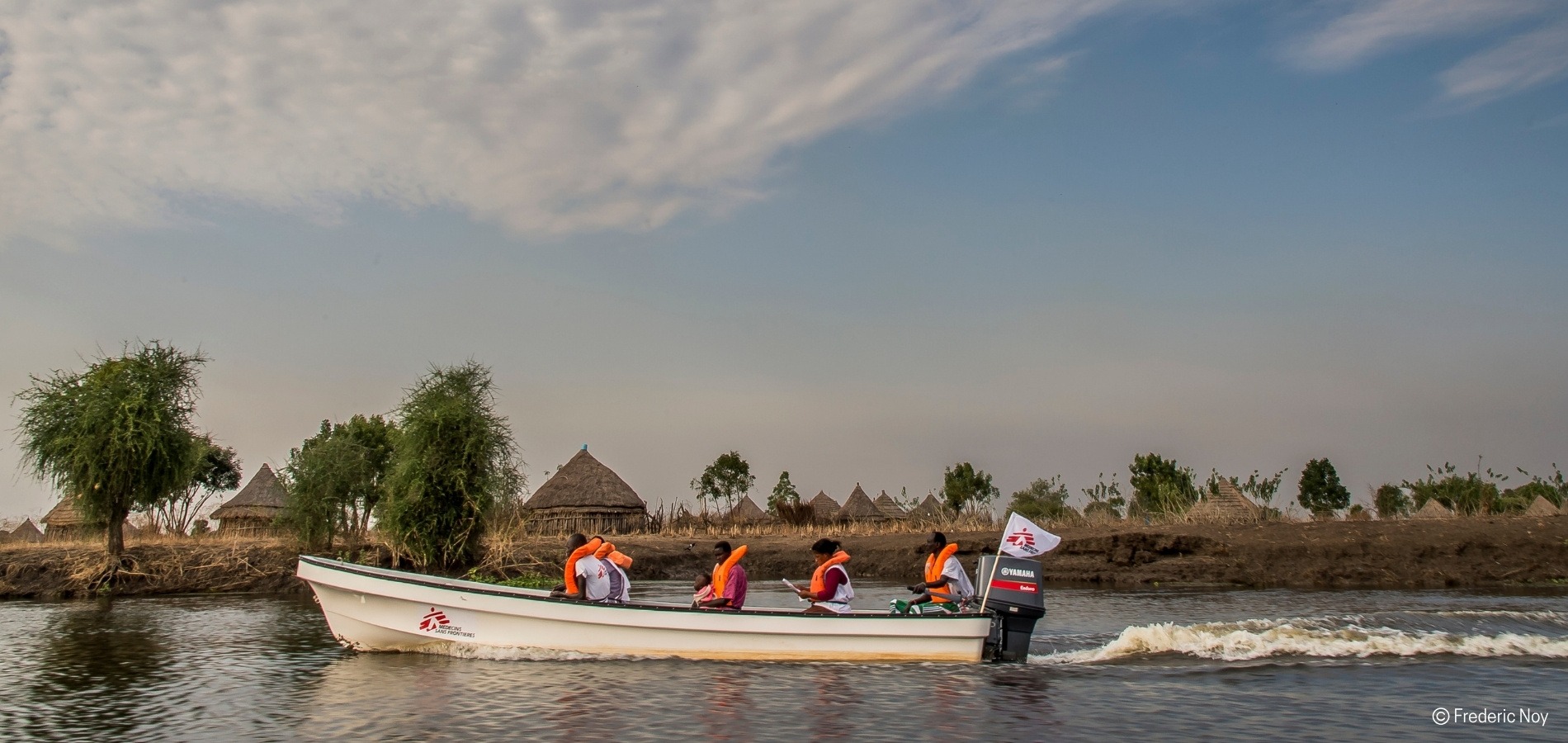
 Photo supplied.
On a winter’s day in Paris, nearly 55 years ago, Médecins Sans Frontières/Doctors Without Borders (MSF) was formed by 300 volunteers: doctors, nurses and other staff, including 13 founding doctors and journalists. Their mission was straightforward: provide medical humanitarian care to people who need it the most around the world.
“It’s simple really: go where the patients are. It seems obvious, but at the time it was revolutionary," says Dr Bernard Kouchner, one of the MSF founders.
Today, in a world where aid has become increasingly politicised, this principle seems more radical than ever. Anti-NGO sentiment, the dismantling of the humanitarian system as we know it, and the gutting of aid from governments around the world means that we face a daunting future. Is an organisation like ours even relevant anymore and how do we continue?
With the UN estimating that 239 million people are in need of humanitarian aid, the short answer to this question is yes, and that we simply must keep going. But how?
Doctors Without Borders was founded on the principles of neutrality, impartiality and independence. Over 97% of our funds come from individual donors. To safeguard our independence and our ability to act according to medical needs, we generally do not accept funding from governments. We also decline funding from industries whose activities or products may conflict with our medical and humanitarian principles, such as tobacco, alcohol or pharmaceutical companies. This financial independence allows us to provide care in some of the most unstable and underserved places in the world.
Independence means we provide healthcare based on medical needs, regardless of race, religion or political affiliations. Independence enables us to launch rapid emergency responses, withdraw when ethical principles are compromised, and continue working in places where few other organisations can. Independence means we can remain neutral in all contexts and not take sides in armed conflicts. Independence is why we are still able to serve people in over 70 countries, year after year. It is also what will allow us to continue going where we’re needed most for years to come.
The power of bearing witness
/file/attachments/2996/Articleimage3_222408.jpg)
The formation of Doctors Without Borders was largely driven by the access to television, which highlighted atrocities being committed worldwide, and a feeling that not enough was being done – in terms of humanitarian aid and condemning what was happening. Hence, journalists were seen as an essential part of the organisation from the start, and the commitment of temoignage – bearing witness – was adopted as another core principle.
Since 1971, our commitment to speaking out has not wavered, even as we face increasing censorship and mis- and disinformation. Most recently we have been documenting the growing number of attacks on healthcare facilities, especially in places like Palestine, Sudan, Myanmar and Ukraine. We have highlighted the devastating humanitarian consequences of exclusive migration policies, such as those funded by the European Union in Libya and the United States in Central America. We also continue to advocate for civilians trapped by conflict and try to draw international attention to crises that receive little political or media focus, like in Mozambique or the Democratic Republic of Congo.
Throughout MSF’s 55-year history, combining medical action with public testimony has remained one of our defining characteristics. “We speak not into the wind, but with a clear intent to assist, to provoke change, or to reveal injustice,” said Dr James Orbinski during MSF’s Nobel Peace Prize acceptance speech in 1999. “Our action and our voice is an act of indignation, a refusal to accept an active or passive assault on the other.”
The triple threat of crises
/file/attachments/2996/Articleimage2_909584.jpg)
Since our inception, the humanitarian landscape has transformed dramatically. Armed conflicts have become increasingly protracted, climate-related disasters are more frequent and severe, infectious disease outbreaks continue to emerge, and millions of people remain displaced by violence, political instability, and environmental shocks.
“We're seeing this triple crisis of conflict, contagion and climate change, and they are making more emergencies more severe, more frequent, more violent, more challenging,” says Maria Guevara, MSF’s international medical secretary.
While our core purpose is to provide emergency medical care, MSF has had to adapt to these overlapping crises, which makes interventions more complex and often longer. We only leave or close projects when the crisis has de-escalated or when we are satisfied that our standard of care will be maintained by partners. This has meant a large shift to focusing on a range of partners who can help us cope with myriad needs and potentially continue our work.
We work together with communities to shape and direct our interventions. By including communities as essential stakeholders, we can provide care that is tailored to their specific needs and cultures, and we can leave them empowered to maintain healthcare systems when we exit.
One of the biggest changes in MSF’s history has been the growing role of locally hired staff in our projects. Today, over 90% of our staff are hired locally in the countries where we operate. Their proximity to, knowledge of, and relationships with the communities we serve has been invaluable for learning and adaptation. Acknowledging our patriarchal past and strengthening community-centred and community-led approaches is an important aspect of how we continue to evolve.
This approach has been applied in South Africa over the last 20 years where HIV/AIDS and TB projects were decentralised and ultimately handed over to partners in Khayelitsha, Western Cape, and Eshowe, KwaZulu-Natal, after decades of community and partner building. Currently, in Butterworth, Eastern Cape, MSF is working with several community-based organisations (CBOs), community leaders and the Department of Health to support our hypertension and diabetes project.
New territory
/file/attachments/2996/Articleimage4_858438.jpg)
There is no doubt that the humanitarian landscape is facing a crisis, and we are charting new territory, but we are committed to adapting how we work to ensure we continue to go where needs are greatest. As the devastation of funding cuts is being revealed, there is growing pressure on organisations like ours to fill the gaps. We know we can’t do it alone, but we won’t stop trying.
To continue operating in over 70 countries, our independence remains paramount. We cannot veer from our guiding principles, but we need support to do this.
“Independent humanitarianism is a daily struggle to assist and protect,” continued Dr Orbinski in MSF’s Nobel Peace Prize speech. “Despite grand debates on world order, the act of humanitarianism comes down to one thing: individual human beings reaching out to their counterparts who find themselves in the most difficult circumstances.” DM
Interested in finding out more? Visit msf.org.za