



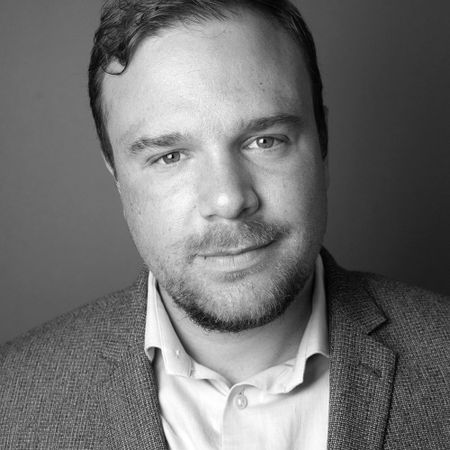
 Former Prasa CEO Lucky Montana. (Photo: Leon Sadiki / Gallo Images / City Press) / Mario Ferreira (Photo: goldcircle.co.za) / Riaan van der Walt. (Photo: Facebook) | Prasa Train (Illustrative image: Rigard Kapp using Google Gemini Flash Image 2.5)
The Special Investigating Unit’s (SIU) recent success in securing an interim preservation order for two properties that former Passenger Rail Agency of South Africa (Prasa) boss Lucky Montana acquired through alleged corruption should be the impetus the National Prosecuting Authority (NPA) needs to finally institute prosecutions in relation to this more than decade-old matter.
Following the SIU’s recent announcement that it had provisionally frozen Montana’s assets, most of the media coverage dealt only with the former Prasa boss’s role in the scandal.

But the Prasa/Siyangena saga is one populated by an array of alleged corruptors and corruptees. There are also several alleged enablers who assisted in moving the alleged illicit gains from the Prasa contractor to the SOE’s embattled former boss.
What the NPA currently has access to is nothing short of a minutely detailed blueprint that should guide it towards successful prosecutions pertaining to one of the State Capture era’s costlier alleged heists.
This reporter in 2015 first exposed suspicious property dealings that linked Montana to an associate of Siyangena’s directors, giving birth to the hypothesis that the company was using property transactions as a means to illicitly gratify Prasa’s CEO in exchange for the multibillion-rand contracts.
Over the ensuing years, compelling evidence, presented on a variety of legal platforms, gave credence to this hypothesis.
What follows is a comprehensive account of the R5.6-billion scandal, crafted on the back of years of journalistic sleuthing; then Public Protector Thuli Madonsela’s 2015 “Derailed” report; evidence placed before the Zondo Commission and the brave testimony of Prasa whistleblowers such as Martha Ngoye; records from a civil matter between Prasa and the contractor; and, finally, the SIU’s latest work.
/file/dailymaverick/wp-content/uploads/2023/02/ED_286898.jpg "dune-prasa-martha-ngoye")
Prasa’s Siyangena scandal unlocks several themes and considerations that are relevant to South Africa’s corruption dynamics.
It highlights the longstanding strategy of channelling alleged kickbacks through property transactions.
It also bears testimony to the invaluable role that enterprising, investigative journalism plays in sniffing out and exposing such dealings.
Finally, it reaffirms the notion that such journalism, vital as it is, is but one of several crucial factors that underpin a healthy, functioning accountability ecosystem. Courageous whistleblowers and media outlets alone cannot save South Africa from its corruption blight. Our law enforcement bodies must make much swifter work of probing corruption revelations aired on serious, credible news platforms.
From R90m contract to R5.6bn mega deal
Records from a legal battle that went all the way to the Supreme Court of Appeal (SCA) chronicles the origins of Prasa’s ill-fated Siyangena deals.
In early 2010, Prasa awarded the first of a series of contracts to Siyangena Technologies for the installation of CCTV cameras, access gates and related equipment at a handful of train stations.
This was the start of what would later be known as Prasa’s Isams project, short for an Integrated Security Access Management System.
/file/dailymaverick/wp-content/uploads/2025/10/MARIO-720x1018b.jpg "Mario Ferreira. (Photo: Goldcircle.co.za)")
Prasa’s executives, led by Lucky Montana, motivated for the project by claiming that it was urgent and necessary in light of that year’s Fifa World Cup. This motivation is now widely seen as a ruse. The tournament was to kick off in June. With only months to spare, Prasa and its contractor had zero chance of completing such a large undertaking before the tournament started.
Despite concerns from Prasa’s own asset management unit, Prasa’s leadership pressed ahead and gifted Siyangena a R90-million contract for work at seven strategic train stations.
Court records reflect the dubious nature of Prasa’s early engagements with Siyangena. The SOE didn’t follow a lawful procurement process, nor did it even budget for the roll-out. According to a 2020 high court judgment, internal Prasa documents were “manipulated” to conceal the unlawful nature of Siyangena’s appointment.
The court records identify Montana, who’d been having “private meetings” with the contractor, as the main driving force behind Siyangena’s appointment. Other alleged co-conspirators from inside Prasa include Luyanda Gantsho, the Isams project manager, and Chris Mbatha, Prasa’s chief procurement officer.
/file/dailymaverick/wp-content/uploads/2025/10/ED_302101.jpg "Lucky Montana testifies at the Zondo Commission on 10 May 2021. (Photo: Luba Lesolie / Gallo Images)")
In pushing for Siyangena’s appointment, this trio of Prasa executives “paid scant regard for Prasa’s internal systems of checks and balances”, the high court ruled.
The court was especially critical of Montana’s conduct as Prasa’s leader.
“As GCEO, Mr Montana simply ignored procedures, by-passed committees and manipulated documents to favour an outcome to the advantage of Siyangena,” reads the judgment.
‘A veneer of compliance’
Siyangena’s initial R90-million contract was but the start of its highly lucrative dalliance with Montana’s SOE.
“Siyangena was allowed to piggyback on its original contract with Prasa, and in this way, allowed to by-pass any vetting under the procurement system,” the 2020 judgment tells us.
First, Prasa awarded to Siyangena a R1.9-billion deal to perform work at 62 train stations. The scope creep and its accompanying financial implications were now in full effect. Under the pilot project, Siyangena charged Prasa R2.5-million per train station. Under the extended roll-out, the cost per station ballooned to R12.4-million, and then to R31.5-million.
The R1.9-billion price tag placed Prasa’s Siyangena deal in “mega project” territory, as defined by the National Treasury’s guidelines for public procurement. This meant Prasa’s parent department needed to plan for it in its medium-term expenditure framework.
Given the cost, Montana and his Prasa colleagues also needed the transport minister’s approval for the project. These vital steps were somehow bypassed, however, and Siyangena could now look forward to raking in billions from the SOE.
/file/attachments/orphans/EngineerReport_633766.jpg "EngineerReport.")
In 2014, Siyangena clinched its final and most lucrative contract under the Isams project. According to the high court ruling, “Prasa attempted to give the process a veneer of compliance with the procurement guidelines”, but the process was as flawed and dubious as the initial Isams deals.
The alleged collusion between Prasa and Siyangena was most pertinently manifested in the farcical tender process for phase two of the Isams roll-out. The high court found that Prasa effectively laced the bid with specifications for access control, CCTV and speed gate equipment that only Siyangena was licensed to sell in South Africa.
In June 2014, Siyangena clinched the phase-two contract, worth a whopping R2.5-billion. Coupled with phase one’s contract value and additional tender extensions, ones that were also later declared unlawful, Siyangena’s total potential Prasa earnings ballooned to R5.6-billion.
The kickbacks hypothesis
Prasa’s infamous R3.5-billion “tall trains” contract showed up on my radar in 2015, but so too did the Siyangena deals. A source at the SOE suggested that I dig into the Isams contracts, seeing as multiple Prasa employees were questioning the legality of Siyangena’s dubious appointment.
Some were suggesting that Montana had been bribed to facilitate the Isams contracts.
But where to start? How could I possibly prove that Prasa’s powerful CEO was banking alleged kickbacks from the contractor?
I had done a short course in forensic investigations the year before, and I recalled that property transactions were oftentimes used as a means to disguise illicit gratifications.
I started digging into Montana’s property records and soon found something that looked odd.
According to the deeds office documents, Montana had purchased a house in the Johannesburg suburb of Parkwood in 2008, for an amount of R1.85-million. In 2014, Montana sold the property for R6.8-million.
This was a staggeringly profitable deal for Montana. In a span of just six years, the property had yielded a return on investment of 267%. This while the average annual appreciation for property prices in the suburb hovered at around 5%.
I phoned a few estate agents in the area. Those who were aware of the transaction were also stunned. They said the property had been quite dilapidated and would require extensive renovations. At best, the house should have sold for around R3.5-million, they assured me.
/file/attachments/orphans/Parkwood_427104.jpeg "Parkwood.")
Next, I looked at the entity that purchased the house, a shelf company called Precise Trade and Invest 02. Its sole director was one Riaan van der Walt, a lawyer from Pretoria. I started digging into Van der Walt’s company records and other available information, at which point the alarms bells truly went off.
Van der Walt was linked to Siyangena’s founder, Mario Ferreira, through shared directorships in other entities. What’s more, Van der Walt had represented Siyangena in legal matters, and he’d once acted as a spokesperson for TMM Holdings, the holding company for Siyangena Technologies and other Ferreira ventures.
Van der Walt’s shelf company had forked out nearly double the market value for the Prasa boss’s Parkwood property. I postulated that this was some clever scheme to enrich Montana, an illicit boon stemming from Prasa’s Isams contract.
Montana’s ties to Van der Walt, the latter’s ties to Siyangena and the suspicious property transaction featured in an article Rapport newspaper published in May 2015. This would only be the start of my work on Montana’s property portfolio.
Over the ensuing years, I exposed four other property deals that tied Montana to Van der Walt’s shelf company and to other entities and persons associated with Siyangena Technologies and its boss, Ferreira. The total value for Montana’s Siyangena-linked property portfolio exceeded R45-million and included properties in Johannesburg and in Waterkloof, Pretoria.
Each time Montana acquired one of these multimillion-rand assets, none other than Riaan van der Walt would play some or other role in the transaction, either by channelling deposits into the purchases via his shelf company, or by acting as a negotiator on behalf of Montana.
A clear red flag came via the fact that the properties were being bought through huge cash payments and not via bank loans.
Enter Andre Wagner
A considerable breakthrough in my investigations came in 2018, while working for News24. The article detailed how Montana had in 2015 bought a sprawling property in Hurlingham, Johannesburg, at a cost of R13.5-million.
I had obtained bank records and related documents which showed that Van der Walt’s shelf company had paid a R2-million deposit for the purchase.
But the biggest slice of the cash, R11.5-million, had come from a mysterious entity called Midtownbrace. In other words, although the property was registered in Montana’s name, he didn’t spend a cent of his own money to buy it.
I combed through South African company records but couldn’t find any entity registered with that name. Finally, after scouring neighbouring countries’ company records, I happened upon a company called Midtownbrace incorporated in Botswana. Its directors, however, were South African, namely Newcastle-based businessman Andre Wagner and his father, Johan.
/file/attachments/orphans/AndreWagnerLinkedIn_626022.jpeg "Andre Wagner. (Photo: LinkedIn)")
I could immediately link Wagner Jnr to Siyangena’s lawyer, Vander Walt, and to the son of Siyangena founder Mario Ferreira. The trio had at various points in time all been directors in an entity called Wetlands Country Retreat.
When approached for comment, Wagner Jnr offered a very curious explanation for his entity’s dealings with Montana. I met him at a restaurant in Rivonia, and to this day I can recall how visibly nervous he had been.
Wagner claimed that the R11.5-million from Midtownbrace was an “investment” in a townhouse complex that he and Montana would supposedly develop on the 6,000m2 Hurlingham erf. This development never materialised.
If the plan was to co-invest with Montana in a property development, where was Montana’s financial contribution? And why on earth would the property be registered in Montana’s name?
Wagner claimed that Montana’s contribution consisted of the R2-million deposit from Precise Trade and Invest 02, together with “development costs” of R8.1-million that the then Prasa boss was due to put up. Montana never put up this money.
Wagner even produced a memorandum of agreement that supposedly buttressed his claims.
But the document didn’t make much sense either. It stipulated that the development would be pursued through a joint venture structure. It did not make any provision for the erf to be registered in Montana’s name.
Wagner’s “investment” in Montana’s property was especially interesting considering the source of the monies he used for the R11.5-million transfer.
Wagner claimed he had sold his stake in Wetlands Country Retreat, the very entity that linked him to Siyangena’s lawyer, Van der Walt. He then “re-invested” those funds in Montana’s supposed Hurlingham development.
Astonishingly, Wagner indicated that the buyer of those shares was none other than TMM Holdings, Siyangena’s mother entity. This meant that the funds had flowed from the Prasa contractor’s holding company to Wagner’s Botswana entity, Midtownbrace, and the latter used those funds to pay for a property that would be registered in the Prasa boss’s name.
/file/attachments/orphans/Property-4-Hurlingham2_838903.jpg "Property-4-Hurlingham.")
The optics looked terrible, but Ferreira at the time strongly denied that the chain of transactions amounted to a kickback scheme that effectively saw funds flowing from TMM Holdings to Montana.
Wagner to this day remains adamant that the investment in Montana’s purported property project was legitimate.
“I deny any insinuation and/or allegation that Midtownbrace is part of alleged corruption and money laundering or that any TMM dealings was done via Midtownbrace,” Wagner stated.
“My dealings with Ferreira at Wetlands was at arm’s length. I have never been included in any criminal investigation linked to Mr Montana’s dealings with TMM as I as director of Midtownbrace never committed any crime.”
In 2019, Wagner’s company instituted legal proceedings against Montana to recoup the R11.5-million.
Wagner sent Daily Maverick a copy of a draft order the high court in Pretoria issued in May 2025. The court ordered Montana to reimburse Midtownbrace to the tune of R11.55-million.
Zondo, SIU scrutiny
A forensic report by investigator Clint Oellermann, submitted to the Zondo Commission in 2020, poured more cold water on Montana and Siyangena’s accounts of events.
Oellermann examined Precise Trade and Invest 02’s bank statements and discovered that Siyangena’s holding company, TMM, had channelled millions of rands into Precise Trade and Invest’s account shortly before Van der Walt’s shelf company paid “deposits” for some of Montana’s properties.
The SIU’s recently completed work, meanwhile, has effectively closed the loop, proving with near certainty that Montana’s property boons were bankrolled with proceeds from Siyangena’s massive Prasa contracts. In a statement, the SIU claimed there is an “uninterrupted money trail” linking Montana’s properties to Siyangena’s massive Prasa contracts.
The R11.5-million that Wagner’s Midtownbrace contributed to Montana’s Hurlingham property, for instance, had its origins in funds Siyangena received from Prasa in late 2014. In December of that year, Prasa transferred R339-million to Siyangena. Next, Siyangena moved R12.5-million to its call account. In April 2015, Siyangena transferred R13-million to its holding entity, TMM.
On the same day, TMM transferred R12-million to Midtownbrace, the company Wagner had incorporated in Botswana. Finally, in May 2015, Midtownbrace paid R11.5-million to the transfer attorneys that handled Montana’s Hurlingham purchase.
One of Montana’s Waterfkloof properties was acquired in much the same fashion. In March 2014, Prasa had paid Siyangena R94-million for the Isams contract. Siyangena moved the entire R94-million to its call account. In June 2014, the company transferred R4-million from the call account to its holding company, TMM. The next day, TMM transferred R4-million to Van der Walt’s shelf company, Precise Trade and Invest 02, which, on the very same day, paid R2.25-million to the transfer attorneys for Montana’s Waterkloof property.
The SIU’s preservation order only applies to the Hurlingham property and to the latter-mentioned Waterkloof house. However, the criminal probes recommended by the Zondo report should also take into consideration the other properties that link Montana to Van der Walt and to Siyangena. This includes properties in Sandhurst, Johannesburg and additional properties in Waterkloof. In those instances, the properties were registered in Precise Trade and Invest’s name, but Montana appeared to be the ultimate beneficial owner.
Will Hawks, NPA finally strike?
In its recent statement, the SIU indicated that “any criminal evidence of criminal conduct” would be referred to the NPA for further action.
But indications of alleged criminal conduct have now been visible to the NPA and the Directorate for Priority Crime Investigations (DPCI) for more than a decade.
Will the DPCI and the NPA finally spring into action?
NPA spokesperson Kaizer Kganyago assured Daily Maverick that “the matter remains under active, comprehensive criminal investigation by the DPCI”.
“A comprehensive draft forensic report has recently been finalised and is currently undergoing detailed legal and evidentiary assessment,” Kganyago added.
“A formal prosecutorial decision will be executed immediately upon the conclusion of the investigation.”
But why has it taken so long to reach this stage?
/file/attachments/orphans/WhatsAppImage2026-07-30at172957_555618.jpeg "Kaizer Kganyago is the national spokesperson for the National Prosecuting Authority (NPA) at a media briefing on IDAC developments on 30 July 2026. (Photo: Kopano Tlape/GCIS)")
“This matter involves highly complex, multi-jurisdictional financial transactions requiring specialised forensic auditing and advanced investigative capabilities. While the findings of the Judicial Commission of Inquiry into State Capture (Zondo Commission) and other regulatory agencies provide a vital framework, information and evidence at the commission do not automatically constitute admissible criminal evidence in a court of law,” Kganyago said.
According to Kganyago, the investigators in the matter had to “independently source, verify and secure admissible evidence that meets the strict statutory requirements” of South Africa’s corruption and related legislative frameworks.
When approached for comment, Siyangena Technologies said it noted from the SIU’s court papers that no relief is being sought against the company.
“As the matter is sub judice it would be inappropriate for us to comment any further,” stated the company.
Lucky Montana did not respond to requests for comment.
Van der Walt, who had reportedly moved to Texas in the United States around the time of the Zondo Commission, could not be reached for comment. DM
Comments
Scroll down to load comments...