



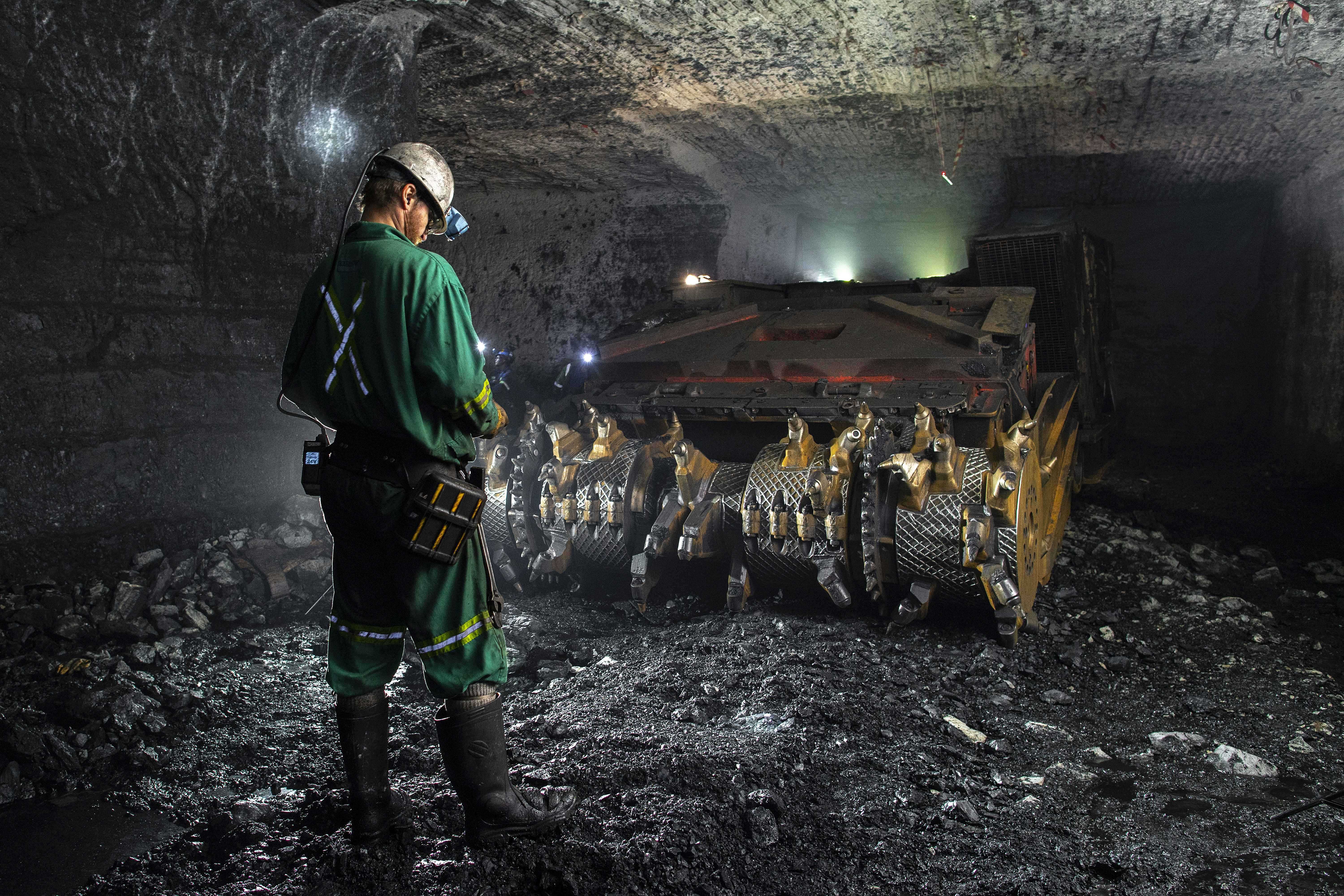
 A technician inspects mining machinery at the Greenside colliery in Mpumalanga. Despite its significant footprint, environmental authorisations for the mining industry are still assessed and granted by the Department of Mineral and Petroleum Resources. (Photo: Philip Mostert/Anglo American)
An analysis of official government data suggests that less than 4% of all environmental authorisation applications in South Africa (SA) over the last two years were refused, with the vast majority of development projects given the green light. In several provinces, not a single project was refused.
Records provided to Daily Maverick by the national Department of Forestry, Fisheries and the Environment (DFFE) indicate that 2,129 environmental authorisation (EA) applications were submitted in the 2024/25 financial year, with only 3.6% of applications refused that year.
Another 1,762 applications were submitted in 2025/26, but only 2.8% of the applications that year were refused after the mandatory EIA processes.
Provincial disparities
Significantly, these total averages blur significant disparities at a provincial level – with not a single application refused in some provinces over the last two years.
For example, the provincial environment department in Limpopo had a zero refusal rate in both financial years, while the refusal rate was also 0% in KwaZulu-Natal, Northern Cape and North West provinces in 2025/26.
/file/attachments/orphans/tonyEIA2SourceDFFE_100445.jpeg "Department of Forestry, Fishers and Environment EIA applications. (Source: DFFE)")
/file/attachments/orphans/tonyEIA3ProvincialEIAapprovalsSourceDFFE_968477.jpeg "Provincial government EIA applications. (Source: DFFE)
<br>
<br>")
Mpumalanga refused less than 1% of applications, and in the Western Cape the refusal rate was around 2% for both years. The highest refusal rates appear to be in Gauteng, with about 7.5% of the 197 applications in 2024/25 not granted.
(Note: These calculations are based on the total number of applications submitted during these financial years, compared to the number of applications refused during the same financial years. They also exclude applications that were either withdrawn, lapsed, or still in the assessment process at the end of each financial year. The DFFE has further emphasised that its information is based on current records in the National Environmental Authorisation System (NEAS) and might exclude some information from provinces not yet captured in the system.)
Only 3.5% national refusal rate average
Nevertheless, the available data for the past two years suggests an average national refusal rate of about 3.5%, dampening perceptions that the EIA approvals system is a significant barrier to development.
The disclosures also come at a time when the DFFE has come under renewed pressure to introduce a new “Flexible EIA System”, which has raised concerns that official guardrails to ensure environmental protection may be weakened by the proposed changes.
/file/attachments/orphans/tonyEIA4PhotoSupplied_544000.jpg "The EIA process aims to reduce the risk of environmental impacts, including major sewage overflows into wetland areas from housing and other developments. (Photo: Supplied)")
However, the statistics also highlight the fact that a large percentage of applications are classified as “withdrawn, lapsed or still in process”.
Yet finalising delays
While the DFFE did not provide a numbers breakdown for these three categories, the stats point towards delays in finalising a significant number of applications – despite assurances that most are finalised timeously.
In response to a written question in the National Assembly by MK Party member Siyabonga Mkhize in April, the DFFE stated that “based on its statistical analysis derived from the National Environmental Authorisation System, the DFFE can state that 98% of applications for environmental authorisation are processed within the prescribed timeframe”.
According to the DFFE, there are “no known delays” in the processing of applications at the national level.
“However, some invaluable capacity has been lost without it being replenished owing to the pressures on the fiscus, but it must be stated that this has not been a factor in what has led to the proposed reforms.”
/file/attachments/orphans/tonyEIA5VaalputstnuclearwastedumpingimagebyDavidGoldblatt-EskomsnuclearsuccessstoryChurchillMurrayPublications1994_464133.jpg "Drums of hazardous waste from the Koeberg nuclear power station are buried underground at Vaalputs in the Northern Cape. (Photo: David Goldblatt/Eskom's nuclear success story) (Churchill Murray Publications, 1994)")
All development proposals with potentially significant environmental impacts (including nuclear power stations or metal smelters) are subject to environmental authorisation by the DFFE or provincial environment departments.
Silent fox in the henhouse
Mining remains the sole exception and the Department of Mineral and Petroleum Resources (DMPR) – with a primary mandate to promote mining and petroleum development – is entrusted to grant environmental authorisations for mining developments under the so-called One Environmental System. As a consequence of this dual mandate, the DMPR has been often characterised as a fox in charge of the henhouse.
Curiously, this department appears to be reluctant or unwilling to provide any data on its EIA approval and refusal rates.
The department acknowledged receiving our request for this data on 8 July, but despite repeated subsequent requests over the past month, the DMPR has been silent. Their responses will be added to the article if the information is provided. DM


Comments
Scroll down to load comments...