




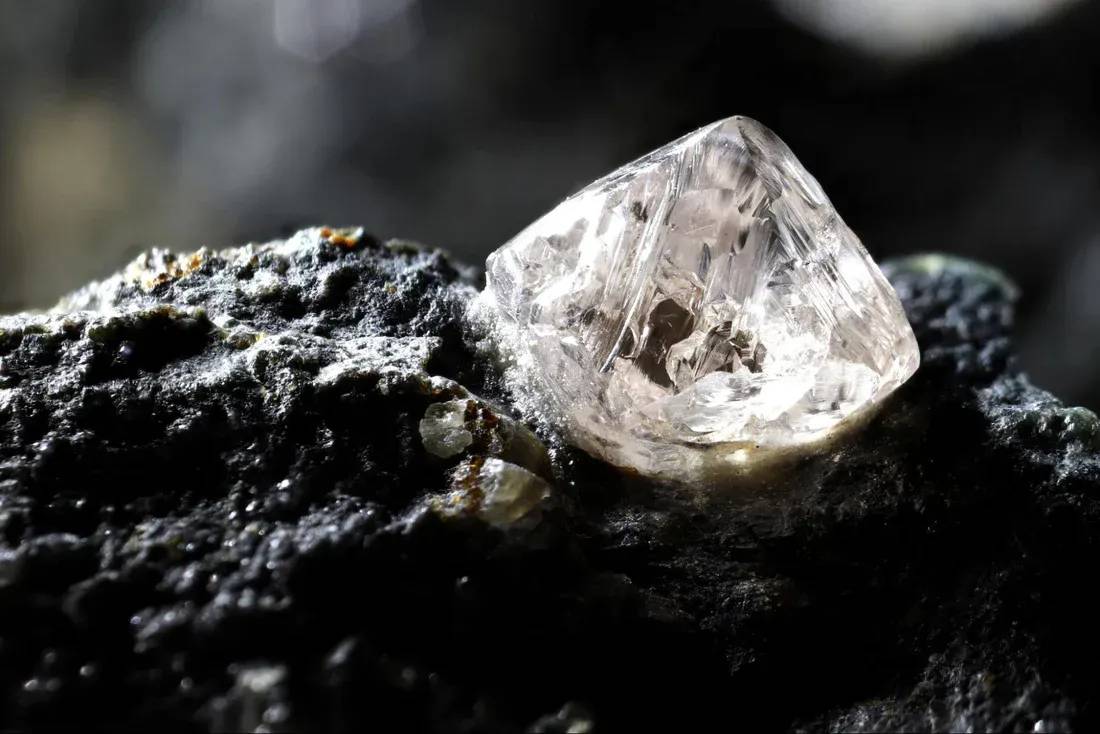
 (Photo: Hilitdiamonds / Instagram)
Coal is supposed to be a toxic asset these days, but Anglo American has had a far easier time ditching its steel-making coal operations than iconic diamond producer De Beers.
This tale of two asset sales underscores two unfolding structural changes in the global mining sector and economy that were not seen on the horizon a few years ago.
The first is the remarkable comeback by coal, which continues to defy its obituary writers, with worrying consequences for the climate. The second is the accelerating collapse of natural diamond markets in the face of increasingly cheaper laboratory-grown gems and wider consumer trends.
To wit, Anglo agreed in May to sell its steel-making coal business in Australia to privately held, UK-registered mining group Dhilmar for up to $3.785-billion. Pointedly, the amount matched a similar deal that Anglo reached last year with Peabody Energy, which pulled out after an underground fire.
“With coal prices having improved since the collapse of a similar agreement last year, markets were a little disappointed not to see a meaningful improvement in the deal terms,” Derren Nathan, head of equity research at Hargreaves Lansdown, said in a comment on the deal.
Anglo was no doubt hoping it could have got more for the assets in a rising price environment.
But the broader point is that steel-making or coking coal prices had improved significantly by the time the deal was struck, underscoring demand for the commodity. And although prices have since cooled in the face of the global economic uncertainties, they remain above the levels fetched this time last year.
Last year, global coal demand reached a record for the third consecutive year, confounding expectations that it was on the verge of a steep decline as banks became increasingly reluctant to fund new projects involving coal because of its links to climate change.
That narrative has since done a dramatic U-turn. The Net-Zero Banking Alliance, convened in April 2021 by the UN Environment Programme, has in effect been defanged with the departure of several leading US banks. Coal’s access to finance remains open.
The bottom line is that Anglo has been able to exit its steel-making coal business without offering it at a bargain. The diamond business is proving to be a much harder sell.
De Beers: from icon to irrelevance
In 1954, US corporate titan General Electric made a stunning breakthrough – it synthesised diamonds in a lab. “This imperilled De Beers’ market dominance,” Michael Cardo noted in his 2023 biography of Harry Oppenheimer. “Although the artificial diamonds were expensive to manufacture, and initially only really amounted to a form of abrasive grit, they were still suitable for industrial purposes like grinding and shaping tools.”
Alarmed, De Beers scrambled to replicate the breakthrough, and in 1958 the company made its synthetic diamonds in a lab, and then settled a patent dispute with the US company.
“By 1970, more than half the diamonds produced worldwide were synthetic,” Cardo writes. But they were used for industrial purposes. The first gem-quality diamond was only produced in 1971, but the process was arduous and expensive.
De Beers for decades remained the undisputed champion of the world diamond industry under its iconic branding phrase “A diamond is forever”.
When the company went private in 2001, the Oppenheimer-led consortium paid $19.7-billion, a sum that was regarded as a steal by some analysts. A decade later, the Oppenheimers exited the company on which their dynasty was built when Anglo completed its takeover to 85% of the company, paying $5.2-billion to the family for a 40% stake that valued the group at $13-billion.
/file/attachments/2996/Screenshot2026-08-06at160623_519054.png "Source: Tenoris")
A decade and a half later, the book value of Anglo’s 85% stake is $2.3-billion, and Bloomberg recently reported that it was discussing selling it for as little as $1-billion.
The lab had unleashed a monster that devoured De Beers’ value. The retail price of lab-grown diamonds has plunged from more than $5,000 per carat in 2020 to less than $1,000, according to diamond research outfit Edhan Golan. And the slide continues as production and supplies surge and technological advancements slash costs.
This has undermined demand and prices for natural diamonds, which Anglo said in a production report last month had fallen a further 32% in the first six months of this year.
The upshot is that even at $1-billion, Anglo is finding it hard to divest from De Beers, though it has more than one suitor at bargain-basement prices. “We are not exclusive with any particular consortium at this point in time, and there is more than one in the process,” Anglo CEO Duncan Wanblad said on a media call last month. But he said he remained “positive” about the sale and hopes to wrap it up this year.
The diamond market has also been hit by softer Chinese demand and a wider rejection of the gems by a younger generation worldwide.
In South Africa, this has seen Anglo closing operations at its Venetia diamond mine in Limpopo – after a recent $2.2-billion expansion to take it underground – for two years, threatening thousands of jobs. And Botswana’s “economic miracle” and coveted investment-grade credit rating are threatened by the unfolding collapse of the natural diamond industry.
Anglo has managed to sell its coking coal assets without resorting to a fire sale. But De Beers looks to be a fire sale of note and may go for 5% of the value it fetched when it went private 25 years ago.
This says something about the state of the global economy. Coal is not going anywhere soon – an alarming state of affairs – because its industrial role is set in stone and it has vested interests determined to keep things that way.
But consumer trends come and go. And a natural diamond forged from billions of years of geology has hit its sell-by date. De Beers’ is fast approaching and it looks like it will go for a song. DM
This story first appeared in our weekly DM168 newspaper, available countrywide for R35.
/file/attachments/2996/DM-070826_879765.jpg)
Comments
Scroll down to load comments...