




 Illustrative Image: City of Cape Town Alderman James Vos, Mayoral committee member for Economic growth and tourism). (Photo: Facebook / James Vos) | Buildings with the logos of three of South Africa’s biggest banks, Absa, Standard Bank and First National Bank (FNB), against the city skyline in Cape Town in 2017. (Photo: Reuters / Mike Hutchings) | (By Daniella Lee Ming Yesca)
 The City of Cape Town has officially transitioned from a municipal brand focused primarily on destination marketing to an active global investment competitor – “Cape Town is Built for Business”, the new international campaign says.
Alderman James Vos, City of Cape Town mayoral committee member for economic growth, speaks of only one mandate from his executive mayor: “A key priority throughout this journey has been driving the ease of doing business index... a mandate the mayor has given me to lead, together with all of our city departments and business partners.”
The mayor is, of course, Geordin Hill-Lewis – who wasn’t present at the City Hall launch because he was working in his capacity as DA party leader and gearing up for the local government elections manifesto launch).

“We have made significant progress in shortening turnaround times across key municipal sectors, from construction permits to business licences, to waive applications to electricity connections, because every day saved is an opportunity unlocked for businesses and investors…” Vos explained. “Time is money.”
That Ease of Doing Business index initiative has driven substantial administrative efficiencies and shortened waiting times across core utility and licensing services.
Wayleave application approvals, for instance, went from manual systems and a 31-day turnaround to a new digital management system launched in May 2024, reducing the number of steps from 15 to six. Processing now takes about a week.
Beyond aesthetic appeal
The City has made an investment case rooted deeper than Cape Town being a great tourist destination. “The world already knows Cape Town as one of the world’s great tourism destinations,” Vos says.
“This campaign tells another side of our story – that Cape Town is also a city where businesses can invest, innovate, grow and create jobs.”
While the narrative of attracting international capital is presented as an unqualified success by the administration, the City’s own data and reports reveal several systemic negatives, severe structural risks and acute socioeconomic trade-offs.
Cape Town is rolling out a R120-billion, 10-year infrastructure pipeline, of which about 40% (R55.5-billion) is allocated to climate change resilience (including drought and flood mitigation).
By 2026/27, the City plans to add 650MW of independent power to the grid, aiming for 1GW over time to achieve independence from Eskom load shedding.
That R120-billion front-loaded infrastructure programme is a prime example of this trade-off. It is not a free public good – rather, a budget item financed in part through direct pressure on ratepayers.
In the 2024/25 Integrated Annual Report, Hill-Lewis acknowledged this fiscal tension:
“Of course, while such infrastructure investment is both critically important and urgent, it also comes at a significant cost, and we have had to enter into some challenging and honest conversations with our residential and commercial ratepayers this year.”
To protect the financial viability of municipal accounts which help make the business case, the City has also had to restructure utility tariffs, reducing the electricity cross-subsidy to the rates account, and raising the revenue base through an 8.7% increase in rates and service charges.
The realities of a dual economy
This campaign represents the culmination of a decade of institutional reforms, infrastructure scaling and strategic private-sector alignment designed with one goal: to make Cape Town the easiest place to do business in Africa.
Central to this rollout is Maya, the City’s new AI-powered investment concierge. Operating 24 hours a day in eight languages (including Afrikaans and isiXhosa), Maya acts as a single-entry digital portal to help international investors seamlessly navigate local municipal approvals, identify commercial opportunities and connect directly with City officials and special-purpose vehicles (SPVs).
Despite the high-skilled job growth concentrated in the financial services, global business services and ICT sectors, Cape Town faces deep-seated structural inequality. The informal sector still accounts for 11% of total employment. The housing backlog stands at 350,000 applicants.
Vos, however, has a counter-narrative on the impact of those SPVs:
“Last year alone, through this model, we have facilitated almost R16-billion worth of new investments into Cape Town’s economy... It shows what can be achieved when government and industry work together with a shared focus on growth.”
There is an ongoing trade-off between directing resources toward high-value economic corridors to sustain investor confidence versus the urgent need for basic services in historically marginalised areas.
While the City does manage social cushions, like raising the pensioner rates rebate qualification threshold to R22,000 per month and delivering 43,962 Expanded Public Works Programme opportunities, the spatial legacy of apartheid (a phrase Hill-Lewis doesn’t recognise) continues to segment the metropolitan economy.
This division makes it difficult for lower-income households to transition from low-wage, temporary labour into the high-skilled, multinational sectors being courted by global marketing campaigns.
Building for business
A major victory for the James Vos era of economic growth under the Hill-Lewis administration was when the City decided to move away from highly localised, exclusionary zoning incentives toward metro-wide development enablement.
The Manufacturing Support Policy (MSP) was a direct, simplified refinement of the 2018 Investment Incentives Policy. While the 2018 policy limited financial and non-financial support to just six targeted industrial zones, the updated MSP – unveiled for public consultation until 3 December 2025 – expanded this framework to bring together all 33 industrial hubs in Cape Town to form a network for balanced spatial growth.
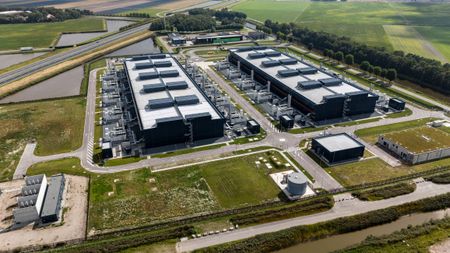
Another critical selling point for Cape Town is its governance dividend that relies on the premise of clean administration and institutional trust to win over risk-averse international capital. This has been anchored by the council formally transitioning the City’s administrative and ethical baseline by adopting the King IV Report on Corporate Governance on 5 December 2017 (under item C03/12/17).
The historical trajectory of Cape Town is defined by its survival of a series of severe systemic shocks over the past decade, including a historic water crisis, Eskom grid failures, the Covid-19 pandemic and the August 2023 taxi strike. These crises forced the City and its private partners to build extreme resilience.
Those business partners made their voices heard during the launch, urging the city to now move past survival:
“We’re tired of being resilient. We want to be prosperous.”
This “Built for Business” campaign is the opening move of a long-term, 25-year strategy aimed at Cape Town 2050.
Whether the city can successfully translate this global capital inflow into equitable, metro-wide prosperity depends entirely on its ability to resolve its deep-seated spatial inequalities and insulate its ratepayers from the heavy costs of Cape Town’s business hub ambition. DM
Comments
Scroll down to load comments...