




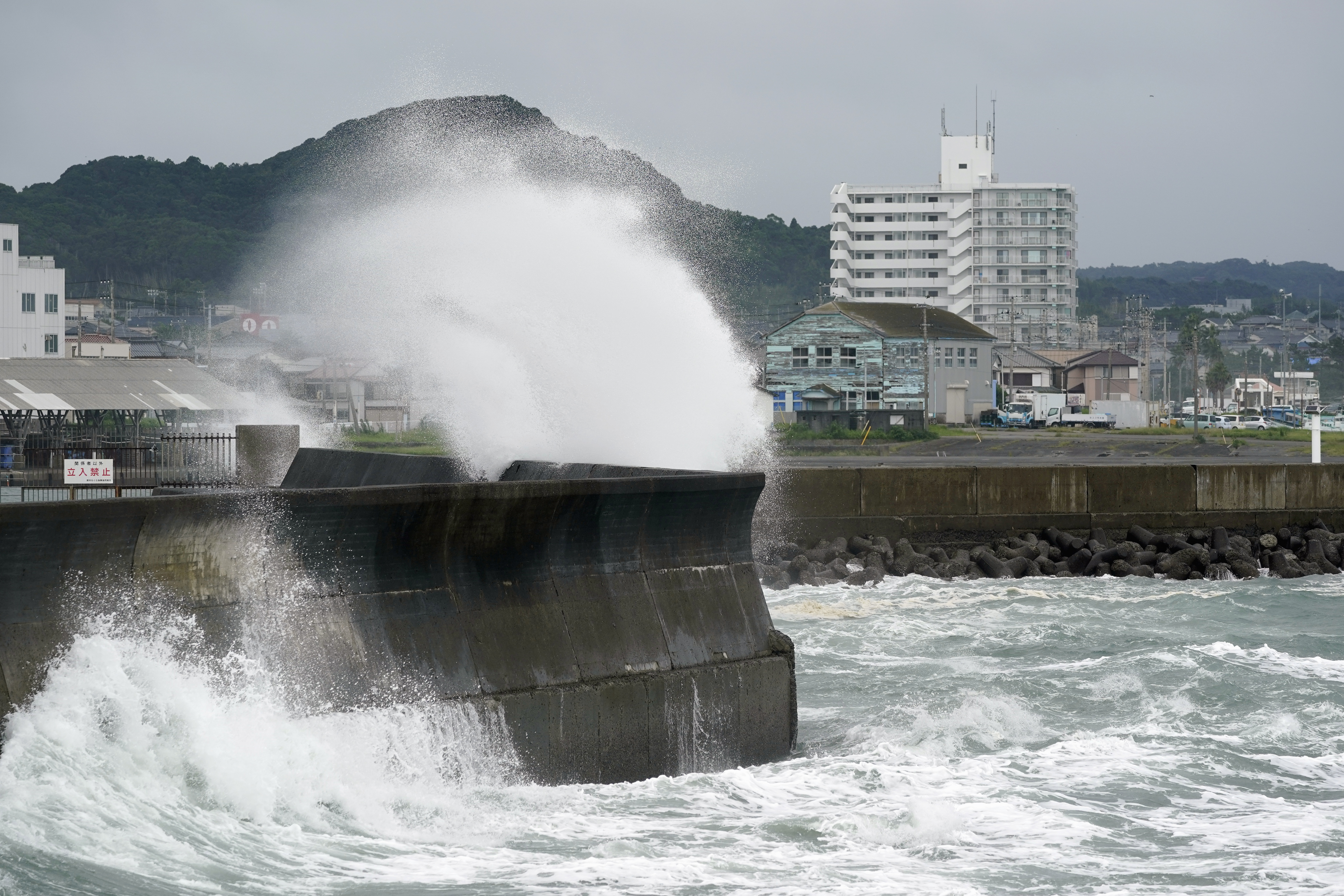
 Waves generated by typhoon Dolphin hit against a breakwater in Chikura, Chiba prefecture, Japan, 24 September 2020. Typhoon Dolphin approached the Boso Peninsula along the Pacific coast and the Japan Meteorological Agency has called for caution of heavy rains for the northeastern part of the country. EPA-EFE/FRANCK ROBICHON
The Category 1 typhoon had maximum sustained winds of 144 kph (89.5 mph) with gusts reaching 198 kph and was nearing a chain of islands between the Kyushu region and Okinawa prefecture, the Japan Meteorological Agency (JMA) said.
Authorities issued evacuation orders for nearly 260,000 residents in Kagoshima and Okinawa prefectures, while Toyota 7203.T suspended work at nine factories on Friday.
Dolphin was expected to maintain its strength as it approached Okinawa prefecture, raising the risk of winds that could damage or collapse some structures, authorities warned. A linear rain band — or a narrow band of intense precipitation and thunderstorms — could also develop, possibly triggering flooding, the weather agency said.
The large storm was also enveloping much of the southernmost main island of Kyushu with strong winds, including Kumamoto prefecture, still reeling from last week's magnitude 7.1 earthquake.
Some 6,700 Kumamoto residents remain in evacuation centres after many houses collapsed. The weather agency has also warned of heatstroke risks with temperatures expected to reach 36 degrees Celsius (97 degrees Fahrenheit) in some areas.
(Reporting by Chang-Ran Kim; Editing by Kate Mayberry)
Comments
Scroll down to load comments...