




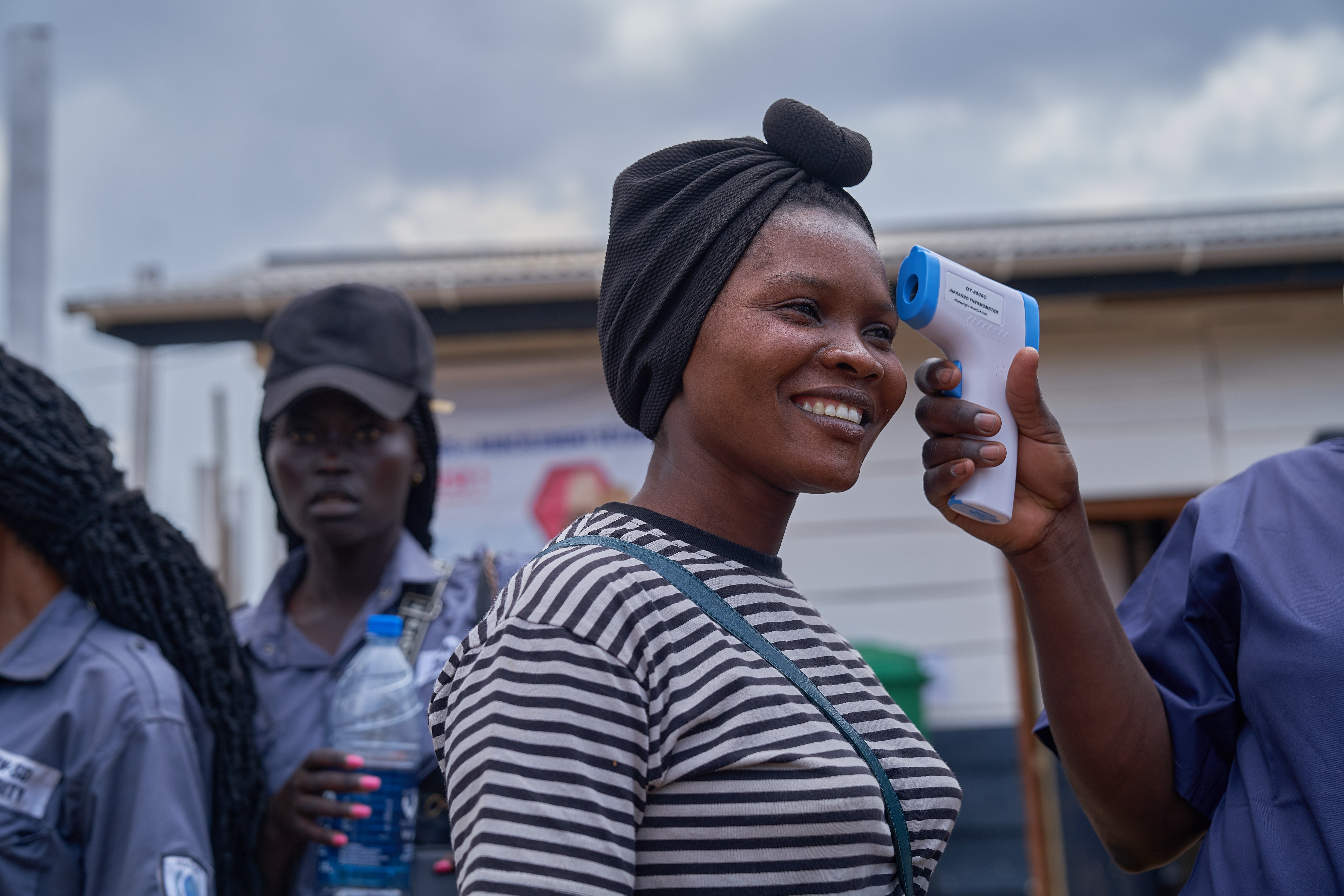
 A woman has her temperature checked at the newly inaugurated Ebola treatment centre in Rwakole, Bunia, Democratic Republic of the Congo, 04 August 2026. The centre has a capacity of 100 beds. According to the World Health Organization (WHO), 3,605 confirmed Ebola cases, including 1,587 deaths, had been reported in the country as of 30 July. EPA/DIEUDONNE DIROLE
The epidemic, the world's second-largest, has been described as the fastest-spreading on record.
Experts believe infections started circulating months before the outbreak was declared on May 15 and that the true number of cases could be much higher than the official tally.
The Central African country's public health institute said in its latest report that the total number of infections had reached 4,053, including 1,850 deaths.
Cases have been recorded in five provinces in the country: Ituri, North Kivu, South Kivu, Haut-Uele and Tshopo.
A report published in the journal Science last month concluded that Congo's outbreak had started in January, or even earlier, in Ituri. Researchers identified more than 500 suspected cases between mid-January and May 15.
Delayed detection, overwhelmed surveillance, military conflict, and a lack of vaccines and treatments for the species of the virus involved have allowed the disease to outrun containment efforts this time.
So far only West Africa's 2014-16 outbreak has been bigger, with over 28,000 cases recorded across Guinea, Liberia and Sierra Leone.
(Reporting by Clement Bonnerot; Additional reporting by Anait Miridzhanian;Writing by Nilutpal Timsina;Editing by Alexander Winning)
Comments
Scroll down to load comments...