




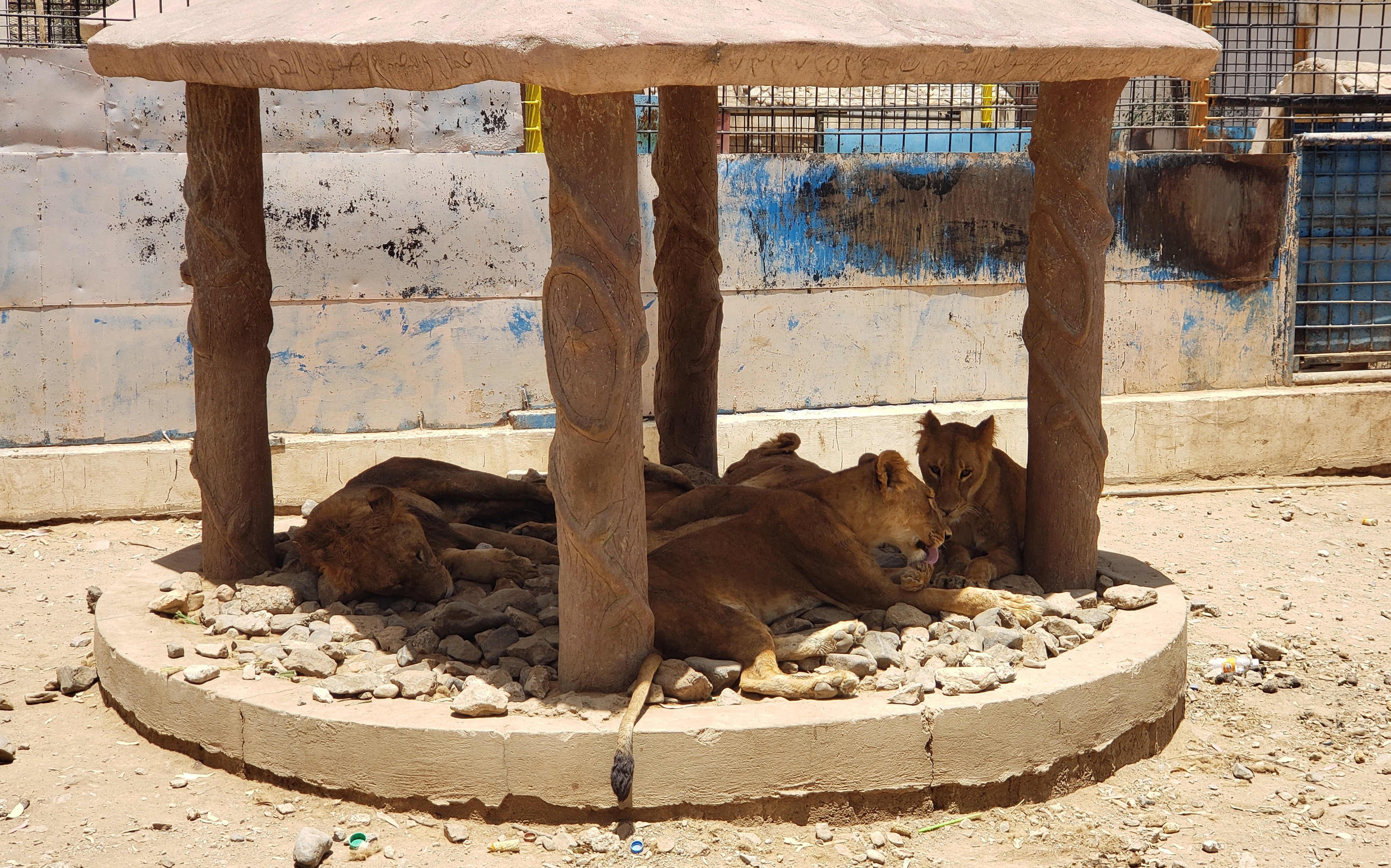
 Lions seek shelter from the sun inside a cage at the Sana'a Zoo, in Sana'a, Yemen, 02 June 2026. The Sana'a Zoo, established in 1999, is the largest zoological park in Yemen and is home to nearly 2,000 animals representing more than 40 species of mammals, birds, and reptiles. EPA/YAHYA ARHAB
The lions, aged 3, 11 and 15 and all born in the zoo, showed signs of severe dehydration and multiple organ failure in post-mortem exams, although the exact cause of death is still under investigation, the zoo said in a press release this week.
As temperatures in Tokyo suddenly spiked in mid-July, the majority of the zoo’s 16 lions began losing their appetite and became lethargic to the point of requiring treatment, the zoo said. While some lions recovered, others deteriorated to develop severe symptoms including the inability to stand and loss of consciousness, it said.
“No other animals have shown any signs of illness, but the staff are managing the animals more carefully than before,” an official at the Tama Zoo said.
Zoo officials suspended public viewing of the lions on July 23 as their condition deteriorated. Treatment such as water-spraying and medicating through intravenous drips continues, the zoo said.
Temperatures in the area rose to nearly 39 degrees Celsius (102 degrees Fahrenheit) in mid- to late July, triggering heatstroke warnings.
Lions are native to sub-Saharan Africa where they are accustomed to arid heat rather than Tokyo’s combination of heat and high humidity, which makes it difficult for them to thermoregulate.
(Reporting by Irene Wang and Chang-Ran Kim; Editing by Saad Sayeed)
Comments
Scroll down to load comments...