




 (Illustrative image: Sources generated with Google Gemini Flash Image 2.5 / Image: iStock)
The Department of Basic Education (DBE) recorded R4-million in fruitless and wasteful expenditure in the fourth quarter of the 2025/26 financial year, after spending on completed or near-completed rural school projects in areas where learner populations had already moved elsewhere.
This was revealed during a parliamentary portfolio committee meeting by DBE Chief Financial Officer Patrick Khunou as he explained that infrastructure projects had been initiated in certain rural areas, but local populations subsequently relocated to urban centres before construction had been completed.
“We had R64-million in fruitless and wasteful expenditure last year, and this year we had R4-million. The reason for the R4-million is because we’ve got schools here, which, as migration happens out of rural areas to urban areas, some schools become unusable or become empty or white elephants, if I may call it that way,” said Khunou.
“So you would find that the project has started some years back to build a school, and with the passage of time before the school gets finished, you find that there are no more learners because childbearing parents have moved, and the fruitless expenditure would be because of spending on a school, which after spending on it, is not used.”
Toll of a broken delivery pipeline
The issue of empty rural classrooms is compounded by a crippling gap between initial planning and final delivery.
According to the Department of Public Works and Infrastructure’s Infrastructure Delivery Management System Toolkit, a school project begins in the pre-construction phase. This is when provincial education departments undertake infrastructure procurement planning across their entire portfolio to draft and budget annual procurement plans.
Once construction begins, implementing agents manage the build on the department’s behalf. These implementing agents can include state-owned enterprises, government departments, public entities and nonprofit organisations.
It is within this layered delivery system that the delivery pipeline repeatedly breaks down. Reports routinely reveal severe delivery delays, financial mismanagement and infrastructure backlogs caused by weak accountability, poor contract oversight and cash-flow bottlenecks.
The cumulative toll of these administrative failures was laid bare in the 2024-25 consolidated general report on national and provincial audit outcomes released by Auditor-General Tsakani Maluleke, which revealed that basic education projects suffered an average delay of 30 months beyond their planned deadlines.

The great pupil migration
While physical construction grinds to a halt, local demographics do not remain static.
According to Statistics South Africa’s migration analysis, internal movement across the country is heavily dominated by outward flows from the Eastern Cape, Limpopo and KwaZulu-Natal, with Gauteng and the Western Cape absorbing a combined net inflow of more than 4.3 million people.
This nationwide shift directly manifests in provincial school enrolments. Between 2022 and 2026, Gauteng enrolled 449,451 pupils from other provinces, with Limpopo, KwaZulu-Natal and the Eastern Cape acting as the biggest contributors. In 2026 alone, 97,104 new pupils from other parts of the country registered at Gauteng schools.
The Gauteng Department of Education noted that an average of 100,000 new learners move into the province each year, placing severe pressure on infrastructure, staffing, subsidies, scholar transport, nutrition programmes and school furniture.
The Western Cape’s 2026 enrolment statistics showed that 12,834 learners from outside the province registered at local schools, including 10,840 originating from the Eastern Cape.
/file/attachments/orphans/Photo-8_303668.jpg "One of the senior classrooms at Greenville Primary School. While teachers at other schools in the area are asking for computers and smartboards, teachers at this school are calling for classrooms and infrastructure to be refurbished. However, the Eastern Cape education department has yet to fulfil its promises. (Photo: Deon Ferreira)")
According to Dr Jaco Deacon, CEO of the Federation of Governing Bodies of South African Schools, provinces that attract jobs and economic opportunity will inevitably attract learners. If pupil migration continues at its current pace, planning for infrastructure, teacher posts and funding allocations will need to become more responsive to these population shifts.
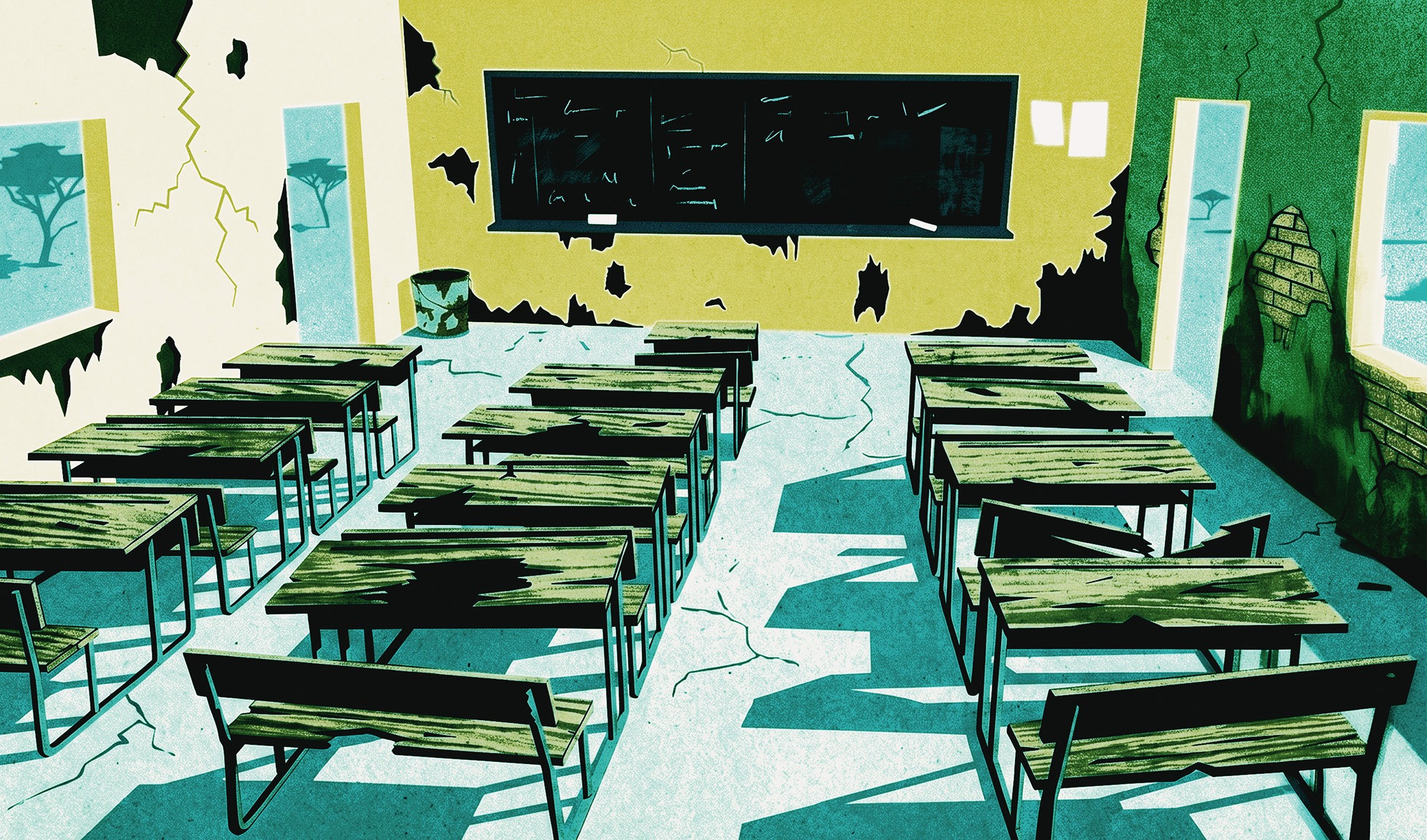
Empty desks in rural villages while urban classrooms burst at the seams
The admission that schools are being built where learners no longer are, is made even more striking by the scale of South Africa’s national school infrastructure crisis.
South Africa still faces a school infrastructure backlog exceeding R120-billion with thousands of schools needing additional classrooms, libraries, laboratories, fencing and other essential facilities.
During a previous portfolio committee meeting, Ramasedi Mafoko, the acting deputy director-general and head of infrastructure at the DBE, confirmed that 3,523 of 22,381 schools in the country still had inappropriate buildings.
Mafoko told the committee that the department faced a challenge of an expanding education system in a constrained fiscal environment.
“Despite increased funding allocations, the unmet demand for education infrastructure remains significant. There are quite a lot of schools built from inappropriate materials that are rapidly deteriorating in condition and need to be replaced,” he said.
According to Mafoko, 379,521 classrooms are available in the country, and there are 12,738,024 pupils – meaning 33.6 pupils on average per classroom.
“It indicates that we actually shouldn’t be having an overcrowding problem. The challenge we have is that these classrooms are not where the pupils and parents are, because when parents move for better economic opportunities, from the rural Limpopo into Polokwane and down to Gauteng and Western Cape, they move with their children and leave those classrooms behind in those areas,” he said.
Mafoko said 43,677 more classrooms were needed to accommodate these pupils.
Daily Maverick sent detailed queries to both the provincial and national departments of Basic Education on multiple occasions, but no response had been received by the time of publication. DM
Comments
Scroll down to load comments...