




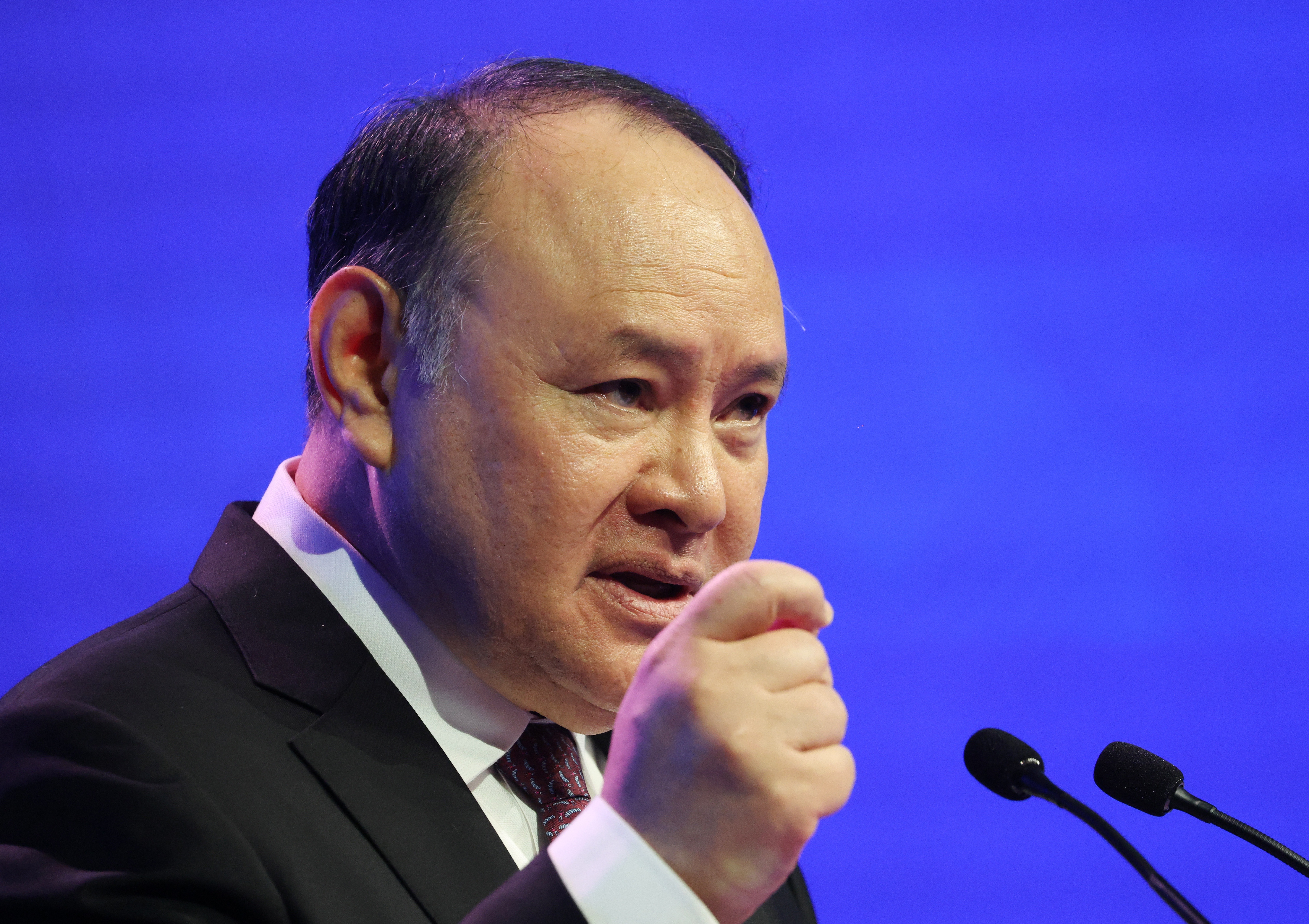
 Philippines Secretary of National Defense Gilberto Teodoro Jr. delivers his speech during a plenary session of the International Institute for Strategic Studies (IISS) Shangri-la Dialogue Defence Summit in Singapore, 31 May 2026. Defense ministers and officials from 44 countries are gathered in the city state for the IISS Shangri-la Dialogue, an annual high level defence summit in the Asia Pacific region. EPA/HOW HWEE YOUNG
The exchange comes as tension grows between between the capitals over repeated maritime disputes and confrontations in the busy South China Sea, which China claims almost entirely as its own, despite overlapping claims by regional countries.
Defending its oversight of foreign state-backed academic and cultural exchange programmes, the Philippine defence department last week pointed to Beijing’s national security law that compels cooperation with state intelligence agencies.
Its statement was “filled with lies and malicious attacks”, however, China’s foreign ministry said in reply to questions on the matter from Reuters.
The ministry said a small group of people “recklessly hijacked and undermined China-Philippines relations”, without identifying it.
“A small group of anti-China forces in the Philippines, seeking political gain and attempting to cover up their country’s maritime violations, are resorting to political manipulation and media distortion,” it added.
In June, Philippine defence chief Gilberto Teodoro called China “wicked”, prompting Beijing to accuse him of pulling a “stunt to serve his own political self-interest”.
Suspicions about China’s activities in the Philippines have grown recently, with a former mayor, identified as a Chinese national with possible links to criminal syndicates, found guilty of human trafficking last year.
(Reporting by Liz Lee; Editing by Clarence Fernandez)
Comments
Scroll down to load comments...