




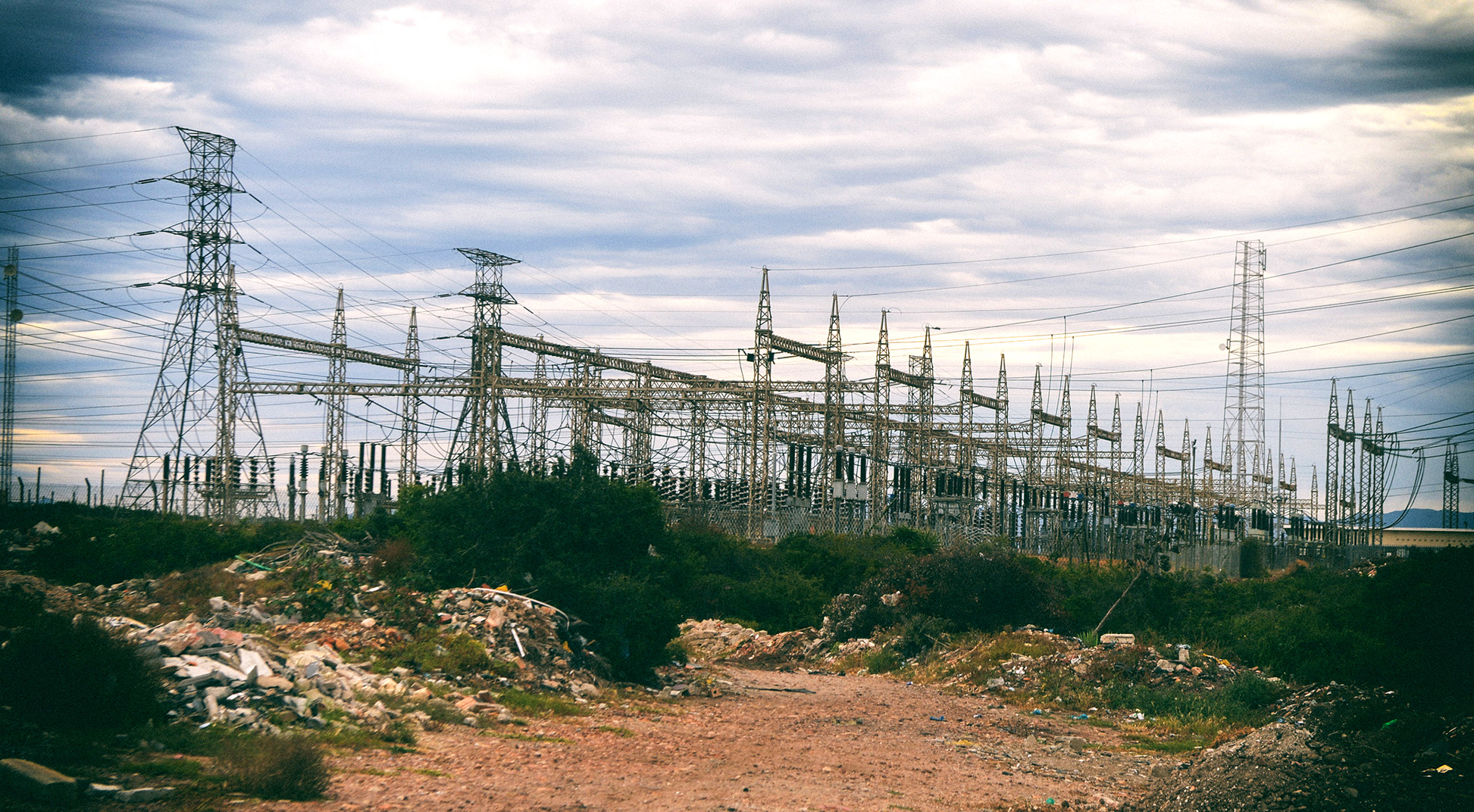
 Small businesses and private residents are struggling to absorb the costs of the newly implemented electricity tariffs in Nelson Mandela Bay, where increases upwards of 29% have hit certain households. (Photo: Deon Ferreira)
As the DA and the Nelson Mandela Bay Municipality prepare for a courtroom showdown over the metro’s latest electricity tariff hikes, residents and small businesses are holding their breath, hoping for a result that could bring some relief to the rising cost of living.
With its mayoral candidate, Retief Odendaal, leading the charge, the DA hopes its urgent application at the High Court in Gqeberha on Tuesday will see the court grant an interdict that will set aside the municipality’s latest electricity tariffs.
At least until they have conducted a better public participation process, which the DA argues was deliberately flawed and filled with half-truths, and did not disclose the full impact of the multilayered price increase.
/file/attachments/orphans/ED_560373_172910.jpg "DA mayoral candidate for Nelson Mandela Bay Retief Odendaal speaks at the launch of an election campaign in Gqeberha on 8 June 2025. (Photo: Gallo Images / Die Burger / Lulama Zenzile)")
The municipality maintains it fulfilled all of its obligations to the public and that the new tariffs, which came into effect on 1 July, are in line with increases approved by the National Energy Regulator of South Africa (Nersa).
Bakeries to salons
While everyone is feeling the pinch of ever-increasing financial pressure, few have been hit as hard by the new tariffs as small businesses run from residential premises.
Some have lost clients while others have gone hat in hand to long-standing customers, as all have had to increase prices to absorb a rise of nearly 30% in their electricity bills.
Standing in the storefront of the popular Pastryworks bakery in Fernglen, owner Cherilyn Gottschalk said she was embarrassed to tell customers that her prices were increasing.
“I have no choice but to push my prices up. And then I feel the need to explain to people that I am not being greedy, it’s simply the cost of doing business.”
/file/attachments/orphans/ElectricityTariffs2_844177.jpg "Popular Gqeberha bakery, Pastryworks, has seen its electricity bill increase exponentially since the Nelson Mandela Bay Municipality implemented increased tariffs. At the same time, they are also contending with regular power outages, which severely impact their efficiency. Store manager Chantel Lotter is pictured behind the counter. (Photo: Riaan Marais)")
Over the past 22 years Pastryworks has built a reputation for offering high-end baked goods from its own premises while also supplying supermarkets with a range of products. The heart of the business – the kitchen – is run from a residential premises around the corner from its flagship store on Stella Londt Drive.
Gottschalk also offers cooking courses at these premises.
“Our electricity bills used to be in the region of R15,000 per month. Now it looks like we will need more than R20,000 to reach the same output.
“On top of that we have to contend with regular power outages. Just [a few] Sundays [ago] we had no power for 14 hours. Some days, between the extra cost and outages, our efficiency is halved.
“Then I have the embarrassing task of going to customers and telling them I have to increase my prices.”
In Newton Park, salon Michael Daniel Hair Design has seen long-standing clients leave due to price increases to cover the additional input costs.
“I was just telling a client that my electricity cost has literally doubled since the start of the month,” owner Michael Kruger, who has been running the business for 30 years, said on Tuesday.
His prices increase annually, but recently some clients have taken their business elsewhere due to the price.
“Now I am facing the difficult business decision: if I skip my annual increase to retain clients, I have to absorb the additional electricity costs. There is no right answer.”
/file/attachments/orphans/ElectricityTariffs1_269772.jpg "Hairstylist Michael Kruger said he has lost clients due to price increases as his electricity bill is likely to double since the Nelson Mandela Bay Municipality implemented increased electricity tariffs. (Photo: Riaan Marais)")
Households hit hard
Besides small businesses, regular residents are also feeling the pressure, particularly low-income households.
In Gelvandale, Marion Claassen is dependent on her disability grant to cover expenses, but her electricity bill has made it nearly impossible.
“I can’t even tell you what my total expenses will be. I bought my usual amount, and when I punched in the prepaid code I only got a quarter of the usual units. I will have to go buy again, and maybe again. I will only know by the end of the month what my new monthly total will be,” Claassen said.
She said some months she runs out of electricity just before receiving her grant. During those months her Grade 9 daughter would study at the neighbours’ house. Other months, when they struggle to make ends meet, she offers her house to their children.
“We help each other like that. But what happens when electricity becomes unaffordable and neither of us can keep the lights on?” she asked.
Like everyone else, Claassen and her neighbours were hit by the Nersa-approved 10.95% tariff increase, implemented from 1 July. They also face the increase brought on by the removal of the inclining block tariff, which saw households pay a reduced rate for their first 300kWh of electricity.
But on top of that, their subsidised electricity, through the municipality’s Assistance to the Poor Programme, has been reduced too.

Court challenge
These “hidden costs” led the DA to its application at the High Court in Gqeberha.
The party claims the municipality’s series of obligatory public participation meetings were purposefully unclear and misleading, and it demands that the increases be referred back to Nersa for review.
In its 230-page application before court, the DA says the public was not made aware of the full impact of the proposed 10.95% increase in electricity tariffs, when taking into account that the municipality was also doing away with the inclining block tariff system.
In its papers, the DA cites a high court judgment from 2014 after the city’s high energy users took the municipality to court over similar processes which had not been conducted properly.
“It is declared that the respondent [the municipality] failed to comply with its constitutional and statutory obligations to ensure meaningful and effective public participation and adoption of its annual budget for the year 2011/2012.
“It is declared that in the future the respondent is obliged to comply, inter alia, with the provisions of the Local Government: Municipal Systems Act 32 of 2000 and the Local Government: Municipal Finance Management Act 56 of 2003 when it prepares and tables an annual budget for consideration and adoption by the municipal Council for the respondent,” the 2014 judgment read.
Municipal spokesperson Sithembiso Soyaya said the municipality acknowledged the DA’s application and responding papers have been filed with the court.
“The municipality filed its answering affidavit on Monday (27 July), in accordance with the court directives. The matter remains enrolled for hearing on Tuesday,” he said.
Unsustainable increases
The Mayibuye Civic Movement, which advocates for accountability and better service delivery in Nelson Mandela Bay, said the tariff increase was “another symptom of the city’s collapsed government”.
“They have failed for years to deal with illegal connections and have repeatedly made the hardworking residents of Nelson Mandela Bay pay for their failures,” Mayibuye president Tukela Zumani said.
/file/attachments/2990/WhatsAppImage2026-03-24at183821_157607.jpeg "The leader of the Mayibuye Civic Movement in Nelson Mandela Bay, Tukela Zumani. (Photo: Supplied / Facebook)")
“They have neglected the electricity reticulation infrastructure to the extent that the residents have gotten used to going without electricity for weeks at a time, and now we are being asked to fund their incompetence. This government has failed to appoint a permanent executive director for the Energy & Electricity directorate, leaving the critical services delivery department on autopilot for almost two years now.
“Electricity may be expensive in South Africa, but in NMB it’s the collapsed government that is costing us,” he added.
The Nelson Mandela Bay Business Chamber has also voiced its concerns over the electricity price increase, and CEO Denise van Huyssteen worries that it could have a devastating impact not only on residents but on the City’s coffers as well.
“Following the implementation of the 2026/27 electricity tariffs, the chamber is very concerned to note that the inclining block tariff system for low-consumption domestic consumers has been abolished. They will face [a] massive increase of 29% as result of the new flat rate per kWh being increased to R4.50,” Van Huyssteen said.
“Such a huge increase is not sustainable and in our view will lead to lower revenue generation for the municipality and increases the potential for electricity to be tampered with and stolen.”
/file/attachments/2986/Screenshot2025-12-15at145231_514674.png "Nelson Mandela Bay Business Chamber CEO Denise van Huyssteen. (Photo: Facebook)")
She pointed out that the municipality’s electricity department has already incurred a loss of R1.5-billion in 2025/26, with a budgeted loss of R1.8-billion forecast for 2026/27.
Van Huyssteen said the move for an interdict to suspend the tariff increase for domestic users is understandable given the lack of transparent and open engagement with affected stakeholders.
“It is also difficult to justify ongoing tariff increases, while the root causes of electricity losses and infrastructure-related issues are not being addressed. Load shedding may well be in the recent past, but consumers in the metro continue to experience regular unscheduled power outages and power dips.” DM
Comments
Scroll down to load comments...