




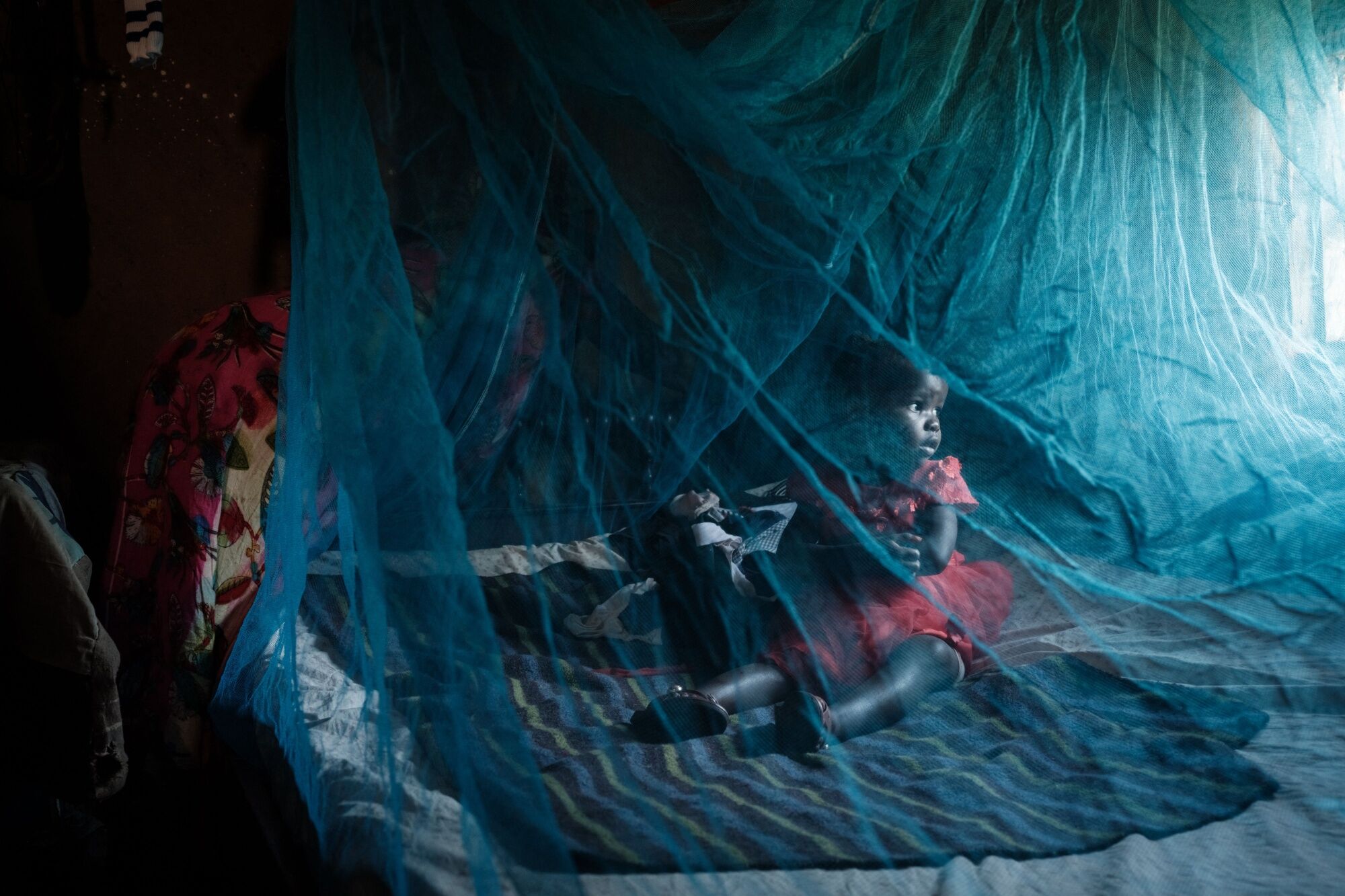
 Although malaria is typically confined to Limpopo, Mpumalanga, and KwaZulu-Natal, the floods triggered an unexpected surge in cases. Photographer: Yasuyoshi Chiba/AFP/Getty Images
Increased cases of dengue fever, chikungunya, and malaria have something in common with droughts, floods and wildfires. The climate crisis is creating the perfect conditions for these infectious diseases to spread further and with more ease as extreme weather events increase in frequency.
This was one of the key messages of a lecture that Professor Helen Rees, the executive director of the Wits Reproductive Health Institute, delivered during the Pro-VC Research Seminar at the University of Witwatersrand on Thursday, 30 July.
Rees argued that climate change should no longer be viewed as a future environmental concern, but rather as a present-day health emergency, particularly in Africa, where warming temperatures, rapid urbanisation, conflict, underfunded health systems and widespread poverty combine to create the ideal conditions for infectious disease to thrive.
/file/attachments/orphans/ED_565673_137670.jpg "Professor Helen Rees, the executive director of the Wits Reproductive Health Institute. (Photo: OJ Koloti / Gallo Images)")
We have already seen this on a smaller scale in South Africa. After deadly floods hit Limpopo, KwaZulu-Natal and Mpumalanga in February, the National Institute for Communicable Diseases (NICD) reported that malaria cases had increased in the country.
Although malaria is typically confined to Limpopo, Mpumalanga, and KwaZulu-Natal, the floods triggered an unexpected surge in cases. According to the NICD, this outbreak extended into non-endemic Gauteng, which recorded 414 confirmed cases and 11 deaths.
/file/attachments/orphans/6I1A3175_673768.jpg "Malaria control services at Mapayeni Clinic in Limpopo. (Photo: Felix Dlangamandla)")
The NICD attributed the cases in Gauteng to travel between the SA’s wealthiest province and the endemic provinces.
How climate change drives infectious diseases
According to Rees, four linked mechanisms drive the rapid spread of climate-accelerated infectious diseases.
The first is that climate hazards are bringing people closer to pathogens. Rising temperatures, altered rainfall patterns and environmental degradation are changing where disease carriers can survive.
Mosquitoes that transmit malaria, dengue, chikungunya, yellow fever and Zika are expanding into higher altitudes and latitudes as temperatures increase. Climate change is also lengthening transmission seasons, allowing carriers of infectious diseases to remain active for longer periods each year.
Rees said one of the clearest examples is Anopheles stephensi, a malaria-carrying mosquito previously confined largely to South Asia and the Arabian Peninsula. It has now moved into the Horn of Africa, where it thrives in densely populated urban areas by breeding in household water storage containers and pools of stagnant water.
Unlike traditional African malaria carriers, this mosquito is well adapted to cities and is resistant to several commonly used insecticides, which makes it a significant new challenge for malaria control.
The expansion of Aedes aegypti mosquitoes, which spread dengue, yellow fever and Zika, paints a similar picture. According to Rees, nearly half of the world’s population is now at risk of dengue, with climate change increasingly recognised as a key driver of the mosquito’s redistribution into previously unaffected regions.
/file/attachments/orphans/IPCC_AR6_WGII_Figure_7_008_508697.jpg "(Source: WHO, 2014).")
The second pathway centres on human movement.
Floods, storms, droughts and sea-level rise displace communities, forcing people into overcrowded settlements with inadequate sanitation and increased exposure to infectious diseases. Simultaneously, environmental degradation and land-use change push human populations deeper into wildlife habitats, increasing opportunities for pathogens to spill over from animals into people.
Wildlife migration
Climate change is also altering wildlife migration. Changes in migratory bird behaviour, for example, are increasing contact between wild birds, commercial poultry and livestock, heightening concerns about highly pathogenic avian influenza (H5N1). While climate change is not the direct cause of H5N1, Rees argued that it is creating environmental conditions that facilitate its spread. Global travel and trade further amplify these risks by enabling pathogens to move rapidly across borders once human transmission begins.
Climate change is also making pathogens stronger.
Warmer temperatures accelerate mosquito development and increase biting frequency. Floods create abundant breeding sites, while warming oceans encourage the growth of harmful bacteria and algae.
/file/dailymaverick/wp-content/uploads/2025/10/iStock-680104394.jpg "A mosquito in the act of sucking blood from a human. Mosquitoes carry malaria, encephalitis, dengue, and the Zika virus. (Photo: iStock)")
Southern Africa’s worsening cholera outbreaks illustrate this mechanism. Cyclone-driven floods have damaged water infrastructure, contaminated drinking water supplies and displaced hundreds of thousands of people, particularly in Mozambique. Cholera bacteria naturally exist in aquatic environments, but warmer water, flooding and plankton blooms dramatically increase bacterial concentrations, creating ideal conditions for explosive outbreaks.
Rees noted that southern Africa experienced a seven-fold increase in cholera cases during early 2026 compared with the previous year, with 13 African countries simultaneously reporting outbreaks.
The final pathway is vulnerability.
Climate-related food insecurity, malnutrition, heat stress, damaged healthcare infrastructure and disrupted water supplies all reduce people’s ability to resist infection.
Rees pointed to the recent Ebola outbreak in Democratic Republic of the Congo as an example of the “perfect storm”. Deforestation, mining activity, changing bat habitats, wildlife displacement, food insecurity, weak health services, poor disease surveillance and conflict combined to accelerate viral spillover and transmission. The outbreak demonstrated that climate change rarely acts alone; instead, it compounds existing social, political and economic vulnerabilities that allow epidemics to flourish.
Building resilience
Moving beyond the bleak outlook, Rees argued that scientific advances offer opportunities to reduce future risks — if governments and research institutions invest now.
Integrated surveillance systems are among the most promising developments. These systems combine climate forecasting, environmental monitoring, disease surveillance and artificial intelligence to predict outbreaks before they happen.
/file/attachments/orphans/RC2NZHAASK2E_925555.jpg "A health worker prepares to administer a dose of the RTS,S malaria vaccine, also known as Mosquirix, at the Mother and Child Hospital in Kasoa, Ghana. (Photo: Francis Kokoroko / Reuters)")
Rees said one such predictive tool is the World Health Organization’s Early Warning and Response System for climate-sensitive diseases, which integrates climate data with information on environmental degradation, vector distribution and current disease activity to identify where outbreaks are most likely to emerge. Rather than simply responding after infections spread, these systems aim to provide public health authorities with enough warning to prepare healthcare services, strengthen vector control and deploy vaccines or treatments in advance.
The role Africa must play
Rees closed with a message of agency rather than despair.
Africa, she argued, cannot continue relying on external funding or externally defined research agendas. The continent’s scientists, governments and institutions must take greater ownership of identifying the health challenges most relevant to African communities and develop locally appropriate technologies and policy responses.
Climate change is changing the geography of infectious diseases faster than many health systems can adapt. But Rees suggests that the greatest risk lies not in the climate itself, but in failing to prepare for the diseases it is already helping to spread. Africa possesses the scientific expertise, local knowledge and growing technological capacity to build that resilience. The challenge now is ensuring governments, researchers and funders act quickly enough to stay ahead of the next outbreak rather than continually responding after it has begun. DM


Comments
Scroll down to load comments...