




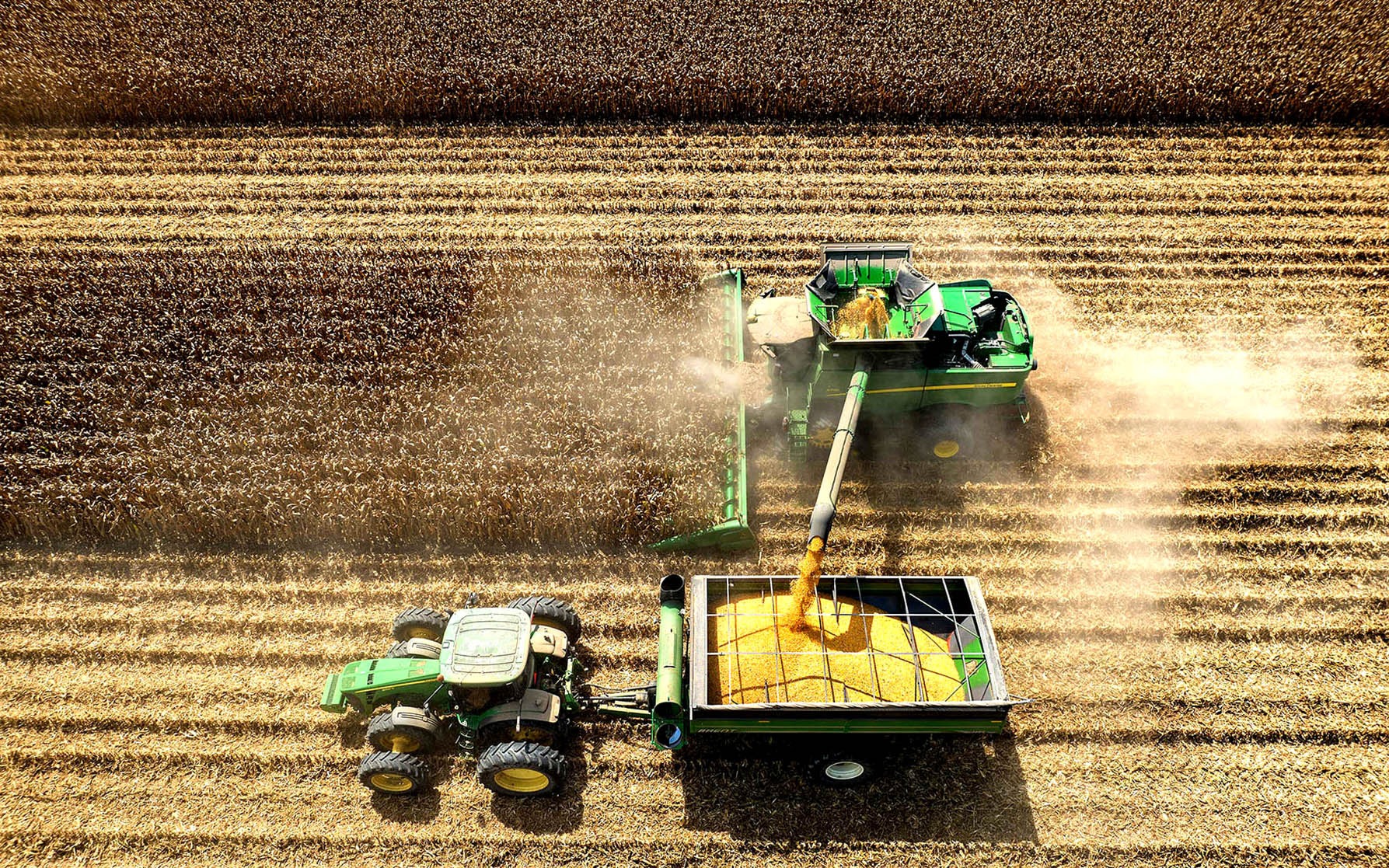
 GMOs and precision farming have yielded 16-year low food inflation for SA. (Photo: Rory Doyle / Bloomberg via Getty Images)
There is a lot of talk about a “cost of living” crisis in South Africa as consumer inflation has accelerated to 5% in June from 3% in February, fuelled by surging oil prices in the wake of the US-Israel war on Iran. But there is a green shoot in this field of woe and it has blunted much of the sting for households: food inflation in June reached an almost 16-year low of 1.4%.
Much of the credit on this front goes to two trends in South African farming – genetically modified organisms (GMOs) and precision farming. And the El Niño weather pattern, which looks set to menace the platteland this summer, highlights why these advances matter.
The issue of GMOs reaped a harvest of controversy about three decades ago amid environmental and health concerns over “Frankenstein foods”. But it has wilted
as a hot-button topic in recent years as food security and climate risks have taken centre stage.
The bottom line is that without this twin revolution, South African grain harvests would be much lower and food inflation – and by extension overall inflation – would be much higher, and the impact would be especially hard for poor households.
/file/dailymaverick/wp-content/uploads/2024/01/pest-7.jpg "Precision farming techniques using drones or modifying the flow rate from spray nozzles can significantly reduce pesticide volumes compared to more conventional manual methods. <br>(Photo: iStock)")
(Photo: iStock)
To wit, South Africa’s 2025-26 maize harvest is forecast by the official Crop Estimates Committee to be a record 17.4 million hectares. Overall grain and oil-
seed production reached a whopping 2.15 million tonnes. “Grains were among the key products underpinning the moderation in consumer food price inflation,” notes Wandile Sihlobo, chief economist of the Agricultural Business Chamber of South Africa.
Bumper crop
Much of the narrative about this bumper crop has focused on the favourable summer rains brought by La Niña. This has since been replaced by the fast-strengthening El Niño, which is expected to bring scorching drought to South Africa this summer.
But this bumper crop and its positive impact on food inflation did not suddenly emerge hocus-pocus from the soil. It is the culmination thus far of decades of agricultural improvements, aided by the adoption of GMOs in the late 1990s, which, among other things, improve water retention.
“With grain farming, it is all about moisture retention, especially in South Africa, as we are a semi-arid country,” Corné Louw, head of applied economics at industry group Grain SA, told Daily Maverick.
Extreme El Niño events in the 1980s and 1990s prompted South African farmers to seek ways to boost their yields in the face of unfavourable weather events. This was one of the drivers behind the adoption of GMOs in the country, which received regulatory approval through the Genetically Modified Organisms Act in 1997.
This was followed by the precision farming revolution, which allows farmers to precisely apply inputs with the aid of GPS technologies. It is all very hi-tech and capital-intensive, but the social dividend in South Africa has been a dramatic increase in food security from a surge in yields.
Data that Louw provided underscores this point. Maize yields in South Africa from 1923 to 1960 increased from 0.6 tonnes per hectare (t/ha) to 1.2 t/ha, a gradual improvement enabled by early mechanisation. Between 1960 and 1970, as tractors became more widespread and could plough more deeply, yields increased to 1.7 t/ha.
/file/attachments/2995/graphsuggestion_308217.jpg)
Fertiliser planning and soil analysis saw a rise to 2.6 t/ha over the course of the next decade. But things really blossomed from 1995 to 2015 with GMOs and the start of precision farming, with yields surging to 4.3 t/ha. And from 2025 to 2020, this number accelerated to 5.4 t/ha and maize yields are now about 6.4 t/ha.
This has ultimately yielded the current 16-year low in food inflation, which goes against the grain of the wider trajectory and a two-year high in the overall read.
White maize is South Africa’s caloric household staple that feeds the nation and maize meal is in deflationary territory, with its price almost 6% lower in June than it was
12 months before. Yellow maize is critical for animal feed and a stout harvest reduces meat costs.
This in turn feeds into inflation expectations and wage demands as many unionised employees – especially in sectors such as mining – have several dependants, and food inflation is often their focus.
The low rate of food inflation, which accounts for about 18% of the overall Consumer Price Index basket, is also seen by some economists as being a key reason behind the South African Reserve Bank’s recent decision to keep interest rates on hold.
A lot of grain can ease monetary policy pain. And it reduces the inflation burden on households – a state of affairs that has sprung from the dual agricultural revolution of the past three decades. DM
This story first appeared in our weekly DM168 newspaper, available countrywide for R35.
/file/attachments/2995/DM-310726_276433.jpg)
Comments
Scroll down to load comments...