




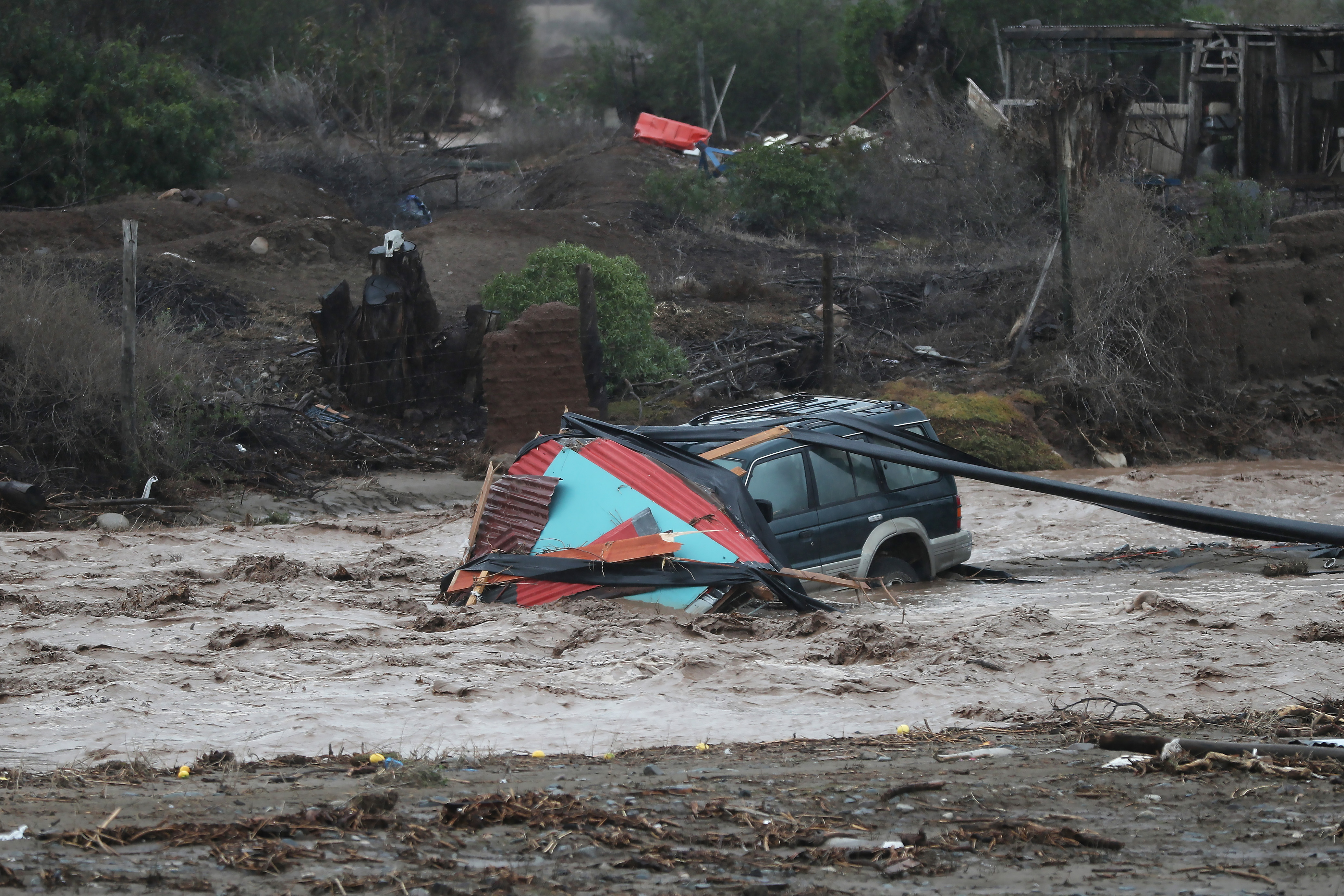
 Flooding in La Serena, Chile, on 21 July 2026. Devastating floods linked to El Niño have seen Chile declare a state of catastrophe. (Photo: Hernan Contreras /EPA)
 This El Niño is fast morphing into a whopper, and its impact will be felt across a broad range of soft commodities around the world that will drive up the prices of many of the basic foodstuffs that land on your table.
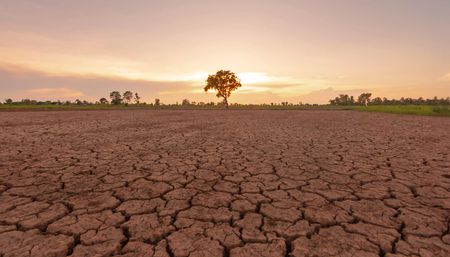
Commodities expected to see price spikes include cocoa — and hence chocolate, coffee, rice and sugar. On the domestic front, the main concerns are focused on summer grain crops, notably the staple maize.
The effects will be uneven, with some supply chains cushioned by ample stocks. And a few agricultural regions may get a boost from the good rains that the weather pattern typically brings to them.
But there are two dark clouds of uncertainty swirling over soft commodity markets that could herald seismic price shocks.
The first is the ongoing Iran war, which is creating a perfect agricultural price storm in tandem with El Niño.
“The Strait of Hormuz conflict has simultaneously disrupted fertiliser supply chains, compounding weather-driven yield risk with input cost stress, which is a combination not seen in prior El Niño cycles,” said Aneeka Gupta, director of macroeconomic research at asset manager WisdomTree Europe, in a recent note.
“The last time a major El Niño hit (2023-2024), markets were watching. Cocoa rallied 250%. Sugar hit its highest price in over a decade. Rice exporters shut their borders. Those events felt dramatic at the time, but they unfolded before the US-Iran war, before the fertiliser crunch, before the warming baseline had climbed another notch.”
The other cloud is the unprecedented nature of this El Niño, which is likely to take commodity markets into uncharted waters.
“With the July runs now in from 667 ensemble members across 14 different seasonal forecast models, it looks like this year’s El Niño is not only very likely to be the strongest event since reliable records began — it may end up the strongest by a truly mind-blowing margin,” climate scientist Zeke Hausfather wrote last week in his influential newsletter Climate Brink.
The trigger for El Niño is a warming of surface sea temperatures in the tropical Pacific.
Hausfather, a co-author of the Intergovernmental Panel on Climate Change (IPCC), noted that the “temperature anomalies” — climate-speak for the deviation in sea surface temperatures in the tropical Pacific from their long-term average — currently stand at 3.6°C above the norm, “roughly 0.8°C hotter than the prior record of 2.75°C set in 2015-16”.
“For context, the gap between the strongest and the fifth-strongest El Niño of the past 150 years is only about 0.5°C. The models are forecasting something outside the envelope of anything we have ever observed.”
If that is the case, then commodity markets and consumers worldwide need to brace for an event that is “outside the envelope”.
Record prices
The last El Niño saw orange juice futures and cocoa prices scale new peaks while coffee reached a record high in 2025.
“Every strong El Niño in the past 55 years has reduced global cocoa production,” WisdomTree’s Gupta noted.
West Africa, which accounts for about two-thirds of global cocoa supplies, is already feeling the effects of El Niño, according to Oxford Economics Africa senior economist Leeuwner Esterhuysen. Heavy rainfall and floods have hit the region, and there are fears that a combination of drought and deluge will follow.
/file/dailymaverick/wp-content/uploads/2023/10/Traditional-farming-MAIN.jpg "Workers cut cocoa pods from trees on a farm in Azaguie, Ivory Coast, on 18 November 2022. (Photo: Andrew Caballero-Reynolds / Bloomberg via Getty Images)")
“Field observations in Côte d’Ivoire and Ghana point to weak pod development, with initial estimates suggesting Côte d’Ivoire’s next harvest could fall by roughly 20% during the 2026/27 harvest season,” said Esterhuysen in a recent note.
But it’s not all doom and gloom for chocolate lovers.
Swiss-based Barry Callebaut, the world’s largest chocolate maker, said earlier this month that the potential supply shock from El Niño would be minimised by ample stocks and surpluses — a stark contrast from the previous one, which coincided with deficits.
This mirrors the situation regarding South African maize. In the wake of the last La Niña — which typically brings good rains to this region, while El Niño heralds drought — South Africa’s maize harvest this year is estimated to be a record 17.3 million tonnes, well over annual domestic consumption of around 12 million tonnes.
/file/dailymaverick/wp-content/uploads/2025/06/iStock-1308606393-1.jpg "South Africa’s maize harvest this year is estimated to be a record 17.3 million tonnes. (Photo: iStock)")
Both scenarios point to surplus supplies that should help to contain the price shocks, which in the case of maize in South Africa hit poor and working-class households the hardest. South Africa’s dam and moisture levels are also at decent levels for the most part.
But this relatively benign outlook could be in for a rude awakening given the forecast severity of this El Niño, which is gaining strength at a menacing pace.
“The 2026 event is developing faster than 1997-98, the previous gold standard for explosive El Niño onsets,” Hausfather ominously noted.
It will also stick around for a while. The US Weather Service, in its latest forecast, says there is a 97% chance that it will not fade before the northern spring/austral autumn — so the entire summer grain growing season in South Africa will take place under its scorching presence.
And if it reappears quickly again, the outlook will be grim. Good maize stocks and favourable dam and moisture levels will evaporate at some point, leaving the South African economy high and dry.
‘A great blow’
“An El Niño drought that extends beyond one season will deal a great blow to the economy, with food inflation likely rising into double digits before easing,” said Reezwana Sumad, senior research analyst at Nedbank.
“This is not our base case, but it is certainly something we will watch very closely in the coming months.”
South African cattle producers, already reeling from the foot-and-mouth disease outbreaks, will also feel the heat as feed costs rise and grazing lands wither — but at least the fields are in good nick ahead of time, and the surplus of yellow maize used for animal feed will help.
“With irrigation dams at reasonable levels, and maize prices predicted to stay reasonably stable as a result of the ample carryover stock, the cost of feed is not expected to increase exponentially,” said Zhann Meyer, the sector lead for agriculture at Nedbank.
But an extension beyond one season would trigger a mass slaughter of herds. This would initially depress South African meat prices, but they would spike afterwards as the supply glut would be replaced by scarcity.
This fast-developing El Niño is already wreaking havoc. Beyond west Africa, devastating floods linked to the weather phenomenon have seen Chile declare a state of catastrophe. And south and southeast Asia are bracing for hotter and drier conditions that will adversely affect rice, sugar, coffee and palm oil production.
South Africa is also bracing for hotter and drier conditions, and such trends elsewhere will also affect the price of stuff we eat and drink. Soft commodity markets are heating up towards the boiling point, and the global economy and consumers worldwide are going to get burnt. DM