




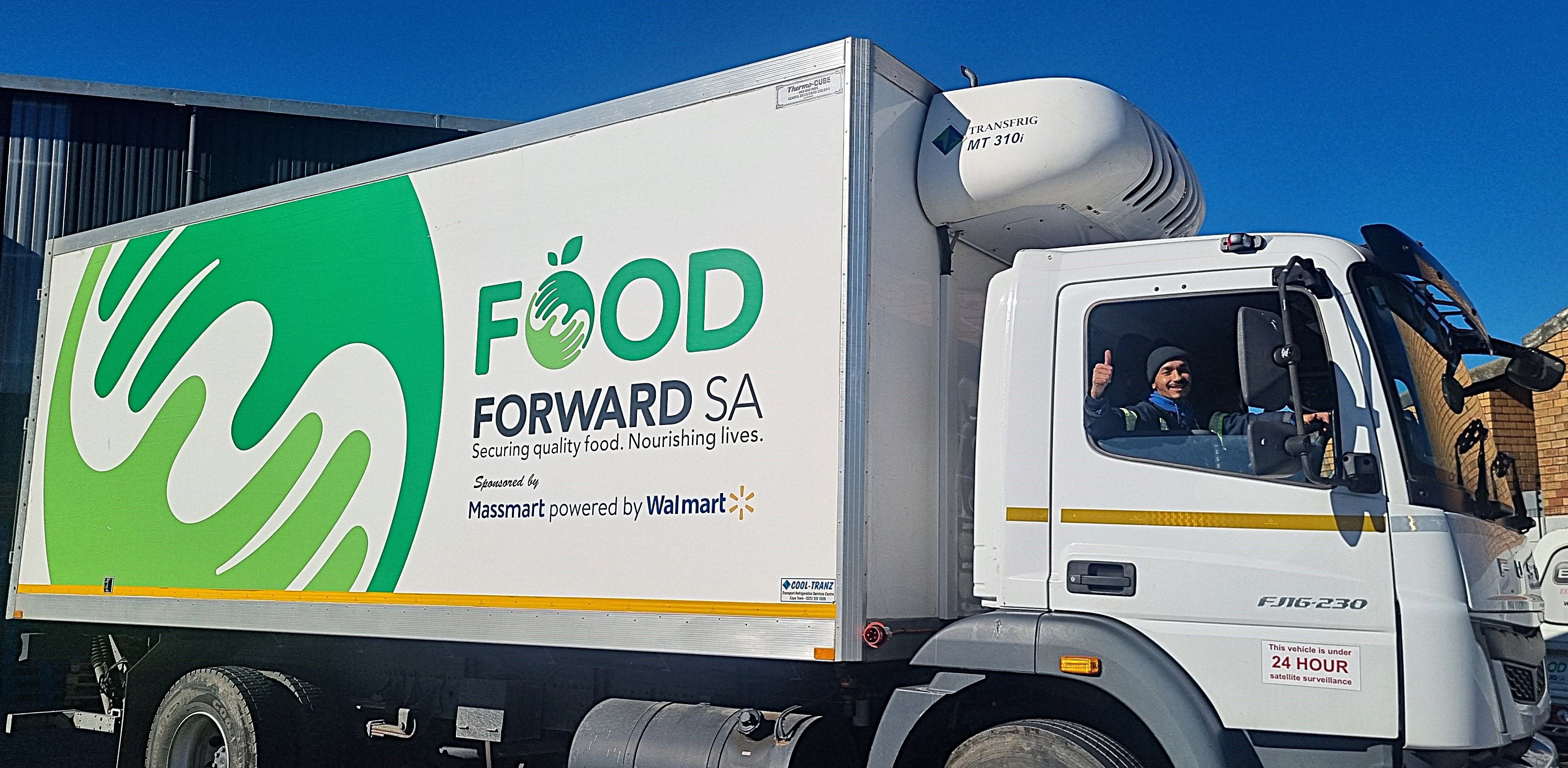
 Dylan Simpson, FFSA’s supply chain internship programme graduate is now a licensed truck driver.
Beyond the millions of households already experiencing hunger, 15.8 million people face the threat of food insecurity says Stats SA. This is a sobering reality in a country whose constitution guarantees “everyone has the right to have access to sufficient food”. Growing concern over this disconnect has led the South African Human Rights Commission to convene investigative hearings into South Africa’s food systems.
What makes this even more heartbreaking is that hunger exists alongside waste. While people struggle to put bread and milk on the table, an estimated 10 million tonnes of edible food or over a third of all food produced in South Africa goes to waste.
This contradiction highlights a bigger social issue, that South Africa’s challenge is less about producing enough food and more about ensuring that families have consistent access to food. The scale and complexity of this crisis demand collective action. It requires government, business, civil society and communities to work together.
One powerful example of a collaborative effort is the long-standing alliance between Woolworths and FoodForward SA. For the past eight years, Woolworths has donated more than R5 billion worth of surplus food through FoodForward SA network, ensuring that approximately 10 billion meals get to the right people, at the right time while maintaining Woolworths quality.
In addition to surplus food donations, Woolworths has supported FoodForward SA with financial resources, contributing more than R11 million in cash over the eight-year period to help FoodForward SA expand their food recovery network, warehousing facilities and national distribution to reach more people nationally.
Through FoodForward SA’s innovative foodbanking programme, managed via the FoodShare digital platform, surplus food from Woolworths stores reaches more than 2,500 vetted independent beneficiary organisations. Together, they provide daily access to food for approximately 935,100 (FoodForward SA 2024/2025 Annual report) vulnerable South Africans, with surplus food collected directly from Woolworths stores.
This shared commitment continues to grow. In FoodForward SA’s 2024/25 financial year, 20,732 tonnes of food was recovered and distributed. More than 60% of this came from Woolworths, representing surplus food worth approximately R857 million (Woolworths 2025 Good Business Journey report). These donations in the 2024/25 financial year translated into more that 50 million meals reaching over 900,000 South Africans who face hunger every day.
/file/attachments/2995/WW_FOODFORWARD_INFOGRAPHIC_684852.jpg)
The responsible recovery of good-quality, edible surplus food (what the industry calls waste) provides both social and environmental benefits. By recovering edible food that would have otherwise gone to waste or landfill, FoodForward SA helped prevent an estimated 107,807 (FoodForward SA 2024/2025 Annual report) tonnes of greenhouse gas emissions during the past year. This demonstrates how food recovery programmes can simultaneously address hunger and reduce waste while supporting climate action.
Zinzi Mgolodela, Woolworths’ Director of Corporate Social Justice, said the partnership with FoodForward SA is central to the retailer’s broader commitment to social inclusion.
“We believe that access to food is a human right – everyone deserves a seat at the table. As a food retailer, we are part of a chain that gets food from farm to home, so we see it as our duty to make sure no one falls through the cracks along the way and that our surplus food has the same level of care as the food we sell. Our partnership with FoodForward SA is a critical component of our commitment to increase and improve access to food with dignity. It supports our Inclusive Justice Initiative’s mission to leave no one behind and share our ZEROHunger2030 vision.”
Working together also recognises that sustainable food security requires investment in people and future skills. In 2019, with funding from Woolworths, FoodForward SA launched a supply chain internship programme for unemployed youth. Since then, the programme has expanded nationally, training more than 69 young people and creating permanent employment opportunities for 20 graduates.
For Andy Du Plessis, Managing Director of FoodForward SA, the partnership has been instrumental in scaling the organisation’s reach and impact. “Through Woolworths’ surplus food donations and funding, we have been able to scale our operations to a national level, reaching nearly 900,000 South Africans with daily access to quality food.”
At its core, the collective action between Woolworths and FoodForward SA demonstrates what can be achieved when organisations work together towards a shared purpose. The 2026 State of Household Food Insecurity in South Africa Report makes it unmistakably clear that partnerships such as Woolworths and FoodForward SA demonstrate how businesses can move beyond philanthropy and become active partners in building a more inclusive and food-secure South Africa. DM
Stats SA General Household Survey
FoodForward SA 2024/2025 Annual report
Woolworths 2025 Good Business Journey report