



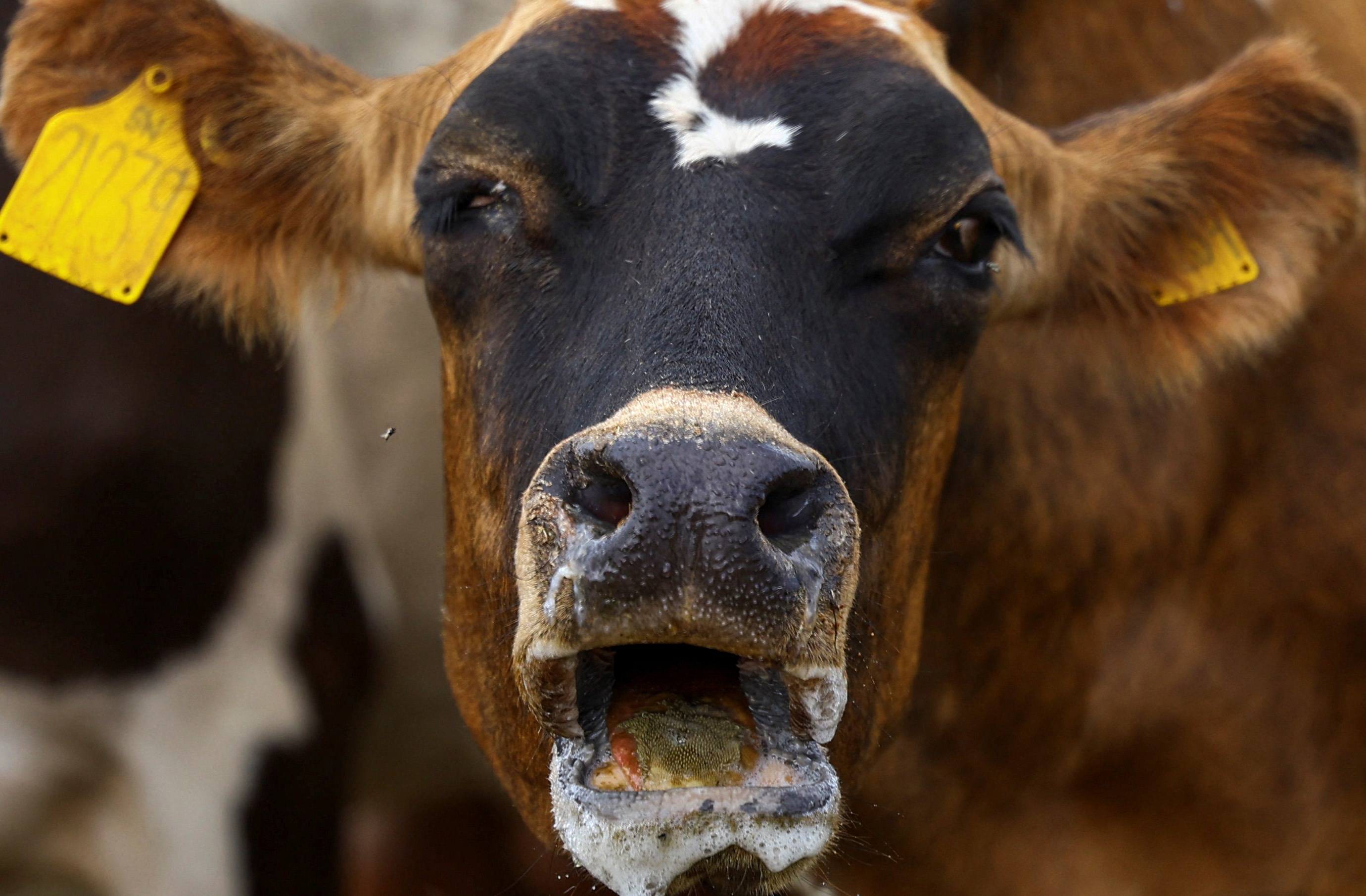
 Sores cover the tongue of a cow believed to be suffering from foot-and-mouth disease. (Photo: Reuters / Siphiwe Sibeko)
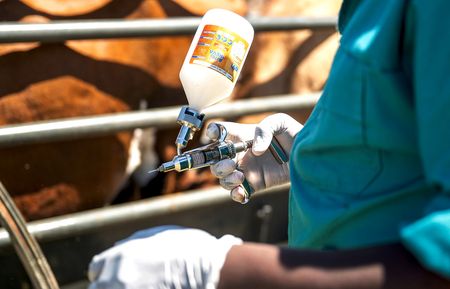
State Veterinary Services has confirmed five cases of foot-and-mouth disease (FMD) among cattle herds in Nelson Mandela Bay, and said it is actively working with City officials to roll out vaccinations and closely monitor animal movement in the metro.
However, after the matter was raised twice during a city council meeting on Tuesday, political head for public health Tshonono Buyeye denied that any cases had been confirmed with the directorate, and said there had been no communication from the state veterinarian.
Ward 40 councillor Jason Grobbelaar, who raised the matter in council, also raised his concerns over FMD in the metro a week before the council meeting took place, when he first came to hear of possible cases.
Dr Lungile Jali, deputy director of State Veterinary Services in the Nelson Mandela Bay region, said his department was working with City officials to address five confirmed cases within the borders of the metro, as well as a sixth outbreak near Thornhill.
The five confirmed outbreaks in NMB were detected in Bushy Park, Kwanobuhle, Lady Slipper, Motherwell and Rocklands.
/file/attachments/orphans/FMDNMB1_895510.jpeg "A map confirming the location of foot-and-mouth disease outbreaks among cattle in Nelson Mandela Bay. While State Veterinary Services has confirmed the outbreak and said a vaccination drive and monitoring programmes were in place, Public Health MMC Tshonono Buyeye told the council that his directorate had not received confirmation about the outbreaks. (Map: Supplied)")
“We recently had a case due to an animal that was transported from Peddie to Nelson Mandela Bay, but we believe that was an isolated incident. At this stage it is not clear how these most recent outbreaks spread into the metro or how long the diseased animals have been here,” Jali said.
He said symptoms were reported to veterinarians in the affected areas who tested the animals and reported the results to the state veterinarian. He could not confirm an exact date, but said they had been aware long enough to consult with City officials and roll out vaccination programmes.
“We are also closely monitoring animal movement in the affected areas in an effort to minimise the risk of the disease spreading further. For now, we seem to have limited the disease to the confirmed areas.
“Our biggest concern is the prevalence of stray animals in and around Nelson Mandela Bay. This makes it very difficult to effectively control the spread of FMD, and we urge all cattle owners to contain their animals, limit their movement and keep a close eye on them for possible symptoms,” Jali said.
FMD is a highly contagious disease that affects cloven-hoofed animals.
Symptoms include hypersalivation, loss of appetite, ulcers and lesions on the tongue and around the hooves, lameness and a drop in milk production.
Fatalities are rare if animals are treated quickly. Younger animals are more susceptible, and most fatalities are among newborn livestock or due to culling to prevent the spread of the disease. People cannot contract FMD.
On Tuesday, when Grobbelaar first tried to bring a motion about FMD in Nelson Mandela Bay before council, he said that there had been reports of outbreaks, but no confirmation as yet. The motion was never officially tabled.
State vet confirmation dismissed
Moments later, after he had received a message from the state veterinarian’s office officially confirming the outbreaks, he took to the mic again, telling council that he had received confirmation.
In response, political head for public health Buyeye told council there had been no official confirmation.
“Councillor Grobbelaar did submit a motion, we have seen it. We are still in the process of responding to his motion, but now he comes here and he says he’s got confirmation from the state vet. As a directorate, we have not received that confirmation.
“The state vet knows the protocols. Once there is a serious issue, such as FMD, public health’s subdirectorate environmental health is the department they should liaise with, and they have not done that as we are seated here,” Buyeye said.
This contradicts Jali’s claims of programmes already in motion to address the outbreaks.
Issue ‘raised a week ago’
Grobbelaar said he first raised the issue with the city manager’s office last week, 13 July, after he received the first reports from concerned residents.
In his e-mails addressed to the city manager, Grobbelaar mentioned the areas of Lady Slipper and Rocklands, as well as surrounding areas, and asked whether the city has any confirmation, or even suspicion, of FMD in the area.
He also asked if the city planned on informing the public on the potential risks of the disease, the official reporting channels to communicate possible cases to the city, and what protocols or contingencies were in place should cases be confirmed.
Grobbelaar received a written response from acting city manager Lonwabo Ngoqo the following morning, stating that he delegated the matter to the acting executive director of public health.
Speaking after the council meeting, Grobbelaar said it was concerning that the matter had not been treated with more urgency.
“The impact of a FMD outbreak could be devastating to the city’s entire herd, whether it belongs to commercial farmers or informal cattle owners.
“We have confirmation from the state vet with a map detailing exactly where the outbreaks are. I do not understand how the MMC can say this has not been communicated to them.”
/file/attachments/orphans/WhatsAppImage2026-01-15at143510_655637.jpeg "The state vet noted with concern the prevalence of stray animals, particularly cattle, as they battle to contain foot-and-mouth disease outbreaks in Nelson Mandela Bay. (Photo: Riaan Marais).")
Municipal spokesperson Sithembiso Soyaya said the city had seen recent public commentary that sought to attribute responsibility for the detection and management of FMD to the municipality.
He said the metro was in regular contact with the state veterinarian, who had confirmed that a positive case involved an animal transported from the Chris Hani District into the Nelson Mandela Bay Metro.
However, he added that the detection, diagnosis, declaration and containment of FMD were statutory responsibilities of the State Veterinary Services provincial department of agriculture, supported by the national department in terms of the Animal Diseases Act.
“These functions do not fall within the constitutional or legislative mandate of municipalities. Accordingly, the municipality is neither the competent authority responsible for confirming outbreaks nor authorised to issue official declarations on the status of the disease.”
“While these statutory responsibilities rest with the Department of Agriculture, the municipality continues to fulfil its own legislative obligations through its public health directorate. These include supporting public awareness campaigns, engaging farming communities, conducting routine environmental health visits to commercial farming operations, collaborating with veterinary authorities and keeping the public health committee informed of developments.”
Soyaya encouraged residents, farmers and livestock owners who suspect cases of FMD to report them directly to the Provincial Department of Agriculture through the State Veterinary Services.
Municipal pound concerns
What is of further concern are the ongoing challenges at the municipal pound in Kariega, which has been under the spotlight since a new service provider, Busy Bees, was appointed in January 2026.
Before this, the SPCA was contracted to manage city pound operations for more than 50 years. Put out to tender again, Busy Bees was awarded the contract.
Its tenure has been marred by repeated inspections by the Animal Anti-Cruelty League, findings of substandard conditions for animals, and the high court ordering the municipality to improve the living conditions of animals at the pound, and to sharpen its oversight at the facility.
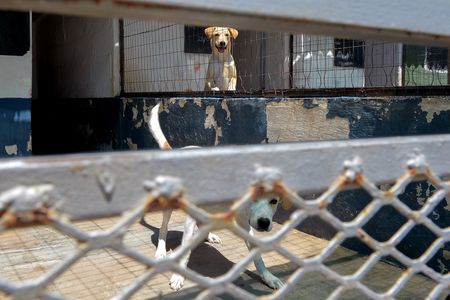
The pound, which is also mandated to house stray livestock, seems to have neglected these responsibilities.
Reports indicate that the service provider has not impounded any livestock since taking over operations of the pound. Its contract is believed to have lapsed in June, leaving the pound vacant and operations in limbo. DM
Comments
Scroll down to load comments...