



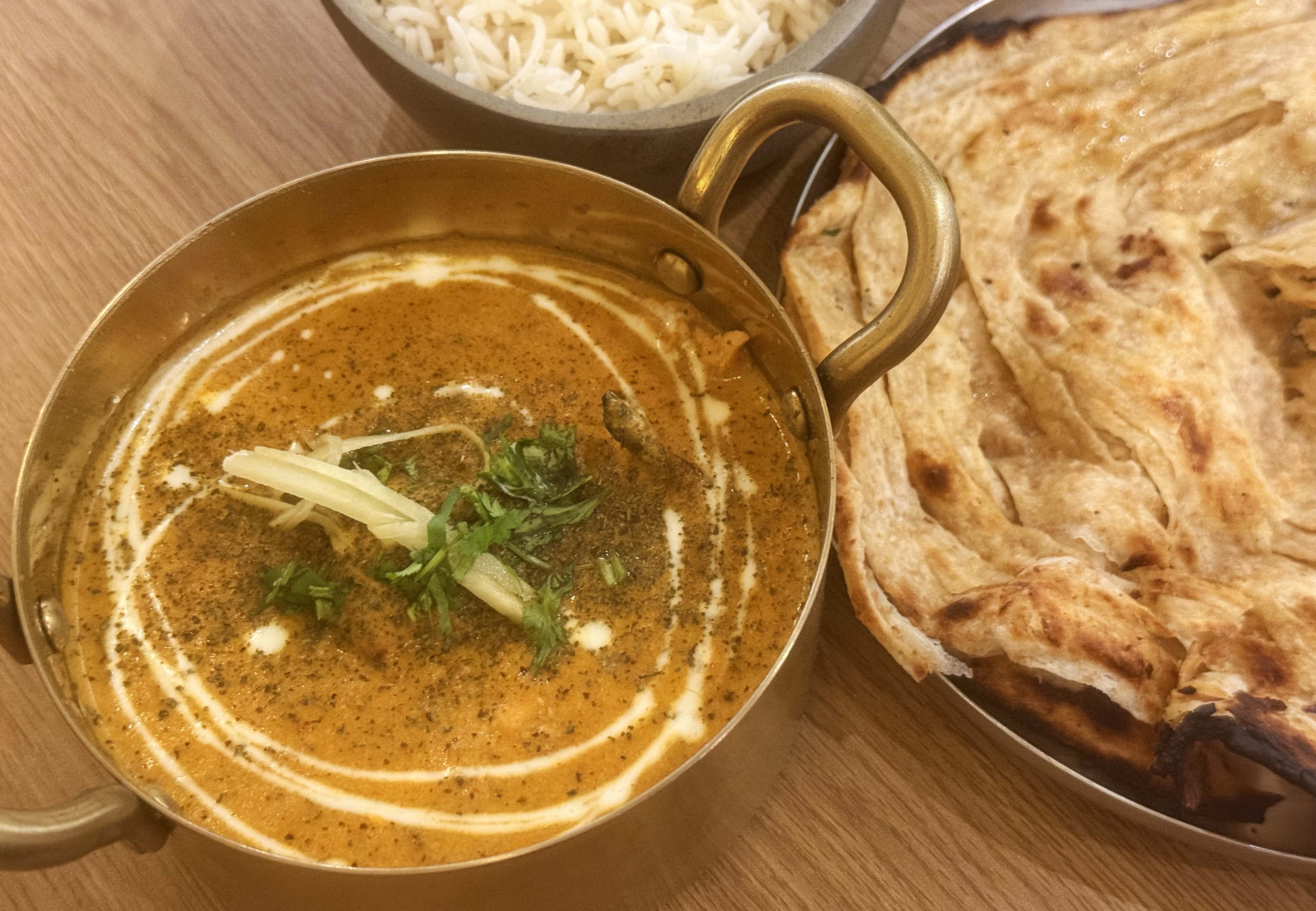
 Chicken changezi, a fragrant and delicious regional speciality from the old Muslim quarters of Delhi, served with basmati rice and pudina paratha (mint). (Photo: Tony Jackman)
 You don’t expect to find a food story with a local, national and even international angle when you pitch up for dinner at a new restaurant in your neighbourhood that somebody happened to tell you about.
We’d heard that there was a new eatery called Punjab, the name of which suggests fragrant, delicious dishes cooked in a tandoor and redolent of that part of India. We wasted no time in making a reservation for this newbie in Church Street, Durbanville.
And it’s smart, despite its rather small scale. It turns out it is the second edition of a brand that started its life in Stellenbosch, where the original still operates.
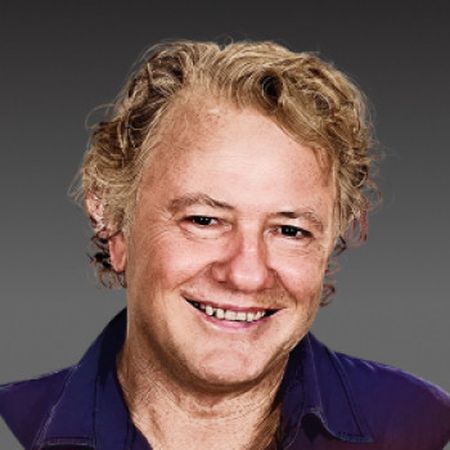
Wandering around was a turbaned gentleman paying careful attention to every guest and every plate being sent out from the tiny kitchen. He is Gurpreet Singh, whose life and career path – I found out on my fourth visit, because that’s how much I love this place – started in New Delhi, India, though it was in Singapore that he developed his skills at running what he calls “the back end” of restaurants. He is an expert in everything that happens out of sight. Not least procuring fresh vegetables and even fresher spices than any available in South Africa, he insists.
Then, in London, he honed his front-of-house skills, owning and running six restaurants in high-end parts of the English capital such as Mayfair and Knightsbridge.
/file/attachments/2995/punjab-chaat_755216.jpg "Sev puri – street food at Punjab restaurant in Durbanville, a small eatery whose owner has big ambitions. (Photo: Tony Jackman)")
Over time, as is the way of a good and instinctive restaurateur, he developed sound relationships with his core clients, not least an unnamed man from Stellenbosch who ultimately persuaded him to head for South Africa and explore the possibilities in the Boland.
He had been to Cape Town before, thanks to the city’s reputation for offering the best heart care in the world. His daughter had been born with a hole in her heart and it was a Cape Town surgeon who finally fixed it, so that she could grow into the healthy, fit young woman she is today. So he had a fondness in his heart for our lovely Mother City even before meeting the Stellenbosch man who would persuade him to come out here.
/file/attachments/2995/chaat-panipuri_377456.jpg "Pani puri at Punjab. The 'shot' is a part of this street food speciality. (Photo: Tony Jackman)")
Recently he sold all six London restaurants to focus on his new interests in Cape Town, and ultimately the rest of the country and parts of the wider world.
The original Punjab in Stellenbosch still operates but he wanted a second outlet, and several of his Boland customers urged him to investigate Durbanville. Why? This is perfectly clear to me now that I have lived at the other side of the Boerewors Curtain for eight months. There are a lot of well-off people here who own big houses with lovely gardens, drive fancy cars and clearly have money to spend.
/file/attachments/2995/samosa-chaat_192299.jpg "Samosa chaat. (Photo: Tony Jackman)")
And this community likes to live life well and to dine out regularly. Enter Punjab, the Durbanville edition, but there’s more to come.
The premises next door happen to be vacant, so Gurpreet has taken the lease on it and work is already under way to open the first branch of Delhicious, and while Punjab is important to him, it is Delhicious – as yet unborn – that holds his heart. It is set to open in October 2026.
Delhicious, he told me, will be several things. A deli. A pantry. And a place to sit down for breakfast, lunch – or high tea. Indian high tea.
The first branch will operate from 7.30am to 4pm, when the space will take the overflow from Punjab next door. He is already finding that Punjab fills up and turns tables every night, after less than a month in operation.
The pantry component of Delhicious will offer bottled relishes (atchars, chutneys), homemade ghee, paneer and mustard oil, Indian teas and spices. There will be Indian patisserie and confectionery (such as spiced croissants), Indian coffee and tea. Ghee on tap has to be experienced, he says.
/file/attachments/2995/punjab-briyanis_203895.jpg "Each of the breyanis is beautifully presented in a handi, a handmade serving pot Singh has imported. The handis will be for sale at Delhicious. (Photo: Tony Jackman)")
Indian dinnerware and tea ware will be for sale alongside fresh spices. He has been disappointed at the lack of freshness of spices sold in South Africa, which he says are old even before they are offloaded from the ships. He is exporting spices himself and will sell them in small quantities so that you can buy only what you need for the curry or chutney you want to make when you get home.
The teapots he imports will be Turkish, not Indian, because “they are the best in the world”.
And his ambitions are not small. Next up, after Durbanville, is a much larger version of Delhicious in a coastal location, right at the seafront. The concept for that iteration will include small plates, picnic baskets and curated tiffin-style meals (the metal Indian lunchboxes).
The concept is one he plans to roll out elsewhere in South Africa, with current intended locations including George, Knysna and Johannesburg, before setting his sights on countries and cities abroad including Portugal, Spain, London and New York.
He is toying with the idea of opening somewhere in the Durban area as well. He envisages six additional Punjab locations nationally over time but with a slow, selective approach to site choice.
The eateries in the smaller South African towns will be renditions of Punjab, while those in Johannesburg and Durban will be similar to the Durbanville arrangement of a Punjab with a Delhicious adjacent to it.
The restaurants he plans beyond South Africa’s borders will all be Delhicious — and that sentence explains perfectly why he smiles every time he utters the name.
Gurpreet plans to contract farmers to grow speciality tomatoes and other produce under contract to him, and refuses to use canned tomatoes for the curries in his restaurants.
/file/attachments/2995/punjab-chops_729758.jpg "My favourite tandoori lamb chops. (Photo: Tony Jackman)")
The cuisine at Punjab focuses on authentic Indian techniques and spice layering: use of ghee, mustard oil, coconut oil, and regionally appropriate garam masala blends.
He explains that garam masala, which contains 18 spices, is not for cooking as such, but is a finishing spice. And there are specific blends of garam masala for winter and summer.
At Punjab we tasted momos, the New Delhi street food dumpling that sells in massive numbers daily in the Indian capital. No less delicious are the Punjabi street food starters we had on our first and second visits: delightfully crunchy sev puri, with cool fillings including tomato, cucumber and creamy yoghurt, samosa chaat (crushed samosas with chutneys, chickpeas and yoghurt), and pani puri (with potato, chickpeas and tamarind).
The second time we visited, I asked Gurpreet to recommend a dish I really should try, and he instantly urged me to order the chicken changezi, which he said wasn’t overly hot but was layered with beautiful spices. It was so delicious that I will certainly choose it again.
But my favourite dish so far, and I’ve ordered it twice, is the tandoori lamb chops, which you can order two of, or four. This is from the “charcoal plates from the tandoor” section of the menu, and they are as perfectly tender as a lamb chop could be, so beautifully spiced. Just wonderful.
On our first visit we both chose briyanis – Lucknow chicken briyani for the Foodie’s Wife, Hyderbadi lamb briyani for me. They were delicious and the chef sent out little jugs of a “special sauce”, which made them even better.
I haven’t yet tried the Railway lamb curry from a rustic railway canteen recipe, and that’s next on my list. I’m also keen to try the peppery lamb Chettinad with its “18 bold spices”.
Gurpreet persuaded me to try a dessert: oddly, this is an Indian take on tiramisu, and it looks like this:
/file/attachments/2995/indian-tiramisu_823381.jpg "Tiramisu, in a deliciously Indian version, at Punjab. A taste of what is in store at the forthcoming Delhicious right next door, perhaps. (Photo: Tony Jackman)")
And that, in so much delicious detail, is what can happen when you decide to pop out and try a new restaurant down the road and find a world of flavour and huge potential for more, please. DM