



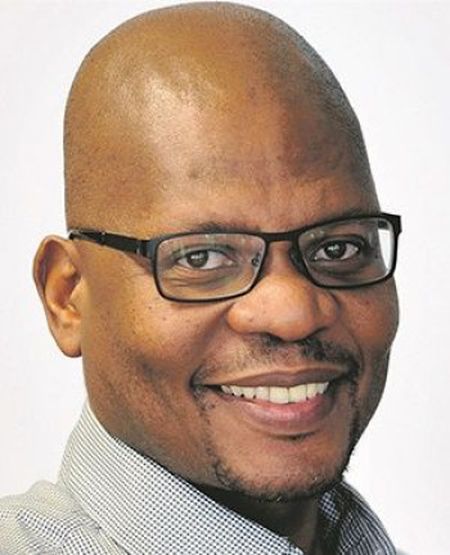
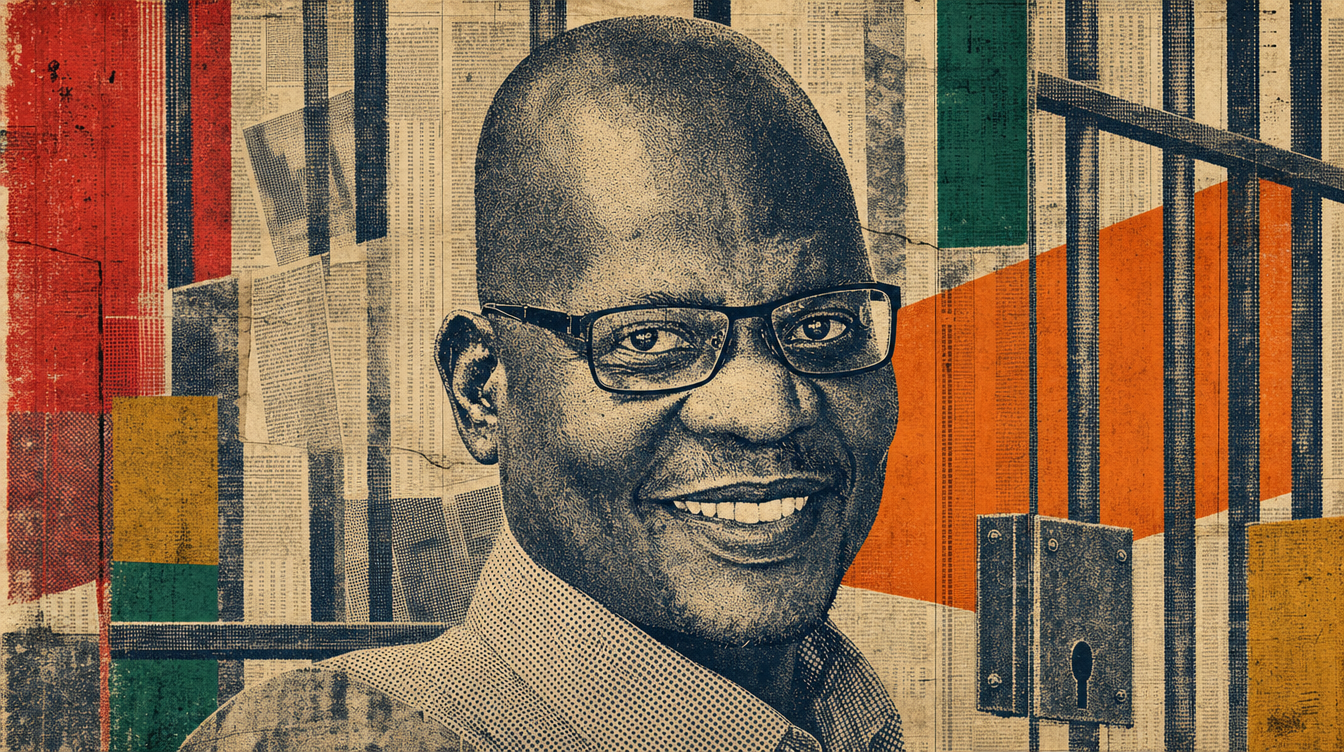
 Mondli Makhanya (Illustrative image: Bernard Kotze using Figma | ChatGPTimage2)
 In their pithy little book, I know this to be true about Nelson Mandela, Sello Hatang and Verne Harris ask what learnings all of us mortals can take from the life of the great man in order to find “the leader within ourselves”.
Released in 2020, the book by the long-serving Nelson Mandela Foundation staffers is a tight 81-pager packed with observations about Madiba and wisdoms from the icon himself. Hatang, the then CEO of the foundation, and Harris, the chief Mandela archivist, had a close relationship with Madiba and engaged with him more regularly than most. They came to understand him through his private and public writings, the images he collected and the conversations and relationships he had with those close to him as well as fellow leaders on the domestic and international stage. In the interactions they came to understand both the extraordinary leader and ordinary human being.
As we approached the national and international frenzy that comes with International Mandela Day – the day the whole world celebrates the birthday of the greatest leader of the past century – this lowly newspaperman revisited the tiny little book. All of us have episodes in life where we draw from the wisdom of those who have come before us, and it is often incidental. We experience personal tragedies, see evil deeds committed by our fellow citizens, and witness blatant corruption by our public representatives, making us want to hate. Mandela’s life – ordinary and extraordinary – gives us a prism into how to live ordinarily and still find ways to be extraordinary in our daily lives.
One of the epic chapters from Madiba’s life is his decision to invite the chief prosecutor at the Rivonia Trial and his Robben Island prison guard to the 1994 presidential inauguration. The prosecutor had in 1963 argued that Mandela and some of the accused be sentenced to death, but the court eventually gave them a life sentence. His jailer was, well, his jailer. These were two of the worst people in his life. Asked why he invited this vile human to this prestigious occasion, his answer was that if he held on to hatred for what they did, “I would still be in prison”. Just a larger prison.
The lesson here is that when we free ourselves from the many prisons we inhabit, the world of possibilities just opens up. We are able to think bigger. In our personal and professional lives.
“What made Nelson Mandela the leader he became?” Harris and Hatang ask at the beginning of the book.
“Why did he become a global icon of great leadership? Was it because he never put a foot wrong? Did he have mostly saintly qualities, rarely seen in a single human being? We don’t think so. Neither did he. By his own admission, he made mistakes, both political and personal. He had weaknesses, even flaws. He was, at best, “a sinner who keeps on trying”.
When we think of the iconic Mandela, we tend to remove that human being from the person who had to navigate hurtful personal issues and still meet public expectations that he was going to lead the country to its destination of freedom. When he emerged from prison, there was an expectation from the masses that he would take forward the violent revolution of the 1980s that many of us believed would lead to the toppling of the apartheid regime. Then he opened the tentative negotiations between the ANC and the National Party government that would eventually become the broader Codesa talks that gave us this constitutional democracy.
There are those who argue that Mandela sold out the revolution by leading those negotiations, that the anti-regime forces could have marched to Pretoria and taken power by force. They forget that the war that preceded the negotiations was already costly in terms of human lives lost, property destroyed and long-term psychological and social damage incurred. Mandela’s leadership gave us another path to victory over apartheid, a victory that we are now squandering.
One of the ways in which we are squandering this victory is our reopening the door to the prison of hate. One does not want to sound like a stuck record but the hate of the foreigner and fellow citizens who do not look like us is a huge leap into that prison cell that we will have great difficulty opening from the inside. It is that large prison cell that Mandela did not want to inhabit, hence his reach-out to his greatest tormentors and the example he was setting for the rest of us to do the same. As we mark Mandela Day, we must keep in mind this prison cell that we are collectively walking into.
One of the lessons that Mandela left us and especially the leaders who would follow him was consistency. He argued that “leadership falls into two categories. Those whose actions cannot be predicted, who agree today on a major issue and who repudiate the following day. Those who are consistent, who have a sense of honour, a vision.”
There is a lot that our current crop of leaders, across political and other sectors of society, can learn from this. On the political front, our leaders all preach accountability and then arm themselves with the highest-calibre weapons the moment they themselves are called to account. Be their names Cyril Ramaphosa, Julius Malema, Helen Zille or Tony Leon, they refuse to abide by the words they utter. To them accountability should only apply to those across the floor.
The one person who should be leading by the example set by the great man is none other than his successor and mentee, Ramaphosa. It is now a matter of legend that Mandela was humbled by defying his own legal advisers by agreeing to a public cross-examination in a case brought by arch-racist Louis Luyt, then lord of South African rugby, in 1998. In doing so he subjected himself to much humiliation. Mandela justified this public flagellation by saying he needed to show that no one, including the president, was above the law.
Now you have the spectacle of the president of the republic arguing that being made to account to a Parliamentary impeachment process over the infamous Phala Phala saga would cause him “irreparable harm”. For someone who has projected himself as the inheritor of the Mandela mantle, this is inexplicable. He does, of course, have every right to follow the route he is taking and may even be successful in his court cases aimed at stalling and ultimately halting the inquiry, but the leadership example set is dead wrong.
He would be well advised to take counsel from Mandela’s dictum that “good, wise leaders respect the law and basic values of their society”. At a time when hateful rogues are touted as revolutionaries, thieves are carried shoulder-high and gross wrongdoing is normalised, one would expect much better from someone who was supposed to have suckled wisdom and morality from the most esteemed human of our times.
Public morality matters. Moral leadership matters. As Mandela told us, we are only sinners who keep on trying. The nation’s leader needs to show us he is trying. We need not wait for him to keep trying on our behalf but there is a great responsibility on him to at least show us he is really trying hard. In the meantime, we can try to free ourselves from the prison cells by finding that inner Madiba in our daily lives. DM