




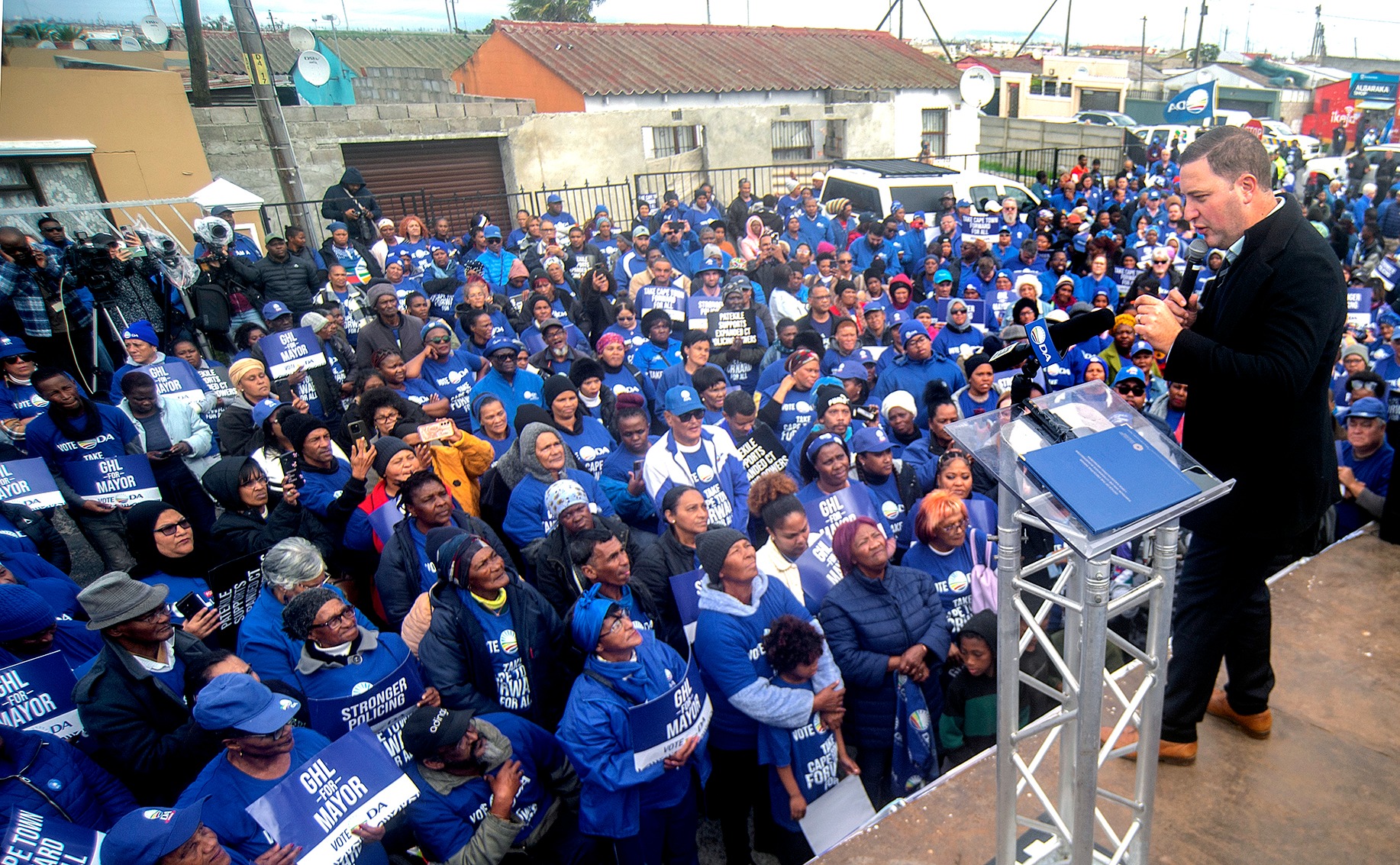
 DA leader and Cape Town Mayor Geordin Hill-Lewis addresses the launch of the Stronger Policing pledge in Delft on 15 July 2026. This is part of the Cape Town mayoral candidate’s five-point pledge in the lead-up to the 2026 local government elections. (Photo: Gallo Images / Brenton Geach)
Cape Town Mayor Geordin Hill-Lewis chose Zandkloof Street in Delft, the site of a gruesome mass murder, to pitch a controversial initiative that would see the City’s Metro Police investigating violent crime.
The streets of Delft were awash with blue on Wednesday, 15 July 2026, as Hill-Lewis launched the DA’s Stronger Policing Pledge ahead of the local government elections.
/file/attachments/orphans/ED_615738_614332.jpg "DA supporters at the Cape Town launch of the Stronger Policing pledge in Delft on 15 July 2026. (Photo: Gallo Images / Brenton Geach)")
It is a pledge that rests on the DA retaining control of Cape Town after the November polls.
Addressing supporters, Hill-Lewis said: “With your support in November, we will build South Africa’s first Metro Police Detective Branch.”
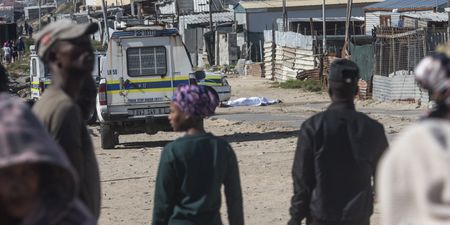
Hill-Lewis made this announcement at Zandkloof Street, where four people, including a 13-year-old boy, were gunned down in a gang-related attack in April 2026. The mayor described this as an execution-style shooting in a granny flat a short distance from where he was speaking.
“The tragedy that happened here was not inevitable. It was not bad luck. We must never, ever accept that this is ‘just how things are’ on the Cape Flats,” he said.
Legal concerns
But the proposal to expand municipal policing into criminal investigations has already raised concerns about the potential consequences of creating a new investigative arm outside existing SAPS structures.
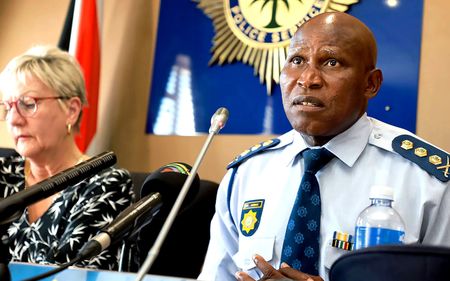
National Police spokesperson Brigadier Athlenda Mathe said no provision in law authorised a municipal structure to establish a detective unit to investigate violent crimes.
“It should be noted that public powers may only be exercised to the extent that is provided for in law. If a functionary does not have the power to perform a certain task, he or she is not authorised to do so,” she said.
/file/attachments/orphans/ED_6157502_545833.jpg "DA leader and Cape Town Mayor Geordin Hill-Lewis at the Cape Town launch in Delft of the Stronger Policing pledge on 15 July 2026. (Photo: Gallo Images / Brenton Geach)")
David Bruce, an independent researcher and Institute for Security Studies (ISS) consultant, warned that expanding investigative powers to metro police departments could create new opportunities for corruption and abuse.
Richard Mamabolo, the national spokesperson for the Police and Prisons Civil Rights Union (Popcru), said: “The fight against gangsterism should not be reduced to an election pledge or an institutional contest between the City and national government.
The mayor’s announcement comes as Delft remains among the areas most affected by gang violence.
According to the Western Cape’s third-quarter crime statistics for October to December 2025, 257 of the 276 gang-related murders recorded nationally during that period occurred in the province.
Delft had the third-highest murder rate among the 30 police stations with 58 killings recorded during the quarter.
Mayor to challenge SAPS over detective shortage
Hill-Lewis said the proposed detective branch would not be a pilot project or a long-term promise, but would begin immediately if the DA retained control of Cape Town in the November election.
“This is not a pilot. This is not a promise for some distant future. We start doing this the day after this election on 5 November,” he said.
/file/attachments/orphans/ED_615759_303314.jpg "City of Cape Town Mayco member for safety and security JP Smith at the launch of the DA’s Stronger Policing pledge. (Photo: Gallo Images / Brenton Geach)")
He blamed the failure to bring those responsible for the Zandkloof Street killings to justice on a shortage of SAPS detectives. Hill-Lewis said nearly 200 detective posts were vacant across Cape Town’s police stations.
“Two hundred empty desks. Two hundred detectives who should be investigating gang murders, rapes, robberies, the Zandkloof Street case among them,” he said.
He said the shortage had left cases moving slowly or not at all.
“That is a choice, made in Pretoria by the national SAPS, year after year, budget after budget,” he said.
‘Government challenge likely’
/file/attachments/orphans/ED_6157461_635910.jpg "Western Cape Premier Alan Winde addresses the launch of the Stronger Policing pledge on 15 July 2026. (Photo: Gallo Images / Brenton Geach)")
The mayor acknowledged that the national government was likely to challenge the City’s position.
“Now, I know what some in the Union Buildings will say. They will say policing is a national competency. They will say the City has no business building a detective capability.
But the Mayor said Cape Town would no longer wait for the SAPS to address the detective shortage.
“We will no longer wait for SAPS to start doing its job,” he said.
He said the City had repeatedly sought permission to help the SAPS and had pursued the matter through what he described as the proper channels.
“Now we must stop asking nicely and just do it. And we must take the fight to SAPS and the national government,” he said.
He threatened legal action if necessary, arguing that the cooperation agreement between the City and the SAPS had been signed in good faith.
“If we have to, we will go to court to force the issue,” he said.
Hill-Lewis underlined that the prospective investigators would be entrusted with gathering evidence and building criminal dockets intended to turn arrests into successful prosecutions.
Detective branch ‘requires legislative change’
The SAPS has rejected the idea that Cape Town can unilaterally establish a municipal detective branch, warning that the City cannot expand the powers of its metro police beyond those provided for in law.
/file/attachments/2992/ED_505410_132027.jpg "National Police Spokesperson Brigadier Athlenda Mathe. (Photo: Lefty Shivambu / Gallo Images)")
On Thursday, SAPS spokesperson Mathe said no member of the executive, including the police minister or the national commissioner, had the power to establish units within a municipal police service or expand its functions beyond the SAPS Act.
“There is no authority in law that authorises a municipal structure to establish a detective unit to investigate violent crimes,” Mathe said.
She said public powers could be exercised only where provided for in law, and that a municipal police service’s functions were set out in Section 64E of the SAPS Act1995 (Act No. 68 of 1995), namely:
- Traffic policing, subject to any legislation relating to road traffic;
- The policing of municipal by-laws and regulations of the relevant municipality; and
- The prevention of crime.
“A municipal police service is therefore legally bound to perform the functions conferred upon them. The mandate/functions of a municipal police service may only be expanded by legislation. The legislative framework is required before powers may be conferred and duties performed by an investigator,” Mathe said.
She warned that allowing one municipal police service to expand its functions independently would undermine the standardisation of municipal policing nationally.
‘A drain on scarce detective skills’
The SAPS also argued that crime investigation was part of its constitutional mandate under Section 205(3) of the Constitution and in furtherance of the powers of police officials set out in legislation such as the SAPS Act and Criminal Procedure Act, 1977 (Act No. 51 of 1977).
Mathe warned that a new municipal detective branch could also intensify competition for scarce investigative skills.
“SAPS invests in the training of detectives, and other agencies attract the members once they are trained. This means that SAPS has to continuously train detectives, but is unable to increase the workforce to perform the functions assigned to detectives.
“This causes a fight over skilled and experienced detectives and undermines law enforcement in the country. The limited human resources are divided across different law enforcement agencies that negatively impact on the effectiveness of the criminal justice system,” she said.
Mathe questioned the scope and jurisdiction of the proposed unit.
“It appears that the plan is for the municipal police detectives to investigate “violent crimes”. However, “violent crimes” is a vague term and open to different interpretations. For example, rape is a violent crime. It is unclear whether the plan is for these detectives to investigate rape as well.
“The investigation of violent crime often expands beyond municipal and provincial borders. A municipal police official does not have the same jurisdiction to perform powers in the whole of the RSA,” she added.
A municipal detective would not have the same jurisdiction as a SAPS official across the country, Mathe said.
“If the firearm has been moved to Bloemfontein, the Cape Town municipal police detective will have no jurisdiction to investigate, track and seize the firearm in Bloemfontein.
“It is unclear how the municipality plans to ensure that the investigation is then successfully completed,” Mathe said.
Corruption warning
ISS consultant David Bruce said Cape Town’s proposed detective branch would be the first of its kind in South Africa.
While metro police services have generally been understood not to have criminal investigation powers, Bruce said the SAPS Act did not expressly prohibit them from performing investigative functions.
“There are limitations on metro police powers … but there are no explicit prohibitions on the performance by metro police of investigative functions,” he said.
Bruce said the country’s existing investigative agencies were already under-resourced and underperforming, with the murder detection rate at about 11%.
But he warned that expanding investigative powers could create new opportunities for corruption and abuse, particularly given corruption concerns within several policing agencies.
“Expanding the functions that they perform would expand opportunities for corruption and the misuse of investigative powers for irregular purposes,” he said.
/file/attachments/orphans/ED_613293_605545.jpg "Suspended Ekurhuleni Metro Police Department deputy chief Julius Mkhwanazi testifies at the Madlanga Commission of Inquiry in Pretoria on 24 June 2026. (Photo: Gallo Images / Frennie Shivambu)")
Citing allegations before the Madlanga Commission that the Ekurhuleni Metro Police Department operated like a “rogue unit”, Bruce said the priority should instead be to strengthen a capable national investigative agency.
“Attempts to establish investigation agencies in metro police departments can, at best, be a stop-gap measure,” he said.
Popcru casts doubt
Popcru supports stronger efforts to tackle gang violence, but says Cape Town’s proposed metro police detective branch could encroach on the SAPS’s constitutional mandate to investigate crime.
National spokesperson Richard Mamabolo said any new initiative had to comply with the Constitution, the SAPS Act and the division of responsibilities between the SAPS and municipal police services.
“The Act does not expressly assign municipal police services a general mandate to establish detective services responsible for investigating violent crimes such as murder, attempted murder, organised gang violence, armed robbery and other serious offences,” he said.
Mamabolo warned that parallel investigations could create disputes over command, evidence handling, docket ownership and accountability to the National Prosecuting Authority.
He said a municipal unit supporting SAPS-led investigations through intelligence gathering and crime analysis could be possible, but an independent detective service would raise a different legal question.
“Depending on the powers envisaged, legislative amendments may also be required. The City cannot confer upon itself policing powers that Parliament has not assigned to municipal police services,” he said.
Popcru supported regulated cooperation between municipal police and the SAPS, but opposed “fragmented or parallel policing structures” that blurred constitutional responsibilities.
“Until those details are published, it would be premature for the City to present the proposed detective branch as an established municipal power,” Mamabolo said. DM
Comments
Scroll down to load comments...