




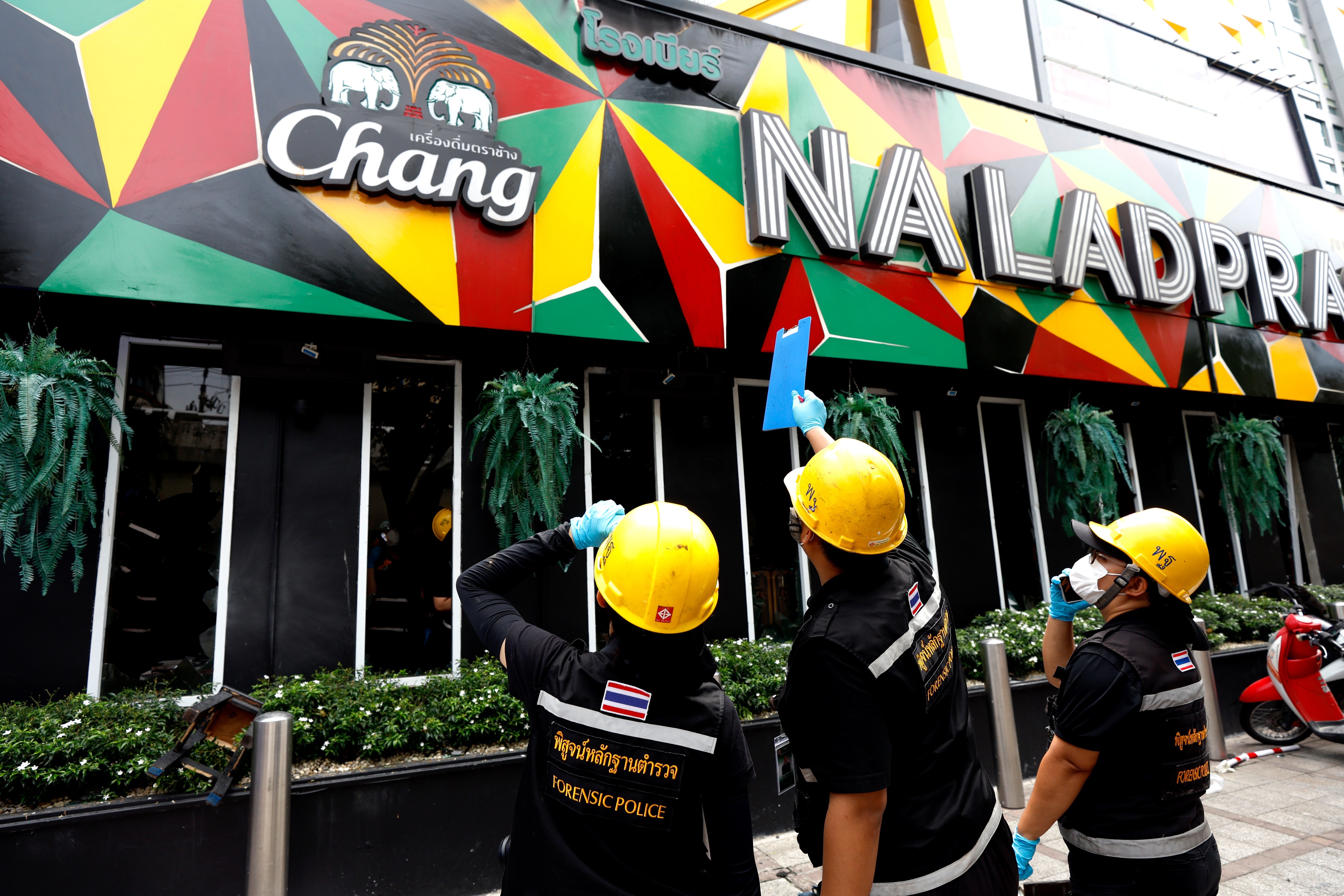
 Fire accident at a nightclub kills at least 27 people
Within seconds, an intense horizontal plume of fire gushed out of the doorway leading to the street, according to a video posted on social media and verified by Reuters.
Screams and shrieks filled the air.
Outside for a cigarette, Usa Tadsree at first noticed the lights flicker inside and then spotted the smoke.
“I wanted to go back in to get my friends but there was intense heat coming out, so I had to run out,” said Usa, 41.
At least 30 people have died as a result of the fire and 75 are injured, 24 of them critically. The toll has once again put a spotlight on fire safety regulations and lax enforcement in Thailand’s hospitality industry.
The fire erupted at 11:57 p.m. (1657 GMT) on Sunday, probably sparked by an electrical short circuit in a ceiling air conditioner, authorities said.
Although firefighters arrived within minutes, a combination of factors proved deadly for many of the people trapped inside the Rong Beer Na Lat Phrao pub.
Highly combustible materials used to decorate the stage and likely for better acoustics instantly ignited to produce extreme heat, smoke and deadly toxins, choking many of those trapped inside, according to two experts who have studied the blaze.
Thai police are investigating if emergency exits were obstructed and prevented victims from escaping the burning pub, which underwent a safety inspection in April.
The pub, located at a busy intersection next to train stations and two shopping malls, is one of a cluster of similar bars often crowded on weekend nights, serving food, drinksas well as offering live music and televised sports.
The pub did not answer calls or immediately respond to a request for comment on Tuesday and its owner is among those being treated in hospital.
“The severity of this fire was driven by a massive fuel load,” said Busakorn Saensookh, chair of the Fire Protection Engineering Committee at the Engineering Institute of Thailand, who inspected the site following Sunday’s deadly inferno.
In particular, she pointed to highly flammable acoustic material and decorations, including artificial trees and flowers that had been installed across the ceiling to create a green canopy, especially around the stage and bar areas.
GRASS-LIKE MATERIAL, BLACK FOAM USED IN INTERIORS
Video of the venue before the fire that has been verified by Reuters shows a green grass-like material covering the ceiling above the stage, as well as what appears to be black acoustic foam panels over areas packed with seating for patrons.
“The fire involved plastic materials, and these were relatively dense plastics. Once ignited, they produced a jet of fire as enormous amounts of heat accumulated,” said Busakorn.
“That heat was transferred downward, causing materials below to burn. Upholstered chairs were completely consumed by the fire.”
The use of foam in the Bangkok pub’s ceiling mirrors how similar material may have contributed to a devastating fire in the Swiss ski resort of Crans-Montana on New Year’s Eve that killed at least 40 people and injured 119 others.
Only about five minutes after the blaze erupted, firefighter Chakrit Khongkom arrived at the scene to find the pub entirely engulfed in smoke and tried to hose down the flames coming out of the front entrance.
“Most of the survivors were choking on the smoke,” Chakrit said.
A search and rescue squad that Chakrit said was sent into the pub found many victims lying around the toilets at the back of the venue, where authorities said multiple emergency exits were obstructed by tables and beer crates.
In a video shared by Prime Minister Anutin Charnvirakul’s office during an inspection of the scene, the premier was told a door that was once an exit was bolted.
Body-camera footage from an emergency worker seen by Reuters also showed several victims lying prone on the floor near the pub’s toilets.
The venue’s decorative items, made from non-fire-retardant foam, produced black smoke containing carbon monoxide and cyanide that choked people trapped inside, said Amorn Pimanmas, president of the Thailand Structural Engineers Association, who has also visited the site.
“People died from inhaling toxic smoke before being burned by the fire,” he said. “Several bodies showed no signs of burning.”
INCOMPLETE FIRE PROTECTION SYSTEMS
The venue, like others in Bangkok, had been registered as a restaurant, although its operations resembled an entertainment establishment that has different regulatory requirements, according to Amorn and Busakorn.
“When venues are not registered as entertainment establishments, their fire protection systems are incomplete, such as lacking smoke ventilation systems,” Amorn said.
“This leads to smoke and heat accumulation, creating dangerous risks.”
The use of flammable materials and decorative items, crowded conditions and unusable emergency exits in Thai establishments have been previously flagged, including after a 2022 nightclub fire in Chonburi that killed 13 people and a 2009 blaze at another Bangkok nightclub that killed at least 65.
Since Sunday’s fire, Bangkok city authorities have said they plan to review multiple regulations, including the use of decorative materials and the definition of entertainment establishments.
“The risks are much greater today,” Busakorn said, “But we are still using the same laws written 30 to 40 years ago that no longer reflect current realities.”
(Additional reporting by Panu Wongcha-Um and Chalinee Thirasupa; Writing by Devjyot Ghoshal; Editing by Raju Gopalakrishnan)
Comments
Scroll down to load comments...