



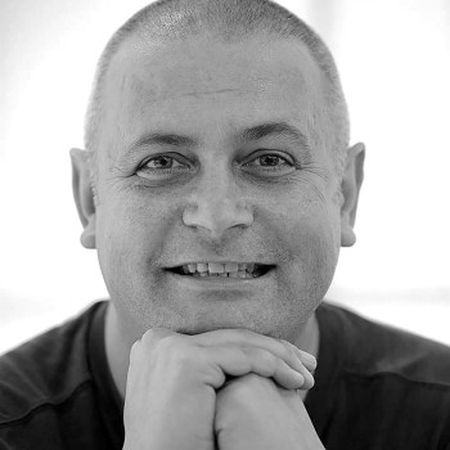
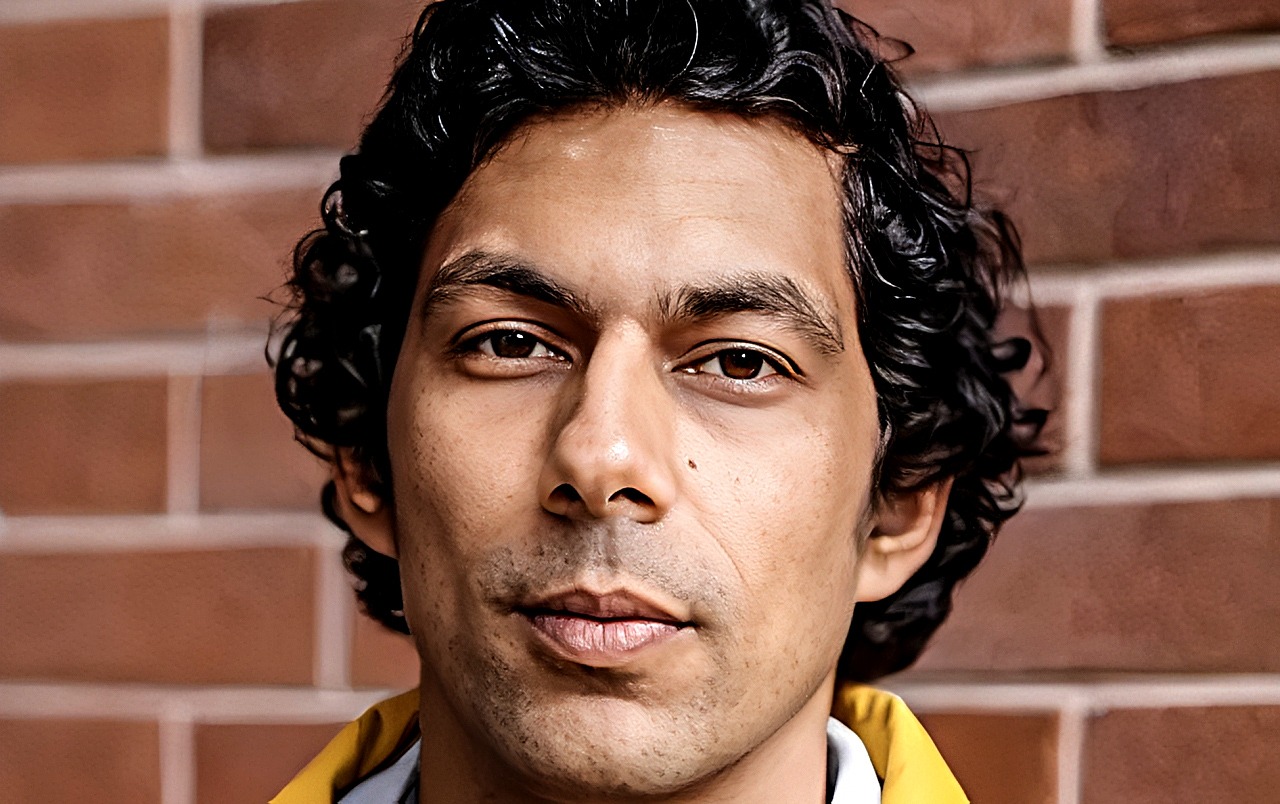
 Hoosen Kolia – lifelong newspaperman, devoted father and husband. (Photo: Supplied / Adam Beruch Kolia)
Goolam Hoosen Mahomed Kolia, 23 November 1951 – 6 July 2026
He was an old-style newspaper man, a tough but tender character straight out of an Ernest Hemingway novel. He had the proverbial printer’s ink in his blood and on his fingers. At 17, he walked into the printing department of the Sunday Times in Durban as a temporary worker.
More than three decades later he retired from the same newspaper as one of South Africa’s most respected media men, having worked his way up through relentless hard work, long hours and unwavering dedication. It was a life defined by integrity, purpose and an abiding love of print.
Such a man was Hoosen Kolia. He passed away at 2pm on Monday, 6 July at his home in Fish Hoek, Cape Town. He was diagnosed with motor neurone disease in 2025. Kolia would have despised this cliché, that he was surrounded by his family when he died, but that’s how it was and nobody can change that moment. He was 74 years old.
“Before he died,” his son, Adam Beruch Kolia, says, “he told me he had no regrets. He had done everything he wanted to do, but there was one: that he had not spent enough time with his family when we were young. He was always on duty, but he was driven by the fact that when he started out, he had nothing, absolutely nothing. And in the end, he was victorious, and we are proud of him.”
He was originally hired to feed paper into machines rather than write a single word of copy. The printing floor took him in whole. Presses thundered. For years he moved between rollers and deadlines, learning his trade, shift by shift. He built a career from the ground up, until the young man from the printing department became a newsroom institution.
Charmain Naidoo worked alongside him for years and remembers a man who refused to let the world slip past him while he slept. “Hoosen was singular… so obsessed with keeping informed, that he slept with two radios on!!” she says. It was Kolia, together with Ray Joseph (investigative journalist), later the paper’s news editor, who interviewed her for her first job at the Sunday Times, and Kolia made short work of her Rhodes University degree. “Forget everything you’ve learnt,” he told her. “Get ready for the real world of journalism.”
Years later, when Naidoo became the paper’s correspondent in New York, Kolia was her commissioning editor, chasing copy from Johannesburg. On 16 July 1999, in the years before a phone travelled everywhere a person did, she slipped away for a weekend in the Hamptons, to Sag Harbor, without telling him she would be unreachable.
That weekend the light aircraft John F Kennedy Jr was piloting went down in the Atlantic, off Martha’s Vineyard. She had spent the day on the beach. When she finally checked her messages, on the landline in her Soho apartment, six hours behind Johannesburg, 13 calls from Kolia waited for her, each one angrier than the last, demanding she file on the crash.
The final message: “Don’t bother. We’ll have to take the wire service! Where the hell are you?” She never lived it down, she says, and he reminded her of it often. “I’m sure you’ve heard, but Hoosen loved cats,” she says.
Clifford Fram, once chief subeditor at the paper and now settled in Australia, met Kolia when he was a senior editor, yet he always found time for conversation and would take Fram to the Seabelle Restaurant in La Mercy for a prawn curry whenever he was in Durban.
Twenty-three years of knowing and working with Kolia followed. Fram visited Hoosen and Jocelyn (his wife) in December, before a confirmed diagnosis of motor neurone disease, though Kolia already understood what the tests would eventually verify.
“I remember thinking how incredibly brave you both were,” Fram writes to Jocelyn. “It was hard to leave that day, with only loving memories of Hoosen’s kindness and gentle inner strength. I have thought about you almost every day since.” He claims one small piece of the couple’s history for himself too, that Hoosen and Jocelyn’s first public display of affection happened in his own lounge, in Kensington. “Rest in peace, my friend,” he says.
Once, when rumours swirled that the Sunday Times was planning a new daily newspaper, he gave a typical po-faced reply.
“We have 100 plans at any one time; we look at all sorts of things. If there will be an announcement, it will happen soon. But I honestly can’t say yea or nay,” he said. He understood exactly how much a newspaperman should tell another one.
He spoke often of the title’s century-long history and what had kept it alive through all of it, a “determination to be an independent voice aligned principally to the interests of the man and woman on the street”.
He liked to remind younger colleagues of the paper’s rougher edges too, the controversial poem Ten Little Chinamen printed in its early years, and its far graver achievement, the exposure of the Afrikaner Broederbond in 1963 and again in 1978, journalism that made the paper enemies in the right places.
/file/attachments/orphans/WhatsAppImage2026-07-08at1459261_404465.jpg "Hoosen Kolia sharing a happy moment with his daughter Nadia and son Adam Beruch. Family memories like these were among his most treasured.<br>(Photo: Supplied / Adam Beruch Kolia)")
(Photo: Supplied / Adam Beruch Kolia)
He tracked the changing face of his own readership with the same precision he brought to a front page. “Our predominant reader profile has changed in line with the society around us.
“Without losing our traditional white reader base or changing our editorial approach, our average reader as reflected in the 2004/5 AMPS figures, has now become a 37-year-old black male living in Gauteng on a household income of R9,247,” he said. It was indeed the Paper for the People.
When Kolia edited the Sunday Times Extra, the metro edition produced for Indian readers, he called it “an essential part of Indian life in South Africa”, a paper that let a community speak to itself, carrying religious festivals and local concerns that never found room in the mainstream edition.
Even after the Group Areas Act fell away, demand for the Extra held strong; people who had moved into previously white suburbs still asked for it delivered to their new front doors.
Fawzia Moodley remembers that newsroom from inside it, a young radical dropped into a paper she had reservations about, with few other doors open to an Indian reporter in those years. Kolia abided her politics and steered her gently towards crime and human-interest stories instead. “Hoosen was tolerant of my activist tendencies, gently cajoling me to write crime and human-interest stories instead of politics,” she says. “Alongside legendary news hounds like GR Naidoo, George Mahabeer, Rajendra Chetty and photographer MS Roy, Hoosen was an excellent mentor, treating me as an equal despite his seniority, kind but firm. He took a rookie reporter, and moulded me for a long and fruitful career in journalism, teaching about ethics and fairness. For that I’m grateful. Rest in Peace, my friend.”
Roger Makings first encountered Kolia’s reputation before he encountered the man, dispatched to run the Durban bureau over a Christmas fortnight while Kolia took a rare break. “I am so terribly sorry to hear this. Hoosen, a great journalist and later executive manager, was among the very best leaders the Sunday Times produced,” he says. “I first met Hoosen when I was told I was being sent to Durban over Christmas to run the bureau for a fortnight while he took a well-earned break. I had sleepless nights. How was I ever going to be able to compete with his layout skills, subbing, and at the same time news edit the copy and manage staff?
“My stint there left me shattered. The second time around, the next year, was just as traumatic. I have no idea how Hoosen coped year after year. When he returned to Johannesburg, then as an executive manager, we reconnected over our common interest in aviation. He came to my desk regularly to collect monthly and weekly copies of the British magazines I used to string for, and to discuss the latest developments in aviation.
“When I retired, for a framed Sunday Times ‘front-page splash’ presented to me by the subs, Hoosen wrote the lead story. The splash head read ‘Roger that as Makings goes’. The picture was of me sitting at the controls of a 747. His story was observant, funny, a touch caustic, but supremely insightful. Hoosen knew me better than I knew myself. We retired, within a few months of each other, to the coast and stayed in contact, visits included, for years afterwards.”
S’thembiso Msomi, later editor of the Sunday Times and once editor of the Sowetan, joined the Durban bureau just months after Kolia had left it for head office, and still felt the shape of the man in the room he had vacated. “He was an absolute legend in the Durban bureau and colleagues continued to reference him when talking about reporting in the region,” Msomi says.
“When I did move up to the Johannesburg office a year later, Hoosen was one of the senior editors responsible mainly for administration. I found him to be someone with an eye for detail, keeping the newsroom in line when it came to spending. Although he was no longer directly involved with news writing, he was a wonderful mentor for those of us still starting out.
“He’d come by a reporter’s desk and have an informal conversation about stories published the past week. By the end of the conversation you would have learned a thing or two about how to approach such stories in future, or he would have given you great leads for a follow-up.”
Ryland Fisher took over the Durban bureau from Kolia in 1993 and then worked beside him as assistant editor in Johannesburg through 1994 and 1995. “He introduced me to many of his friends in Joburg and made me feel welcome,” Fisher says.
“Later, I took over the paper’s fourth wave technology from him, which saw the paper being produced using personal computers instead of old-fashioned Atex terminals. I learned a lot from him about technology but also about how to navigate Durban’s complicated political and struggle landscape. I know he loved his family very much and will be missed.”
Andrew Donaldson met him in October 1998, when Kolia was managing editor. “Hoosen and I bonded over a shared interest in VS Naipaul’s iconoclastic writing and a mutual, and rapidly growing, distrust of mainstream party politics.
“He had a healthy scepticism of the doctrinaire and the orthodox, and was disdainful when the caprices of the ruling elite intruded or interfered with the newspaper’s core business, that is, reporting and producing a best-selling weekly newspaper.”
Donaldson’s own scepticism curdled into something harder in his final years at the paper, and in 2010 he was pushed out after a false plagiarism accusation. “It was a stressful period, but Hoosen was a staunch ally, and did much to encourage me that there was indeed life after the Times.”
Both men eventually settled along the same stretch of coast, Donaldson in Kommetjie and the Kolias in Fish Hoek, and the visits continued for years, “happy occasions of newspaper gossip and reminiscing about the trade. Drinks were taken.”
His son, Adam, voices what sort of man lived behind all that professional weight. “My parents met while my mother was working at the Himalaya Hotel in Durban, South Africa,” he says.
“They were married for approximately 20 years. After their divorce, my father married Jocelyn Kolia, née Maker, to whom he remained married until his passing. He was born and raised in Durban, growing up on McGregor Road in Asherville, and he spoke about it often, his school days, his passion for judo, his love of swimming, always fondly.
“He loved a good spicy fish curry and enjoyed spicy food in general. His greatest sporting passions were judo and swimming, and he had an incredible love for travel, always happiest exploring new places and experiencing different cultures.
“Over the years he visited probably most of the countries around the world. I was born and grew up in Durban before moving to Johannesburg in 1983 with my parents and my sister, Nadia. Some of my happiest memories are of Dad taking us to the beach and public swimming pools.
“We were all keen swimmers from a young age. He was loving, patient, and encouraged us to enjoy life and the outdoors. He was generally easy-going, but he disliked dishonesty. If we lied to him, he became upset. He always preferred hearing the truth, no matter how difficult it was. He often brought work home. I was always proud of the passion he had for journalism.
“He truly loved his profession and the media industry. He was exceptionally well connected, yet despite his busy career, his favourite way to relax was taking the family camping at Midmar Dam in KwaZulu-Natal. We travelled extensively around South Africa.
“Camping, nature and the outdoors were a big part of our family life, and many of my happiest childhood memories come from those trips. One lesson he constantly taught us was never to accept information at face value. If we said someone had told us something, he would ask, ‘How do you know they were telling the truth if you haven’t researched the facts yourself?’
“For example, if we were learning about the solar system at school, he would take us to the public library so we could research it ourselves and draw our own conclusions. He was remarkably calm under pressure. Even when he was carrying enormous stress, he rarely showed it to us.
“He taught me the importance of family, developed my love for travel, and showed me that there is a wonderful world beyond South Africa waiting to be explored. It was only after he was diagnosed with motor neurone disease in 2025 that I truly realised just how deeply he loved me. Facing his illness brought us closer together in ways I had never fully appreciated before.
“One unusual thing we shared was that, once or twice a year, I would randomly develop a pimple on my right cheek at exactly the same time he would develop one on his right cheek. It had happened for as long as I can remember. When his disappeared, mine would disappear too. It became a strange little coincidence that always made us smile.
“If I had one more hour with him, I would ask him more about his childhood. Those stories always brought him so much joy, and I wish I had taken the time to hear even more of them.”
Even after he chose early retirement, the newshound in him refused to switch off. He taught himself computer skills so he could keep following local and international news every single day, a tribute in The Media Online by his son records, his curiosity outlasting his career by decades.
Motor neurone disease took from him, piece by piece, the physical abilities a restless man depends on. He met it, those closest to him agree, with a dignity that never once slipped into self-pity.
Omar Badsha knew Kolia longer than any colleague, since childhood in Durban. “We essentially grew up together,” he says. “I remember him as the serious one, studious, thoughtful, with a sense of humour and later in life, his absolute loyalty as a friend. When he worked at the Durban bureau, he commissioned me to take photographs.”
Badsha went on to become a documentary photographer of note, a career Kolia had a hand in setting in motion. Decades later, when Hoosen and Jocelyn settled in Fish Hoek, Badsha kept visiting.
/file/attachments/orphans/3_852501.jpeg "‘Deepest sympathies… an immensely kind and generous man.’ Rest in Peace,<br>Hoosen. (Photo: Supplied / EARS Donkey Sanctuary / Greyton)")
Hoosen. (Photo: Supplied / EARS Donkey Sanctuary / Greyton)
“When he was diagnosed with motor neurone disease he was stoic about it, he understood and accepted it. He was always kind and welcoming, and relentlessly followed local and international news. The newshawk in him was there to the end.”
Towards that end, the visits thinned out around him, though Badsha’s did not. “I kept visiting about every second weekend,” he says, “but not many people came anymore.”
Apart from being a cat lover, what some people might not know was his soft spot for donkeys. The EARS (Everyone’s Animal Rescue Society) Donkey Sanctuary in Greyton counted Hoosen and Jocelyn among its most loyal supporters for years, and word of his death reached the sanctuary too:
“Deepest sympathies to Jocelyn Kolia and family in the passing of Hoosen, an immensely kind and generous man who, with his wife Jocelyn, has been among our most loyal supporters. Sending Jocelyn big donkey kisses.”
A journalist who slept with two radios on, who checked a fact before he trusted it and taught his children to do the same, ends up remembered, in the end, for donkey kisses sent to his widow from a sanctuary in the Overberg. Hoosen Kolia would probably have found that the best headline of all.
Hoosen is survived by his wife Jocelyn Kolia, Beruch Kolia and Nadia Kolia. And Lauren and Patricia. DM