



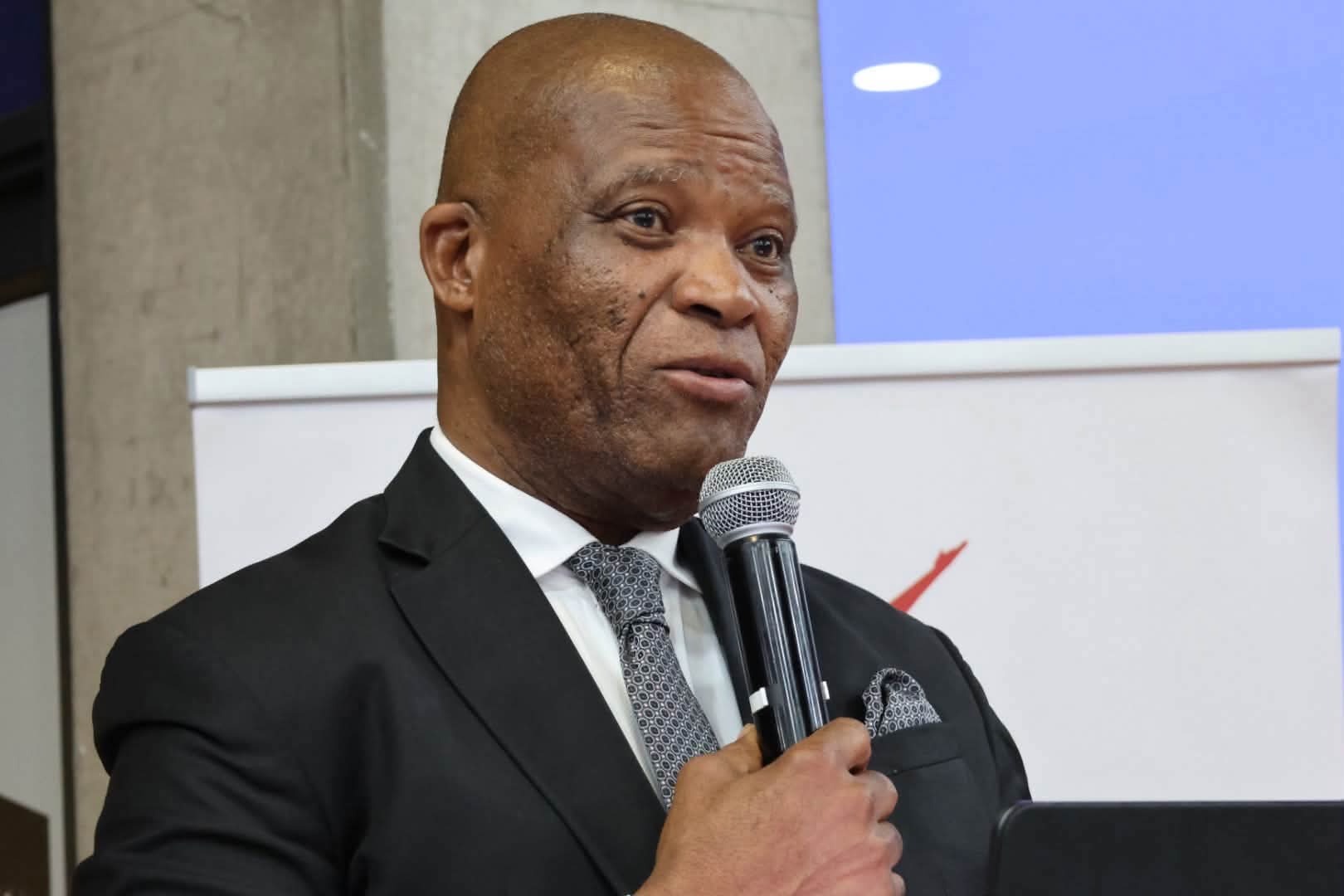
 Deputy Cogta Minister Namane Masemole has issued a stern warning to the leaders of Nelson Mandela Bay. (Photo: Nelson Mandela Bay municipality)
 Deputy Minister of Cooperative Governance and Traditional Affairs (Cogta) Namane Masemola has warned Nelson Mandela Bay’s leadership that the provincial government will step in if they fail to turn the struggling metro around.
Such an intervention, Masemola noted, would require the national government to invoke section 139 of the Constitution, which empowers the province to take over a municipality that fails to fulfil its executive obligations or faces a financial crisis.
The warning comes seven months after the national Department of Cooperative Governance and Traditional Affairs introduced a 10-member team under section 154 to assist the metro in unlocking bottlenecks that were hampering service delivery and governance.

Masemola said much has been said about the city’s finance unit, and he was “immensely concerned” about how procurement decisions were being made.
“When we come back here, we won’t talk about the same thing again. Therefore, you are forewarned that if you don’t listen, you will lose the management of your space [municipality]. We are managing a state here; this is not a friendship society or a family business,” said Masemola.
“When you are forever in the news for the wrong reasons, you are gradually inviting all the levers of the state to be interested in your affairs. Once those state levers converge around you and your space, you will lose total control, and you will regret it.”
He said the political and administrative leadership had a choice to make, and when the time comes for the provincial government to take over, they must not say they were not warned.
“We are in and out of this metro because we want to see improvement, but the state can’t keep quiet about what is happening here. You all probably follow the Madlanga Commission of Inquiry, and with everyone implicated, it’s not like they didn’t know what was right from wrong and they are now facing consequences of the state machinery as it converges from different angles.”
Masemola said of the 101 issues identified in the metro, there was at least some movement towards the right direction. However, he would not be drawn into saying how many of these issues remained unresolved.
He said while they were confident that the city, working with the Cogta team, could turn around the fortunes of the metro, if the change does not happen, then the department will be forced to take tough decisions, including invoking Section 139.
Consequence management
“Taking decisions means we must effect consequence management on yourselves, and it’s very easy to do so politically, but it’s a process which will require us to submit all the evidence to show that we did all we could but failed.
“If we don’t change the trajectory of this municipality, there are two possibilities: if there are no changes, those who are in political leadership, your party would have to take decisive decisions, and if the parties won’t act, then the citizens will have to take over and look elsewhere for their own future, and this is what will happen in the coming few months.”
Masemola said that come 4 November, the city’s political leadership would pay for what it had done over the past five years.
The visit by Cogta comes as the city faces a tough decision by the National Treasury to temporarily withhold its equitable share for July for failing to address ballooning unauthorised, fruitless and wasteful expenditure (UIFWE) and implementing consequence management where necessary.
Service delivery failures by the municipality have resulted in a trust deficit from civil society, the business sector and the public.
Mayor Babalwa Lobishe admitted that the Section 154 intervention was not working as swiftly as anticipated.
/file/attachments/orphans/Mayor_142661.jpeg "Nelson Mandela Bay Mayor Babalwa Lobishe. (Photo: Nelson Mandela Bay municipality) <br>")
“The Section 154 intervention is being frustrated by the very same management that is dragging its feet in attending to procurement issues and other matters that have been raised,” said Lobishe.
She said part of what was required from management in terms of the intervention was the implementation of strict procurement control to deal with the UIFWE.
“This should have been taken care of by the EPR [Enterprise Resource Planning] system we are meant to procure, which will consolidate all our information communication technology (ICT) into one centralised system for easy accessibility to financial documents, including invoices. We have set aside R105-million for it, but there’s no movement on it when it comes to implementation.
Lobishe said the failure to deal with consequence management should be squarely blamed on the Municipal Public Accounts Committee (MPAC) as no report has been brought to council yet.
“Our councillors are quite cosmetic when it comes to dealing with consequence management because, as council, we’ve not received a report from MPAC that deals with this issue of officials not bringing reports to the committee. If they were serious, the committee would have resolved it and brought a report to council to deal with the affected officials, but instead they are politicising the matter and just want to be seen on social media blaming other people.
The Eastern Cape Cogta MEC, Zolile Williams, said that core to the city’s challenges was the fact that it was governed by a coalition of many parties.
/file/attachments/orphans/Williams_763085.jpeg "Eastern Cape Cogta MEC Zolile Williams. (Photo: Nelson Mandela Bay municipality)")
“Coalitions are a new phenomenon in SA. When you’re not experienced in this, those with the responsibility to lead a coalition government may forget that even if you’re in a coalition, you are expected to deliver services.
“The expectation of the city in terms of performance is that this government must comply with legislation in all that it does. This workshop is held to say that while there may be different views in the coalition, all parties must work together to improve the lives of ordinary people.” DM
Comments
Scroll down to load comments...