



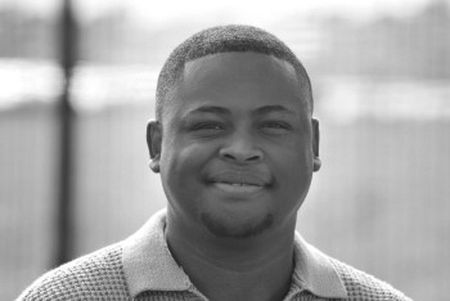
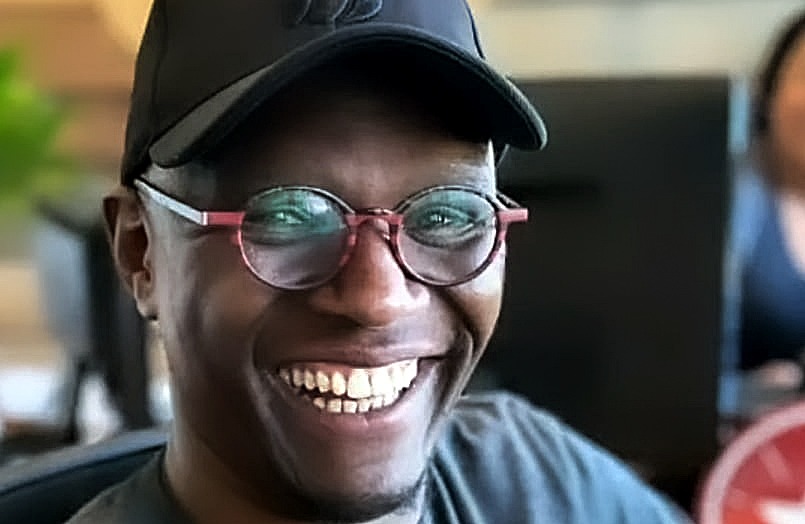
 Nelson Mandela Bay muralist Banele Njadayi painted the murals which is a visual history lesson in Steve Biko Street in Gqeberha. (Photo: Supplied)
For visual artist Banele Njadayi, the towering murals in Steve Biko Street are more than public art. They are a tribute to Nelson Mandela Bay’s rich history and an invitation for residents to celebrate and reconnect with the people who helped shape democratic South Africa.
“I’m leaving my mark on the city. The murals for me are going to stay for generations, a long time, depending on if it does not get vandalised,” says Njadayi.
The murals pay homage to some of Nelson Mandela Bay’s icons whose contributions shaped South Africa’s rich cultural, political and artistic landscape.
Among those depicted are acclaimed playwright Athol Fugard, legendary jazz musician Patrick Pasha, award-winning actress Nomhle Nkonyeni, internationally celebrated jazz trumpeter Feya Faku and Black Consciousness leader Steve Biko, to mention but a few.
/file/attachments/orphans/Photo4_975862.jpg "Playwright and novelist Athol Fugard, who penned works such as Sizwe Banzi Is Dead and Tsotsi. (Photo: Klaas Kingma)")
The series of murals in Steve Biko Street (formerly Strand Street) forms part of the Mandela Bay Development Agency’s (MBDA) urban regeneration programme, which aims to celebrate the city’s rich cultural and liberation heritage while at the same time making public spaces more welcoming and vibrant.
The MBDA says the project was carefully designed to reconnect residents with the city’s identity while breathing new life into neglected public spaces.
Project manager for Creative Industries Projects, Oyama Vanto, says the murals activate walls that previously had little visual or cultural value, with some having become marred by vandalism.
/file/attachments/orphans/Photo6_790613.jpg "Anti-apartheid activist and wife of president Nelson Mandela, Winnie Madikizela-Mandela. (Photo: Klaas Kingma)")
“Essentially, it is a placemaking initiative to reconnect the public with the history and identity of Nelson Mandela Bay. It is also intended to improve the experience of pedestrians in the area by creating a more visually welcoming and engaging streetscape in the city centre.
“Importantly, the project forms part of the MBDA’s strategy, which recognises that successful urban regeneration is achieved not only through physical infrastructure, but also through creating spaces that people value, that they identify with and feel proud to use,” said Vanto.
“The project intentionally moves beyond recognising only political leaders. The artworks celebrate individuals who distinguished themselves in the liberation struggle, arts, culture, music, literature, sport and community leadership. They tell the story of a city that has contributed significantly to South Africa’s democratic journey and cultural development,” he said.
For Njadayi, the commission also fulfilled a long-held dream.
“It’s something that I’ve always wanted to do – to do a big mural that is in the public’s eye,” he says. “The murals I’ve done before are public, but not as public as this one in the city centre.”
Supported by Phumlani Dwane, an alumnus of Masifunde Learner Development in Walmer township, Njadayi spent 14 days bringing the project to life.
/file/attachments/orphans/Photo81_275046.jpg "Phumlani Dwane, an alumnus of Masifunde Learner Development in Walmer township, assisted visual artist Banele Njadayi. (Photo: Supplied)")
The pair worked to an ambitious schedule, completing a pillar each day. Portraits were first carefully sketched before being painted. In total, they created 10 portraits across five pillars.
Although widely known for painting, sculpture and mixed media, Njadayi says murals have remained a passion since his first large-scale public artwork in 2004 at Ubuntu in Zwide.
“I’m an artist, and I’m not that artist who enjoys doing one thing. I like to explore other things,” he says. “When we did that mural, I fell in love with large-scale public art projects. Since then I’ve always loved doing murals.”
/file/attachments/orphans/Photo5_440847.jpg "Steve Biko, founder of the Black Consciousness Movement. (Photo: Klaas Kingma)")
The project quickly became more than an artistic exercise. As the paintings emerged, they sparked conversations among commuters, pedestrians and residents eager to learn more about the faces appearing on the pillars.
“It was a lovely experience,” Njadayi recalls. “The truck drivers would pass and cheer us. The taxi drivers were also supporting us. Even people walking past would stop and ask questions.”
When asked whether the murals serve as a visual history lesson, Njadayi agrees, saying they enable people to put names to faces and faces to names they might only have heard about.
/file/attachments/orphans/Photo1_308059.jpg "Jazz legend, global icon and anti-apartheid activist the Rev Patrick Pasha. (Photo: Klaas Kingma)")
“You explain, ‘This is Patrick Pasha... This is Vuyisile Mini.’ People start to put the name to the face or the face to the name.”
For Njadayi, that is precisely the power of public art. “It’s always lovely for every artist to see people’s positive reactions,” he says. “The murals are not for us, but for the people, for the children. It warms my heart when I see people stopping and taking pictures with their family and friends, or people driving past taking videos.”
According to Vanto, the Steve Biko Street murals are the first phase of the MBDA’s broader public art programme. He said the agency intends to expand similar projects into other revitalised precincts, with the long-term vision of making public art an integral part of Nelson Mandela Bay’s urban identity, storytelling and cultural tourism.
Dr Pierre Voges, the MBDA’s interim CEO, said cities derived their identity not only from buildings and infrastructure, but also from the stories they told.
“Public art provides an opportunity to celebrate those stories in a way that is accessible to everyone. Ultimately, the murals are intended to become part of a larger cultural landscape that strengthens Nelson Mandela Bay’s identity as a city of heritage, creativity and resilience
“Urban regeneration is about creating functional, safe, economically active and socially inclusive urban environments. Beautification is one aspect of this. Public art has been shown to have a profound impact on how people view, use and live in a space,” Voges said.
/file/attachments/orphans/Photo3_436750.jpg "South African actress Nomhle Nkonyeni, who appeared in television shows such as Of Good Report. (Photo: Klaas Kingma)")
Njadayi hopes the murals themselves will continue receiving the care they deserve.
“I would like for that area to be constantly cleaned and taken care of,” he says. Better street lighting would also allow the artwork to be appreciated after dark. DM
Comments
Scroll down to load comments...