




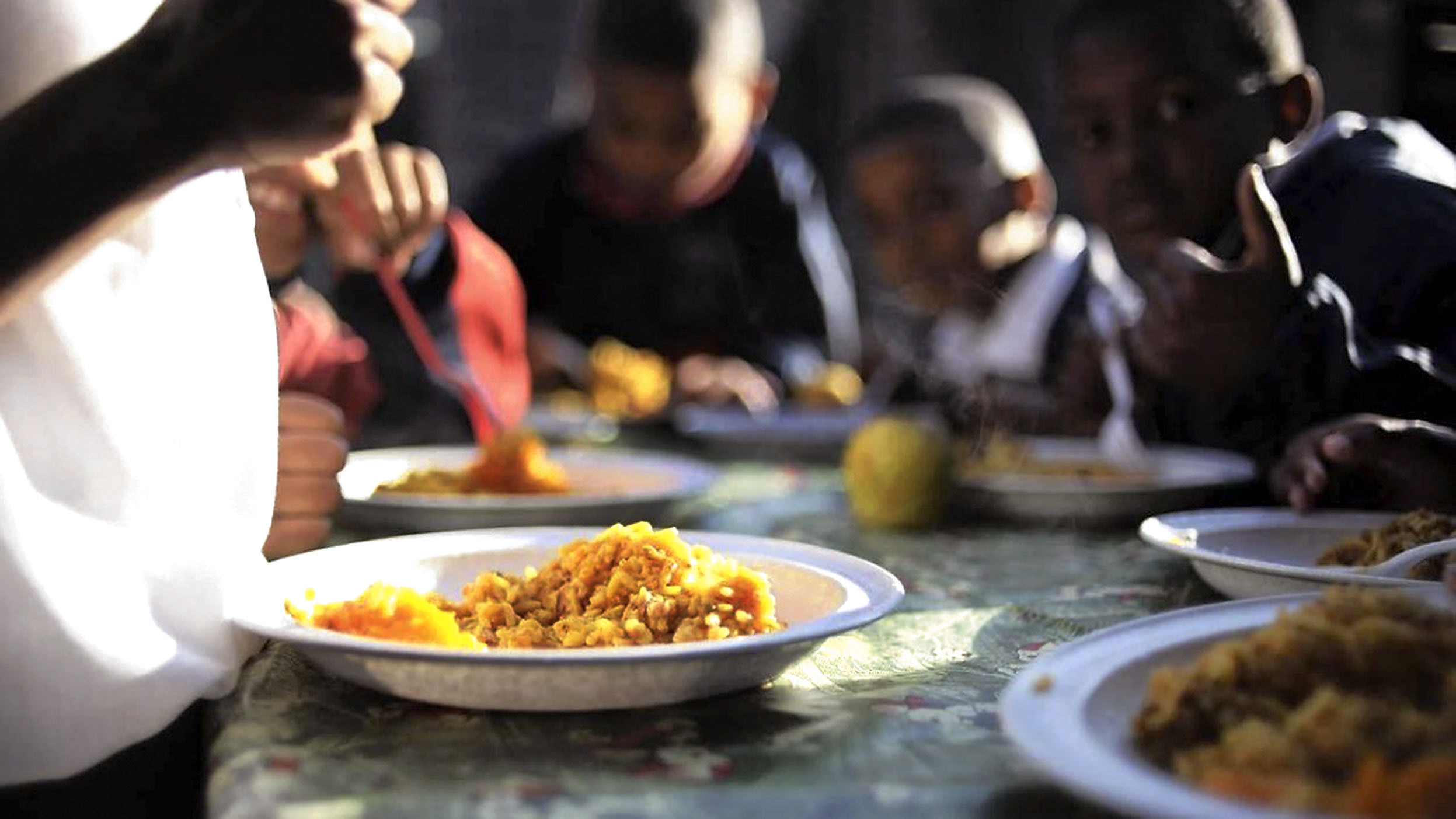
 Even before the Covid-19 pandemic, national nutrition surveys estimated that 77% of children between the ages of six and 23 months did not receive a minimally acceptable diet and that almost 2.5 million young children in South Africa lived below the food poverty line – that is, there was insufficient money in their households to cover the cost of their basic nutritional needs. (Photo: African News Agency archives / Wikipedia)
 In January 2025, the Gauteng Division of the High Court in Pretoria handed down a judgment in a case brought by the Institute for Economic Justice (IEJ) and #PayTheGrants, represented by the Socio-Economic Rights Institute (Seri), in the Covid-19 Social Relief of Distress (SRD) grant case against the minister of social development and the South African Social Security Agency. The minister of finance intervened to oppose the case in 2024.
The court found that the government had deliberately and unconstitutionally designed the SRD grant system to be exclusionary. The government’s appeal against the judgment will now be heard by the Supreme Court of Appeal in Bloemfontein on 25 August 2026.
Currently, about nine million people are approved for the SRD grant; however, the outcome of the case could affect twice as many, including those excluded from accessing the SRD grant despite being approved.
Maverick Citizen has been tracking the prices of 14 basic food items to be bought with the R370 SRD grant.
From May to June, Daily Maverick’s food basket decreased by R5. This is due to flour, maize meal and white sugar costing slightly less, while cooking oil increased. At R414,86, the food basket is still R44.86 higher than the R370 SRD grant.
/file/attachments/orphans/Food-prices-May-June-2026_619438.jpg)
The Pietermaritzburg Economic Justice and Dignity’s Household Affordability Index tracks 44 basic food items. In May, its household food basket cost R5,479.26, and in June it cost R5,502,42. It has increased by about R23.
SRD court case
The court found that the SRD grant is not temporary; that the online-only application system is irrational and illegal; that bank verification and flawed database checks are unlawful; and that the government must implement a plan to progressively increase the grant’s value and means-test threshold.
The court also found that aspects of the grant system’s design had the ulterior motive of preventing millions of otherwise eligible people from accessing their entitlements, and ruled these provisions unconstitutional and invalid.
“The ulterior purpose of the online application has the result of reducing the uptake of SRD grant beneficiaries,” stated Gauteng High Court Judge Leonard Twala.
/file/dailymaverick/wp-content/uploads/2024/11/GroundUp-Sassa-recovers.jpg "People queue for social grants outside the Sassa office in Eerste River, Cape Town. (Archive photo: Ashraf Hendricks)")
The Department of Social Development (DSD) and the South African Social Security Agency (Sassa) “have been able to remain within budget by reducing the uptake of deserving and qualifying people by using the procedural barriers to access the SRD grant”, the judgment read.
“DSD and Sassa have done so because the amended regulations provide that all payments of the SRD grant are limited to the amount appropriated for the 2023/24 financial year to the vote of Social Development. Once the funds as allocated by National Treasury are depleted, so it was contended, no payments would be made to successful and approved beneficiaries,” it read.
Due diligence?
With this system, the government said they are doing due diligence – making sure people are not included in error, explained Kelle Howson, senior researcher in the IEJ’s Basic Income project to Daily Maverick.
While this is standard practice, all the barriers put in place that got in the way of people getting the SRD grant were added after National Treasury decided what the budget was going to be for the grant, she said.
It was not based on estimates of the number of people in need and who would qualify, so DSD and Sassa were forced to find ways to keep the number of beneficiaries below the budget allocation – by instituting a very low means test, the system of bank verification.
The exclusions were arbitrary and their purpose is to contain spending, Howson said.
Grant ruled ‘not temporary’
“The state has insisted that the grant is temporary for a very specific reason, and that’s because they want to be able to argue that they don’t have to administer the SRD grant like they do other grants,” Howson said. “So we argue that there’s an irrational differentiation between how the other grants are managed and how the SRD grant is managed, and there are more checks and balances in the other grants.”
With other grants, there’s the option of in-person applications and people are able to sign affidavits attesting to their income levels, whereas with the SRD grant there are additional layers of verification, Howson explained.
The argument that it is temporary “contradicts their stated policy – statements that have been made by the President, by the minister of finance, by the minister of social development, repeatedly over the course of several years, saying that the government is committed to retaining the SRD grant and expanding it into a permanent system of basic income support”.
Flawed appeals process
“Every month the government monitors people’s bank accounts, and if they have a balance above R624 they are automatically rejected from receiving the grant. They could receive ad hoc donations, child maintenance funds, loans – all of which should not be considered personal income,” Howson said.
/file/attachments/orphans/B415DB14-917A-4534-9BB1-2D59D6718C1C_1_201_a_516280.jpeg "The food poverty line in South Africa is R855 per person per month, above the R624 ‘income’ level which excludes people from receiving the SRD grant. The food poverty line is the bare minimum someone needs to afford the required daily food intake, often referred to as the ‘extreme’ poverty line. (Photo: Lillian Roberts)")
Part of the argument in the case was that there are flawed and inaccurate verification systems, overly restrictive income assessments, and an appeals process that repeats the same flawed checks that led to rejection in the first place.
National Treasury conceded that the appeals process needs to be reformed, but the DSD and Sassa did not, which indicates that the government is not united on that front, Howson said.
“If the appeals process were to be overturned, that wouldn’t solve all of the problems, but it would go a long way to providing recourse for these unfair decisions.”
Why is this case important?
Howson explained that the case has material relevance to about 16 million people directly.
“What is important to understand about the ruling is that it acknowledges that “the whole system is rigged to exclude eligible people”.
“It’s not about limiting fraud, it’s not about having appropriate checks and balances on government spending, it’s about excluding half of all eligible people to save money.”
/file/attachments/orphans/ED_597612_622891.jpg "Protesters march to Parliament in Cape Town before the 2026 Budget speech on 25 February 2026. They argued that austerity measures disproportionately affect the poor, the working class and marginalised groups. (Photo: Gallo Images / Ziyaad Douglas)")
She said it is affordable for the government to provide social assistance to everyone who needs it, and it would be good for the economy and help turn around the economic crisis.
“The attitude that it’s not affordable and that government has to do this because of fiscal constraints, that’s not based in hard fact, it’s an ideological approach to fiscal policy, and it’s possible to do things differently to meet basic needs, and in doing so to help turn around our economic crises.”
The IEJ said that the R370 grant continues to shrink in value amid rising food, fuel and living costs, with millions excluded or at risk of exclusion.
“The appeal is therefore not a technical legal dispute. It is a fight over the constitutional right to social assistance and whether the government can evade that obligation through administrative barriers and arbitrary budget caps, devoid of any clear policy considerations or assessment of demonstrable and growing need,” the IEJ said. DM