




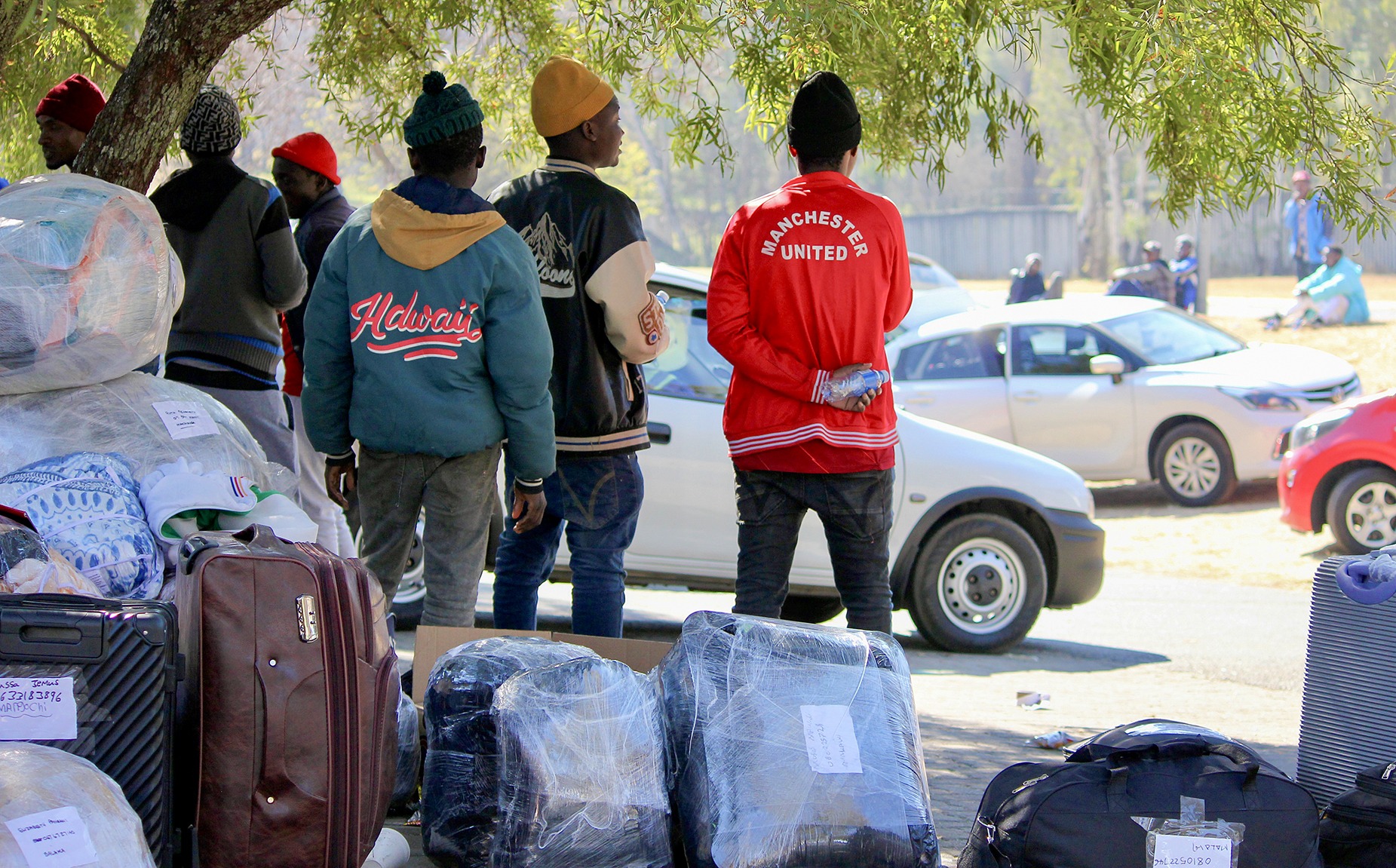
 Malawian nationals continue to seek assistance with voluntary repatriation at the country’s consulate in Johannesburg on Monday, 6 July. (Photo: Reitumetse Pilane)
 Since the beginning of the recent anti-foreigner unrest, Malawian nationals from various parts of Gauteng have been heading to the Malawian consulate in Woodmead, Johannesburg, seeking assistance to return home. The consulate closed in the lead-up to the 30 June protests, leaving humanitarian aid up to community volunteers and NGO organisations.
Many Malawians have been left with no choice but to camp outside while awaiting repatriation assistance. Repatriates have been sleeping in the parking lot outside the consulate while waiting to be transported to the Lindela Repatriation Centre for processing.
On Monday morning, Daily Maverick observed roughly 50 Malawian nationals waiting outside the consulate. Within about an hour, that number had more than doubled to about 115 adults and 10 children.
Growing humanitarian needs
Humanitarian organisations and community volunteers described increasingly desperate conditions.
“Generally, people start arriving overnight. During the day, the numbers grow from around 50 or 60 people, like we’re seeing now, but there have been days when there have been 200 to 700 people here,” said Tessa Dooms, director of the think-tank Rivonia Circle.
“It’s 100% a humanitarian crisis,” said volunteer Jessica Fearnhead, describing women giving birth outside the consulate, foreign nationals seeking food and safety after being forced from their homes or intimidated, and many having their belongings taken from them.
Dooms told Daily Maverick that the presence of humanitarian aid and some security at the site had spread by word of mouth, attracting increasing numbers of people. Among those arriving were pregnant women, children and people requiring chronic medication.
/file/attachments/orphans/IMG_8603_493855.jpg "Jessica Fearnhead is among the Sandton residents who have been providing humanitarian aid to Malawian nationals stranded outside the non-operational consulate since the recent anti-foreigner unrest. (Photo: Reitumetse Pilane)")
“I’ve seen a woman’s water break on the road,” Dooms said, adding that some repatriates were physically injured when they arrived at the site, having been assaulted while attempting to reach the consulate for assistance.
Daily Maverick observed no toilet facilities available on site. Dooms said that portable toilets previously installed as part of a humanitarian response had been removed after government officials and the Department of Home Affairs instructed that they be taken away because the facilities were attracting more people to the site. This has left those waiting to be repatriated without access to basic sanitation.
At the time of writing, Home Affairs had not responded to a request for comment. The Malawian High Commission, which is in charge of the consulate, also didn’t respond to a request for comment.
Threats and security concerns
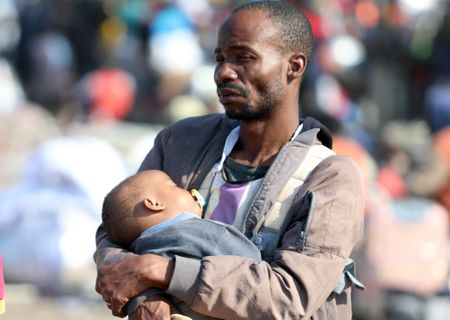
While clutching her one-month-old baby, Malawian Ellen Braki told Daily Maverick that she could not wait to leave South Africa and get herself and her child to safety. Braki said she had been threatened and told to leave her community.
“I arrived here this morning from Germiston, Phase 9,” she said. “The reason we all decided to come here is that we were threatened to leave the place we lived in before. People came to our homes and told us to leave. They said they do not want us here any more. Seeing that I have a very young child, I felt it was best to come here to seek help.”
A SAPS Nyala armoured vehicle was stationed outside the consulate, alongside SAPS members and two security guards who appeared to be employed by the consulate. Dooms said police and security personnel were helping guard the site because foreign nationals had continued to face threats, intimidation and harassment during the ongoing unrest.
Freedom Park community activist Peter Monethe told Daily Maverick that foreign nationals in communities, including Freedom Park, Thembelihle, Rosettenville and Jabulani, had reported widespread intimidation and violence. Monethe said homes had been broken into and residents assaulted, while some foreign-owned spaza shops had been demolished.
/file/attachments/orphans/IMG_8616_472010.jpg "A young girl peers through the crowd at the Malawian consulate in Johannesburg as families await assistance with repatriation. (Photo: Reitumetse Pilane)")
Monethe alleged that some foreign nationals working in industrial areas had been told to leave their jobs without receiving pension benefits. Many victims have allegedly been reluctant to report such crimes, fearing that they might face immigration-related arrests if they approached law enforcement.
Former Olievenhoutbosch resident, Gift John, said that he had never faced violence or intimidation, but the recent unrest has instilled anxiety and driven him to want to leave SA.
“Sometimes people threaten with expulsion from South Africa,” said John, from Malawi. “But other people in the community would say, ‘If you want to stay, that’s your choice. If you want to leave, that’s your choice. Don’t be scared.’”
“But when you hear people talking outside and see what’s happening, you become scared. It gives us too much stress, so you think it’s better to go.”
Another Malawian national, Duwa Mustafa, told Daily Maverick that he was fleeing because he was working in South Africa without the correct documentation.
“I worked for a Somalian spaza shop owner,” said Mustafa. “About three or four days ago, a group of people came to the shop. They said everyone had to have legal papers,” Mustafa said.
“The group told my Somalian boss that they didn’t want people working without papers. They said everyone must have the right documents to work in South Africa,” Mustafa said. “It gave us anxiety. If you stay here without papers, you can’t get work. Maybe it’s better to go home and try to get the right documents first.”
/file/attachments/orphans/IMG_8619_953531.jpg "Malawian nationals continue to seek assistance with voluntary repatriation at the Malawian consulate in Johannesburg on Monday, 6 July. The consulate remains closed, leaving many with no option but to camp outside. (Photo: Reitumetse Pilane)")
Journey through the repatriation system
While the roughly 15,000 Malawians being repatriated from Durban were bused to the Musina border post in Limpopo for processing, those seeking voluntary repatriation from the Malawian consulate in Johannesburg are transported to the Lindela Repatriation Centre in Krugersdorp before travelling north.
“We don’t know how long that takes,” Fearnhead said. “They say it’s one day.”
“When they get to Lindela, they are processed, and from Lindela there are buses that then take them to Musina near the border,” she said.
“From Musina, buses come into Zimbabwe, and they are then taken to Malawi.”
However, she said humanitarian workers had been told that government funding for transport was becoming a concern.
“But now we are hearing that South Africa has run out of budget to hire buses from Lindela to Musina.”
Community organisations and NGOs providing humanitarian assistance told Daily Maverick that buses typically arrived in the evening to transport those wishing to return home to repatriation sites, including Lindela.
Lindela has long attracted criticism from human rights organisations over conditions at the facility. Humanitarian workers said the deportation site was being used to accommodate large numbers of foreign nationals seeking repatriation because of capacity constraints elsewhere.
According to Fearnhead, those returning to Malawi have their passports stamped with a five-year prohibition on re-entering South Africa. Those without documentation have their fingerprints recorded to detect them should they attempt to return before the five years lapse.
Belongings left behind
At the Woodmead site, many Malawian nationals were seen wrapping their luggage and marking it with their names and contact details before departure. Fearnhead said people processed through Lindela were permitted to travel with only two bags, prompting many to label their belongings in the hope of recovering them if separated.
“Some people are losing the few things they could take with them because at the Lindela repatriation centre, they are … allowed to take in only two bags,” Dooms said.
/file/attachments/orphans/IMG_8604_418620.jpg "Malawians mark their belongings after reports that people transferred to the Lindela Repatriation Centre may travel home with only two bags, raising concerns that they could be separated from the rest of their possessions. (Photo: Reitumetse Pilane)")
Calls for greater coordination
On Monday, the Department of Home Affairs announced it would recruit an additional 301 immigration officers to its current staff of 868 to strengthen immigration enforcement capacity. Yet on the ground, the growing number of people seeking voluntary repatriation has exposed significant gaps in the government’s response.
Dooms said the crisis had been exacerbated by poor coordination between the South African and Malawian governments, as well as a lack of disaster management intervention at the municipal level. She argued that the absence of a coordinated humanitarian response was worsening conditions for those seeking assistance.
Dooms also pointed out that anti-immigration organisers, such as March and March, had increasingly sought to broaden their support by mobilising civic organisations whose primary concerns were unrelated to immigration.
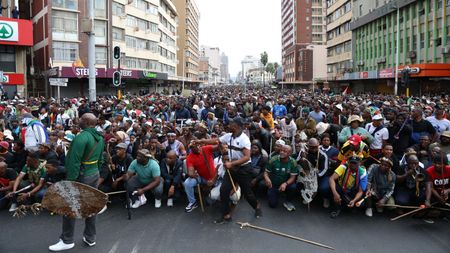
She argued that organisers had presented the removal of undocumented migrants as a solution to a wide range of social and economic problems, allowing anti-immigration campaigns to draw support from organisations whose original mandates had little to do with immigration.
Asked whether the scenes outside the Malawian consulate amounted to a humanitarian crisis, Kopanang Africa Against Xenophobia’s (Kaax) Mike Ndlovu did not hesitate: “Yes, definitely, because more and more people are still arriving there.”
The repatriation of undocumented migrants has become a humanitarian crisis, with tens of thousands of foreign nationals turning up at repatriation sites and embassies across the country while they wait to be processed. DM
Additional reporting by Peter Fabricius